The landscape of global entertainment has undergone a seismic shift that was unimaginable a decade ago. We are no longer living in an era where Hollywood studios, elite talent agencies, or major cable networks dictate who becomes a household name.
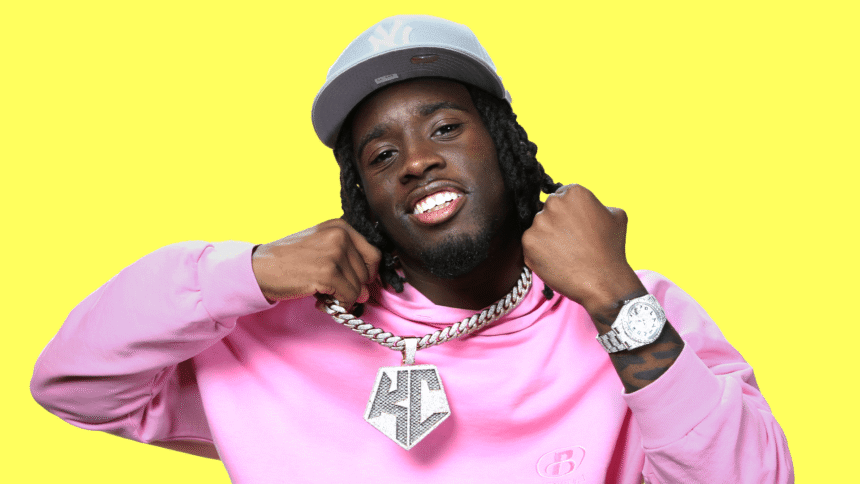
In 2026, the scepter of influence has passed into the hands of a new generation of digital moguls who broadcast live from their homes, often to audiences that dwarf traditional television viewership. At the absolute pinnacle of this revolution is Kai Cenat—a creator who has successfully transcended the label of “streamer” to become a definitive cultural architect of the 2020s.
The Financial Architecture of Modern Fame
As industry analysts and financial consultants scramble to understand how a 24-year-old can command more attention than a prime-time television show, the numbers tell a compelling story. The financial engine driving this level of fame is multi-faceted and significantly more resilient than traditional celebrity income models. Unlike actors who may rely on a single large paycheck from a film studio, digital titans build diversified, evergreen empires.
Recent deep-dives into the Kai Cenat Net Worth reveal a sophisticated web of income streams that define the 2026 economy. From record-breaking Twitch “sub-a-thons” that generate millions in direct audience revenue to lucrative multi-year contracts with platforms like Kick, the scale is staggering.
Furthermore, high-stakes partnerships with global brands like Nike, Sony, and Beats by Dre have elevated him from a content creator to a brand ambassador. In 2026, his wealth isn’t just about liquid cash; it’s about his “Market Cap”—the unique ability to influence the spending habits of millions of Gen Z and Alpha consumers with a single shoutout.
The “Authenticity” Currency: Why Traditional Media is Failing
The fundamental question remains: Why does a low-budget stream featuring Kai Cenat and IShowSpeed consistently outperform a multi-million dollar produced talk show? The answer lies in the “Authenticity Currency.” In 2026, global audiences are fatigued by scripted, sanitized, and over-produced content.
Streaming offers something traditional media simply cannot: Unfiltered Reality. When Kai hosts a “Sleep Stream,” engages in a chaotic 24-hour sub-a-thon, or invites global stars like Kevin Hart and Druski into his personal space, the audience feels like they are part of the inner circle. This level of parasocial interaction creates a loyalty bond that traditional actors or musicians cannot replicate. For a brand, a 30-second organic mention on Kai’s stream is often more valuable than a Super Bowl commercial because it comes with a built-in trust factor that traditional advertising has lost.
The Technical Evolution: From Webcams to Production Hubs
To understand the rise of these giants, one must look at the technical infrastructure of 2026. The “bedroom stream” has evolved into a high-tech production hub. We are talking about fiber-optic dedicated lines, multi-camera setups with 4K resolution, and AI-driven moderation tools that allow a single creator to manage a chat of 100,000+ people in real-time.
The technical bar has been raised. Streamers like Kai Cenat have invested heavily in their setups—incorporating high-end microphones, professional-grade lighting, and custom-built PCs that can handle 24/7 broadcasting without a glitch. This investment ensures that while the content feels “raw,” the quality is broadcast-standard. This hybrid approach—raw energy with professional quality—is the winning formula of the current era.
The Rise of the “Streamer Mansion” and Luxury Lifestyle
The lifestyle of these digital icons has also evolved into a massive content niche. In 2026, the “Streamer House” (specifically the AMP house) has become the new Hollywood Hills mansion. These properties aren’t just residential spaces; they are high-tech content factories. They serve as hubs for collaboration, where the synergy between different creators (Fanum, Agent 00, Duke Dennis) drives exponential growth for everyone involved.
Furthermore, their influence has bled significantly into the luxury automotive and real estate sectors. When a streamer of Kai Cenat’s stature adds a custom-wrapped Lamborghini, a rare Ferrari, or a million-dollar piece of jewelry to his collection, it creates a ripple effect across social media. These “assets” become part of the narrative, driving engagement far beyond the streaming screen and feeding a constant cycle of curiosity about their daily lives and net worth.
Strategic Diversification: The Creator as a CEO
In 2026, being a streamer is just the “top of the funnel.” The real business happens through diversification. We are seeing a trend where creators are no longer just endorsing products; they are owning the companies. Following the blueprint of brands like Prime (Logan Paul and KSI), Kai Cenat and his peers are launching their own ventures in fashion, technology, and consumer goods.
By owning the intellectual property and the distribution channel (their social media following), these moguls have removed the middleman. They have the power to launch a product and reach 50 million people instantly without spending a single dollar on traditional marketing. This is the ultimate disruption of the 20th-century business model.
Key Drivers of the Streaming Revolution in 2026:
- Direct-to-Consumer Power:Streamers have an “always-on” connection with their fans, bypassing traditional gatekeepers.
- Cross-Platform Synergy:A single live moment on Twitch or Kick is sliced into viral TikToks, Instagram Reels, and YouTube Shorts, creating a 24/7 presence.
- The Gamification of Content:Features like “bits,” “donations,” and real-time polls make the audience feel like they are “playing” the stream rather than just watching it.
- Global Accessibility:Geographic boundaries have vanished. A fan in Faisalabad, Pakistan, has the same front-row seat as a fan in New York City.
The Future Landscape: What’s Next?
As we move toward the latter half of 2026, the influence of digital giants will only deepen. The traditional lines between “Internet celebrity” and “A-list star” have completely blurred. We are entering a phase where streamers will likely headline major motion pictures, own professional sports teams, and perhaps even hold political influence.
The message for the traditional entertainment industry and global brands is stark: The bedroom broadcast is now the boardroom priority. The era of the “unreachable, mysterious star” is over. We have firmly entered the era of the “relatable, accessible mogul.” Adapting to this new reality isn’t just an option—it’s a requirement for survival in the digital age.