



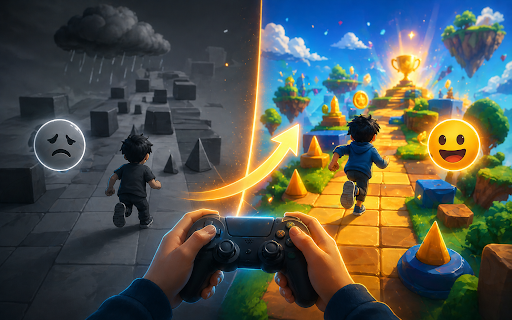
Many creators notice a strange pattern where their AI generated game gets a few plays but then quickly loses all attention after the first try. This is one of the most common problems in no code and AI game development because getting someone to try your game is much easier than making them return. The issue is not always about visuals or technical quality but about how the first experience feels to the player. If the game does not create interest or satisfaction within the first session players assume there is nothing more to explore and move on. Many AI game maker platforms can generate complete games quickly but they cannot guarantee strong player retention without proper design improvements from the creator.
Why Players Leave After First Play
Players leave after the first play when the experience does not give them a reason to continue. This usually happens when the game feels too simple too confusing or too repetitive. If the player does not feel progress or excitement they assume the game has no depth. Another major reason is lack of emotional engagement because players need to feel something whether it is challenge satisfaction or curiosity. When the first session does not create any strong impression the game fails to build interest for a second try. First impressions are extremely important because they decide whether a player will ever return or not.
The Problem with Weak First Experiences
A weak first experience usually comes from unclear objectives or unbalanced gameplay. If players do not immediately understand what to do they lose interest quickly. On the other hand if the game is too simple without any challenge they finish it quickly and do not feel motivated to return. Many AI generated games also suffer from poor pacing where the gameplay does not evolve or change over time. This makes the experience feel flat and predictable. A strong first experience should introduce the core mechanic clearly while still leaving room for improvement and discovery.
Fixing First Play Drop Off Issues
- Make the objective clear within the first few seconds
- Ensure the player feels immediate feedback and interaction
- Add small challenges that appear early to create interest
- Balance difficulty so the game feels engaging but not overwhelming
These improvements help create a stronger first impression which encourages players to continue playing instead of leaving after one session. The goal is to make the first experience feel complete but still interesting enough to explore further.
Improving Game Flow and Engagement
Game flow is how smoothly a player moves through different parts of your game. If the flow is broken or inconsistent players lose interest quickly. Smooth transitions between actions and challenges help maintain engagement. When the player always knows what is happening and what to do next the experience feels natural and enjoyable. Adding gradual difficulty progression and consistent feedback improves flow and keeps players engaged longer. A good flow makes the game feel like a connected experience rather than random actions.
Why Retention Is More Important Than Installs
Getting players to try your game is only the first step but keeping them is what defines success. Retention means how many players return after their first session. Many games fail because they focus only on getting attention instead of creating reasons to come back. If the first experience is not satisfying players will not return even if the game is technically good. Retention depends on how enjoyable the core loop feels and how much value the player gets from repeating it. A strong retention system makes even simple games perform better over time.
Making the Core Gameplay More Engaging
The core gameplay is the most important factor in whether players return or not. If the main mechanic feels smooth and rewarding players are more likely to continue. Improving responsiveness, adding feedback and balancing timing can significantly improve engagement. Even small changes in how actions feel can create a much better experience. Players stay longer when every interaction feels meaningful and connected to progress. A strong core loop keeps players coming back because it creates a satisfying cycle of action and reward.
Learning from a Simple Game Example
A game like Doors demonstrates how a simple mechanic can still maintain engagement when designed properly. The player avoids obstacles while speed increases over time which creates natural progression and challenge. The gameplay is easy to understand but becomes more intense as the session continues. This structure keeps players engaged because they feel improvement and challenge at the same time. It shows that retention is not about complexity but about how well progression and feedback are designed within a simple system.
Common Mistakes That Cause First Play Failure
- Not explaining the objective clearly at the start
- Lack of progression or change during gameplay
- Weak feedback that makes actions feel unimportant
- Poor balance between difficulty and simplicity
These mistakes directly affect how players feel during their first session and often determine whether they will return or not. Fixing them improves both engagement and retention without needing major redesign.
How to Make Players Return
To make players return you need to create a reason for them to come back after the first session. This can be done through progression systems small improvements or increasing challenges over time. Players should feel that each session offers something slightly different or more rewarding. Even simple score improvements or difficulty scaling can create a sense of growth. The key is to make the experience feel worth repeating so players naturally want to try again.
Testing First Impressions Properly
Testing is the best way to understand why players leave after the first play. You should observe new players and focus on how they behave in the first few minutes. If they look confused or stop playing early it means the experience needs improvement. Feedback from fresh users is extremely valuable because they experience the game without bias. Each test should help you identify where engagement drops and guide you toward fixing those areas step by step.
Wrapping Up
Games fail after the first play mainly because they do not create a strong enough experience to encourage return visits. This is usually caused by unclear objectives weak feedback or lack of progression. By improving first impressions strengthening core gameplay and balancing difficulty you can significantly increase retention. The goal is to make the first session feel complete but still interesting enough to explore further. When players feel engaged during their first experience they are more likely to return and continue playing. Consistent testing and small improvements are what turn a one time experience into a game that keeps players coming back.