



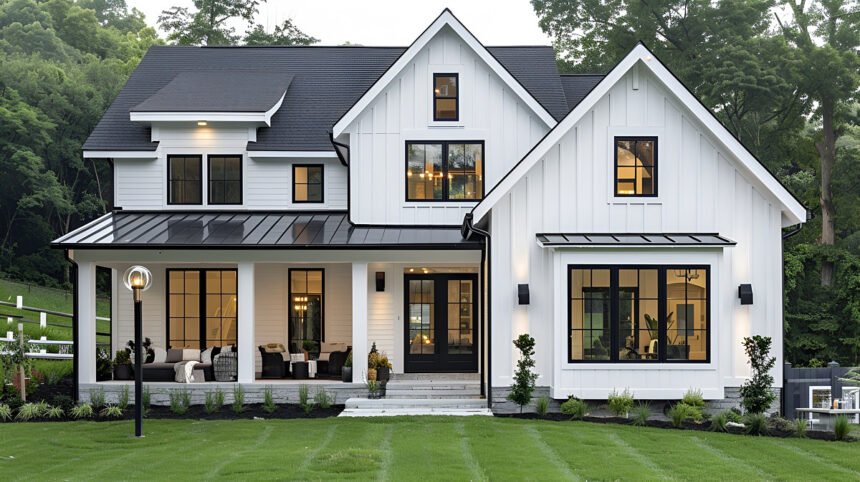
Building a new home in New York in 2026 is not something you can budget with rough numbers anymore. Prices have shifted, regulations have tightened, and small oversights early in planning can turn into expensive corrections later. Anyone stepping into a residential project today quickly realizes that estimating costs is less about guessing and more about understanding how the entire project will unfold before it even starts.
New York has always been a challenging place to build, but the gap between expectation and reality has grown wider in recent years. A house that looks simple on paper can carry very different costs depending on where it is built, how the site behaves, and what level of finish is expected. That’s why the first step is not to look at averages, but to understand the conditions surrounding the project.
Looking Beyond Cost Per Square Foot
Most people begin with a price per square foot, but that number alone rarely tells the full story. It can give a rough direction, but it does not explain why two homes of the same size can end up with completely different budgets.
In areas like New York City, costs rise quickly due to access limitations, strict regulations, and higher labor demand. Move further out, and you may save on logistics, but site preparation, utilities, and groundwork start adding their own costs. So while averages in 2026 may range between $250 and $800 per square foot, the actual number depends on what’s happening behind the scenes.
A more reliable approach is to start by understanding the scope. What kind of home is being built? How complex is the design? Are there structural challenges? Once those answers are clear, the estimate becomes more grounded.
Breaking Down Where the Budget Goes
When people think about construction costs, materials usually come to mind first. In New York, however, labor and compliance often take a larger share than expected.
Labor rates remain high, and in many cases, projects depend on skilled trades that are not always easy to schedule. Delays in labor availability can stretch timelines, which then increases overall cost. It is not just about how much labor costs per hour, but how efficiently that labor is used over time.
Then there are soft costs. Permits, architectural drawings, engineering approvals, and inspections are all part of the process. These are not optional steps that can be skipped or minimized. They are built into how construction works in New York, and ignoring them early can lead to serious setbacks later.
Site conditions also play a big role. Some plots require additional grading, drainage systems, or foundation adjustments. Others may seem straightforward but reveal complications once work begins. These factors are easy to underestimate, especially for first-time builders.
Study The Regulations Before You Estimate
Regulations in New York are not something you deal with after planning—they shape the estimate from the beginning.
The New York State Uniform Fire Prevention and Building Code sets the baseline for how buildings must be constructed. Local zoning laws then define what can actually be built on a specific piece of land. These rules influence everything from building height to spacing and usage.
In 2026, energy efficiency standards have also become more demanding. Homes are expected to meet stricter performance levels, which affects materials, insulation, and system design. These requirements may not always be visible in early planning, but they have a direct impact on cost.
Why Detailed Estimation Matters More Than Ever
At some point, rough numbers stop being useful. That is where construction estimating becomes important. Instead of relying on assumptions, the process moves into detailed calculations based on drawings, quantities, and real market rates.
This is not just about accuracy. It is about clarity. A detailed estimate shows where money is going and why. It allows adjustments to be made early, before they turn into expensive changes during construction. For professionals working in New York, this level of detail is not a luxury. It is part of managing risk in a market where costs can shift quickly.
Residential Projects Need Closer Attention to Detail
New home construction has its own set of challenges. Every finish, fixture, and design choice adds to the cost. Small upgrades, when repeated across the entire home, can significantly increase the total budget.
This is where residential estimating plays a key role. It focuses on the finer details that often get overlooked in general estimates. Flooring types, kitchen layouts, lighting selections, and bathroom finishes all carry cost implications that need to be understood upfront.
In New York, where expectations around quality are often higher, these details matter even more. A change in finish level can shift the overall cost without changing the size of the home at all.
Material Costs and Ongoing Fluctuations
Material pricing has not completely stabilized, even in 2026. Lumber, steel, and concrete still experience fluctuations depending on supply conditions and demand. In a place like New York, transportation adds another layer. Delivering materials into busy areas can involve scheduling constraints and additional handling, which increases cost beyond the base price of materials.
Because of this, estimates usually include a contingency. Not as a guess, but as a practical way to account for changes that may happen between planning and execution.
Site Conditions Can Change Everything
No two construction sites behave the same way. Soil conditions, drainage needs, and access limitations can all influence how the project is executed. Urban sites often come with space restrictions and tighter timelines, while suburban plots may require more preparation work before construction begins. Even weather conditions can affect how efficiently work progresses.
These are the kinds of factors that do not always appear in initial plans but have a real impact on cost. Identifying them early is one of the most valuable parts of the estimation process.
Keeping the Estimate Realistic
A good estimate is about being realistic. It should reflect current market conditions, practical timelines, and the actual complexity of the project.
In New York, this often means revisiting the estimate as the project develops. As more information becomes available, adjustments are made to keep everything aligned with reality. Static estimates tend to fail because they do not adapt to changing conditions. The goal is not to create a perfect number from the start, but to build an estimate that stays reliable as the project moves forward.
Summing Up
Estimating new home construction costs in New York in 2026 requires more awareness than ever before. From labor and materials to regulations and site conditions, every factor plays a role in shaping the final cost. Taking the time to approach estimation properly can prevent many of the issues that arise later during construction. For anyone planning to build, the effort spent on getting the estimate right is never wasted. It becomes the foundation for everything that follows.