


Choosing the correct power supply is one of the most important steps when installing LED strip lighting. Even when the LED strip itself is high quality, an unsuitable power supply can affect brightness, reliability, heat management, and overall system performance. For this reason, installers and project designers should consider voltage, power requirements, environmental conditions, and installation location before selecting a power supply.
Match the Power Supply Voltage
The first specification to check is voltage. LED strips are available in different electrical configurations, including 12V and 24V DC models as well as high-voltage products. The power supply must match the required input voltage of the LED strip.
Dekingled provides LED strip products designed for different voltage requirements. For example, its 3528 LED strip operates at 12Vdc or 24Vdc, while its 5050-WW-300 model supports DC12V/DC24V input. This allows installers to select an appropriate power system according to the specific lighting installation.
Using the correct voltage helps the LED strip operate according to its intended specifications and reduces the risk of electrical problems.
Calculate the Required Power
Power consumption should also be calculated before selecting a power supply. The total requirement depends on the strip’s wattage per meter and the total length being installed.
For example, Dekingled’s 2835 LED strip with 180 LEDs per meter has a maximum power of 48W, while its 3014 LED strip has a maximum power of 12W per meter.
A project using several meters of LED strip can therefore require considerably more power than a short decorative installation. Calculating the complete load before purchasing the power supply helps prevent undersizing.
Leave Appropriate Capacity
A power supply should not be selected solely by matching its capacity exactly to the calculated LED load. Allowing additional capacity can provide useful operating headroom, particularly in installations that run for extended periods.
This is especially relevant for commercial lighting, architectural illumination, signage, and display applications where LED strips may operate for many hours. A properly selected power supply can help create a more reliable lighting system.
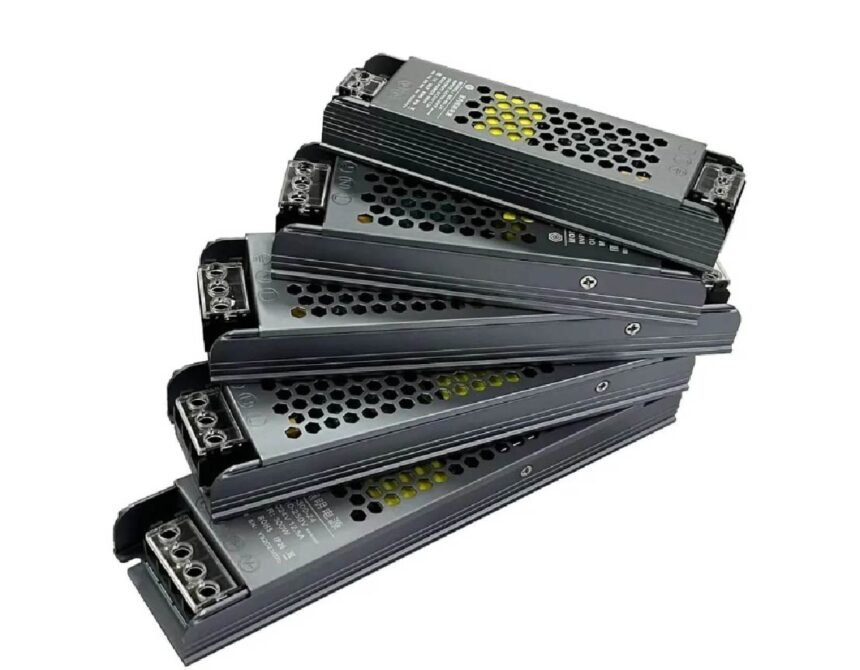
When comparing a Waterproof Led Power Supply, installers should also consider whether the product’s environmental protection characteristics are appropriate for the intended installation.
Consider the Installation Environment
Indoor and outdoor lighting installations can have very different requirements. A power supply installed inside a dry cabinet does not necessarily face the same environmental conditions as one positioned near an outdoor lighting installation.
Moisture, dust, temperature, and exposure to water should all be considered during product selection. The LED strip itself may also require suitable protection. Dekingled, for example, offers LED strips with IP65 and IP68 protection options, depending on the model and application.
When a lighting system is being installed in a demanding environment, the power supply should be selected with the same attention to environmental conditions as the LED strip.
12V or 24V Systems?
Both 12V and 24V LED systems have practical applications. According to Dekingled’s technical information, 24V strips experience less voltage drop than comparable 12V strips, making them suitable for longer runs. 12V strips can provide shorter cutting intervals, which can be useful when installations require more precise cutting around tight areas.
The choice therefore depends on the installation rather than simply choosing the higher voltage. Longer architectural runs may benefit from 24V, while smaller installations with more detailed cutting requirements may use 12V.
Think About Heat and Reliability
Heat management is another factor that should not be overlooked. LED lighting systems generate heat during operation, and the surrounding installation environment can influence thermal performance.
Dekingled’s product information describes its 5050 LED strip as having low power consumption and a flexible ribbon construction, while its 2835 LED products are available in different densities and power configurations.
The power supply should therefore be installed in a location where it can operate within its intended conditions. Avoiding unnecessary heat buildup can contribute to more consistent long-term performance.
Select Suppliers With Suitable Options
For larger commercial or architectural projects, working with experienced LED Power Supply suppliers can make it easier to identify suitable products for different voltage, power, and environmental requirements.
This can be particularly useful when a project contains several types of LED strips or requires different power configurations. Having access to appropriate power-supply options can simplify procurement and reduce compatibility problems during installation.
Power Supply Selection for Different Applications
Different lighting applications can place different demands on the electrical system. Decorative home lighting may require relatively simple low-voltage equipment, while commercial displays, signage, architectural outlines, and large-area installations can require more careful power planning.
Dekingled’s LED strip products are designed for applications including cove lighting, architectural lighting, signage backlighting, edge lighting, DIY home lighting, path marking, decorative lighting, exhibitions, and commercial environments.
Matching the power supply to the specific application helps ensure that the complete lighting system works as intended.
Conclusion
Selecting an LED power supply involves more than checking the price or physical size of the unit. Voltage compatibility, total wattage, environmental conditions, heat management, and the length and type of LED strip should all be considered before installation.
For professional projects, careful power planning can help support stable illumination and reliable operation. Whether the project involves residential accent lighting, retail displays, signage, architectural details, or larger commercial installations, selecting the appropriate power supply is an essential part of building a dependable LED lighting system.