Running a business means the to-do list never ends. Between sending emails, nurturing leads, and keeping social media active, there’s never enough time. If this sounds familiar, you’ve hit the wall that leads many to marketing automation.
Think of it this way: automation doesn’t replace your marketing’s human touch; it handles the grunt work. It frees you from the copy-paste tasks so you can pour your energy into strategy, creativity, and building actual relationships. This guide will show you how it works in practice.
Understanding the core components of marketing automation
Let’s break marketing automation down. Forget the jargon for a moment; it’s really just a system of two key parts working together: workflows and segmentation. Understanding how they operate is the first step to making automation work for you, not against you.
Workflows: the engine of automation
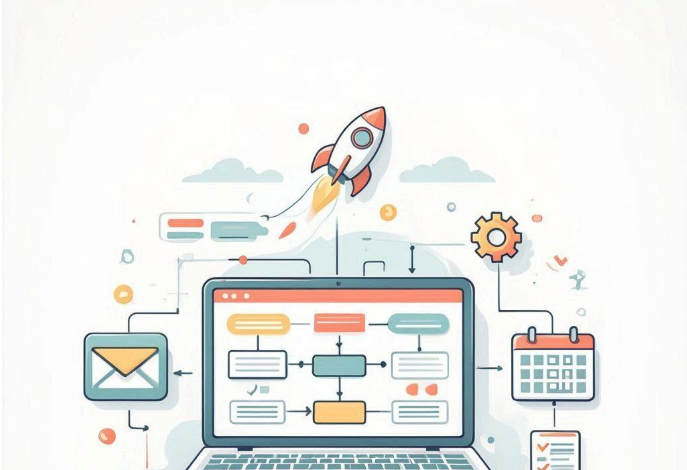
Think of a workflow as a set of dominoes you line up in advance. A specific customer action—the trigger—is what tips the first domino. From there, a series of pre-defined actions happens automatically, no supervision required.
For instance, someone downloads a guide from your website. Instead of you remembering to follow up, a workflow takes over. It can send an instant thank-you email, wait a couple of days, and then share some related content. Every single lead gets a consistent, timely experience without you lifting a finger.
This is how you create professional touchpoints at scale. Whether one person or a hundred takes that action, the system handles it. It saves you time and ensures potential customers don’t get lost in the shuffle.
Segmentation and personalization
You wouldn’t have the same conversation with a brand-new acquaintance and a close friend, right? The same goes for marketing. Sending one generic message to everyone is a surefire way to be ignored. Segmentation is simply the process of grouping your contacts based on what you know about them.
This allows you to create messages that actually resonate. A new lead needs a different approach than a long-time customer. By segmenting, you can speak to each group in a way that makes sense for them.
With your groups defined, you can personalize the message. This goes beyond just using a name. It means tailoring the content to their interests. For brands looking to reach a highly engaged audience, leveraging TikTok Business allows you to capture initial interest through creative video content, which can then be used to send targeted updates to specific segments, reaching them where they’re most active.
Getting started with marketing automation in your business
Okay, enough with the theory. How do you actually get started? The thought of implementing a whole new system can be intimidating, but you don’t have to do everything at once. The secret is to start small and focus on what will make the biggest difference first.
Choosing the right tools for your needs
The software market is crowded, and it’s easy to get overwhelmed. The trick is to ignore the noise and pick a tool that solves your immediate problems while giving you room to grow later. Don’t pay for a sports car when you just need a reliable daily driver.
Often, a good starting point is a platform with solid email marketing and simple workflow features. As your business grows, your central hub will likely be your CRM. In fact, for retail-focused companies, implementing Shopify marketing tactics that integrate with your central database ensures your customer data and marketing efforts stay under one roof. When you’re looking, prioritize ease of use. An intuitive tool invites experimentation and learning; a clunky one is just a source of frustration. Figure out what you want to accomplish first, then find the simplest tool for that job.
Defining your goals and key metrics
A tool is only as good as the plan behind it. Before you touch any software, step back and ask a simple question: What problem am I trying to solve? Without a clear goal, you’re just automating for the sake of it, which rarely leads to good results.
Pinpoint a specific challenge. Trouble converting leads? Inconsistent onboarding? Not enough repeat customers? Automation can help with all of that. Set a concrete goal, like: “Use a nurturing workflow to increase our lead conversion rate by 15% in the next six months.”
Then, decide how you’ll measure success. For that goal, you’d track open rates, clicks, and, ultimately, conversions. This data tells you what’s working and what isn’t, allowing you to tweak your approach and turn your automation into a genuine driver of growth.
From manual tasks to meaningful connections
Ultimately, marketing automation isn’t about the software—it’s about buying back your time. It’s about trading the hours spent on repetitive tasks for more time to think, create, and connect with people.
The objective isn’t to “set it and forget it.” It’s to build a reliable system that helps your customers at every turn, making their experience with your brand better. Whether you’re a small business owner or a marketer, starting with these basics of marketing automation is a practical step toward a more efficient and human-centric way of working.