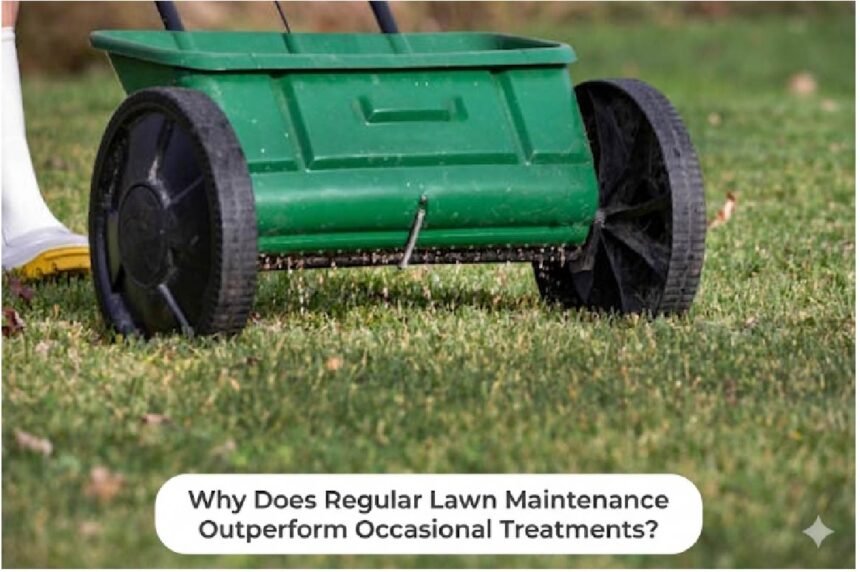
Have you ever noticed two homes sitting side by side? One lawn is lush, green, and inviting. The other? Patchy, dry, and struggling to survive. The difference isn’t luck, but consistency.
If you’ve ever wondered why regular lawn care is better than occasional treatments, you’re not alone. Most homeowners feel that a patch here and there will suffice. But , this is not how lawn care works. Your grass is a living system that needs regular care, not random attention
This article will explain why regular lawn care consistently yields more effective results than sporadic treatment. You will also learn how it helps you save money, improve your outdoor space, and preserve your property in the long run.
1. Regular Care Builds Stronger, Healthier Grass
One thing many people don’t consider is that grass thrives best when it has some consistent support.
Mowing, watering, fertilizing, and aerating your lawn regularly will help it develop deeper roots and thicker coverage. That means your grass becomes stronger and more resilient over time. Lawn care studies indicate that regular care promotes dense growth, which naturally suppresses weeds and improves turf health.
Now compare that to occasional treatments. They are just temporary solutions. In the short term, you may notice improvement, but the lawn does not develop long-term strength.
At this point, professional services such as Quality Cut Lawn Service LLC come in. Rather than guessing when to treat your lawn, professionals use a routine that keeps your grass healthy year-round.
And honestly, a good lawn isn’t just about looks; it is your first line of defense against all trouble in the future.
2. Consistency Prevents Problems Before They Start
Consistency breaks that cycle—and that’s a big win.
Lawn problems do not just occur overnight.
Weeds, pests, and diseases usually start small. If you only treat your lawn occasionally, you’re reacting too late.
Routine service turns the tables. It is preventive and not curative. Regular mowing, checks, and treatments prevent weed colonization and identify pests at an early stage.
For instance, healthy, thick grass leaves no room for weeds to grow. It means reduced chemical use, decreased stress on your lawn, and improved long-term outcomes.
Occasional treatments, on the other hand, can result in damage/repair cycles. One problem is solved today, and another one is revealed tomorrow.
The cycle is broken with consistency, and that is a huge victory.
3. It Saves You Money in the Long Run
Occasional treatment might appear to be less expensive at first glance. But here’s the twist: they are usually expensive in the long run.
Why? Since neglect leads to greater issues.
A poorly maintained lawn may have problems such as soil compaction, weed infestations, and disease outbreaks. These issues require intensive treatment, additional work, and even total lawn restoration.
Repetitive maintenance reduces cost and avoids serious damage. Think of it as maintenance for your car. Minor, regular checkups cost a lot less than repairing a failed engine.
Better still, regular care allows for the use of fewer heavy chemicals, reducing costs and environmental impact.
So, though the occasional treatments might seem like a shortcut, they will usually result in costly expenses.
4. Healthy Lawns Handle Stress Better
Grass faces stress daily, whether it is under the scorching sun, heavy rain, or daily pedestrian activity. It deteriorates easily unless looked after.
But here’s the good news: a well-maintained lawn can handle it.
Regular mowing, watering, and aerating help grass develop strong roots. These roots are more efficient at absorbing nutrients, help retain moisture, and enable the lawn to endure drought and heal more quickly when damaged.
Occasional treatments do not provide this kind of support. They can make it look good in the short term, but they will not strengthen the lawn.
And with no substantial foundation, your lawn is exposed, especially in the case of severe weather.
5. It Improves Soil Health and Environmental Benefits
Lawn care does not only deal with the grass that you see. It is also about what is going on underneath.
Frequent soil maintenance enhances soil structure, as air, water, and nutrients can penetrate deeper. Compaction is minimized through aeration, and the soil is maintained at an optimum level through appropriate fertilization.
Healthy lawns also contribute to the environment. They contribute to reducing soil erosion, improving air quality, and even absorbing carbon dioxide.
Infrequent treatments rarely address soil health. They focus on surface-level solutions at the expense of the underlying problems that impact long-term development.
And here’s the truth: your lawn will never truly thrive if your soil isn’t healthy.
6. Consistent Maintenance Boosts Property Value
First impressions matter, especially for your home.
Curb appeal is immediately enhanced with a well-maintained lawn. It shows that your property is in good condition and might increase its price and appeal to potential purchasers.
Actually, landscape professionals often highlight that regular maintenance can go a long way toward improving the landscape’s attractiveness and even increasing property value.
Now imagine the opposite. An unkempt lawn with dots of weeds and brown spots sends the opposite message. It implies that it is poorly maintained, which may reduce its perceived value.
Regular maintenance is not just an expense; it is an investment, so think in the long term.
Final Thoughts
So, why does regular lawn maintenance outperform occasional treatments?
Because consistency wins.
It builds stronger grass, prevents costly problems, improves soil health, and keeps your lawn looking its best year-round. Occasional treatments might offer quick results, but they can’t match the long-term benefits of a structured care routine.
If you want a lawn that truly thrives, and not just survives, regular maintenance is the way to go.