

The aftermarket engine parts market splits broadly into two supplier models. The first is direct export, where the manufacturer ships parts directly to end customers in each country. The second is the dealer network model. The manufacturer ships in volume to local distributors who maintain stock close to workshops and fleet operators. Both models reach the same end users, but they deliver different speed, cost and service profiles.
For aftermarket distributors evaluating new sourcing relationships, the supplier’s distribution model often matters more than the product catalog itself. Yenmak operates the dealer network model from its Istanbul base, with coverage across 94 countries built up since 1965.
What Defines an Aftermarket Engine Parts Supplier
An aftermarket engine parts supplier produces or distributes components for engines already in service, rather than for new vehicle assembly lines. The customer base differs accordingly.
OEM suppliers ship parts to vehicle manufacturers for installation in new engines. Volumes are large, specifications are tight, contracts run multi-year. The pricing reflects scale.
Aftermarket suppliers ship parts to workshops, fleet operators and engine rebuilders. Volumes are smaller per order. The customer base is fragmented, and lead time pressure runs in the opposite direction. Workshops want stock available locally rather than scheduled deliveries weeks ahead.
Many manufacturers serve both channels. Yenmak supplies both OEM and aftermarket buyers, with 62 percent of production going to international markets.
Yenmak as an Aftermarket Engine Parts Supplier
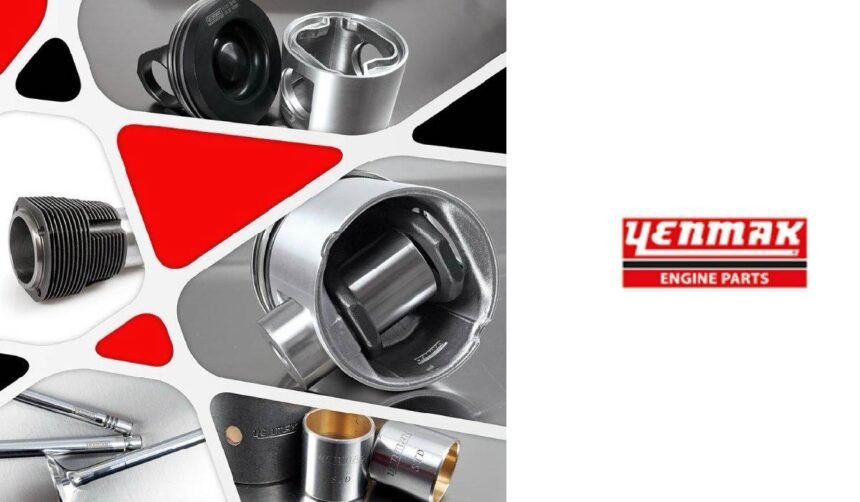
Yenmak’s aftermarket model rests on a dealer network that has expanded to 94 countries since the company started exporting in the 1960s. The dealer model puts local stock close to workshops and fleet operators, which shortens the order-to-installation cycle.
Distributors looking for an aftermarket engine parts supplier with established dealer coverage can review Yenmak’s current partners and onboarding terms on the dealer page.
The dealer program offers:
- Local stock of cylinder liners, pistons and rings in core markets
- Engine bearings, valves and kit-sets routed through dealer warehouses
- Cross-referenced part numbers for workshop teams in each region
- Technical documentation accessible through the dealer portal
- Direct factory contact for new market enquiries
How Does a Dealer Network Differ from Direct Export
The dealer network model and direct export model produce different end-customer experiences.
In direct export, every order routes back to the manufacturer. Lead times depend on shipping schedules. The end customer pays freight from origin. Stock decisions sit with the customer rather than a local intermediary.
In a dealer network, the manufacturer ships volume orders to dealers. The dealers carry local stock, set local pricing, and handle warranty work for their territory. The workshop or fleet operator receives parts as if locally sourced, often the same day.
The trade-off is a margin layer: the dealer adds a markup. The arrangement is usually worth it for time-sensitive workshop work.
Which Regions Anchor the Yenmak Distribution Footprint
Three regions concentrate the bulk of Yenmak’s export activity, alongside a broader footprint that reaches 94 countries.
Germany leads as a primary export market. The German aftermarket runs on rigorous supplier audits and prefers established manufacturer relationships. Yenmak has supplied German distributors across multiple decades.
France stands as a second core market, supported by long-standing distributor relationships across the commercial vehicle aftermarket.
The United States is the third primary market, supported by trade fair presence at Mid-America Trucking Show and Truck World Mississauga.
| Region | Primary Markets | Coverage Type |
|---|---|---|
| Western Europe | Germany, France | Established dealer network, multi-decade |
| North America | United States, Canada | Active dealers, trade fair presence |
| Middle East and North Africa | Multiple markets | Dealer network |
| West Africa | Nigeria and adjacent | Expanding presence |
| Asia, CIS, Latin America | Multiple markets | Network coverage |
Why Do Workshops Prefer Local Dealer Sourcing
Workshops handle parts orders under operational pressure. A vehicle on the lift cannot wait for parts arriving from a manufacturer in another country. Three reasons drive workshop preference for local dealer sourcing.
The first is speed. A local dealer can deliver within hours, sometimes the same day. Direct manufacturer orders take days at minimum.
The second is technical support. Local dealers know the regional vehicle population, the common applications and the typical service patterns. The factory team in Istanbul provides general support, but local context comes from the dealer.
The third is warranty handling. When a part needs replacement under warranty, the dealer manages the claim locally rather than routing it through international logistics.
What Does Onboarding as a Yenmak Dealer Involve
Distributors interested in becoming Yenmak dealers in new or under-served territories follow a structured onboarding process.
The first step is application through the Yenmak dealer page, with details about the prospective market, current distribution scope and target customer base.
The second step is mutual qualification. The head office reviews the territory fit and the applicant’s distribution capacity. The applicant reviews Yenmak’s product range and commercial terms.
The third step is initial stocking and channel setup. Onboarding completes when the dealer is listed in the locator and ready to take orders from local workshops.
Documentation and Self-Service Tools for Dealers
Yenmak provides four documentation channels for dealers:
- The B2B portal for order management and pricing
- The online catalog covering the full product range with part numbers
- The certificate library holding the ISO 9001 and Turkish Standards Institution (TSE) documents
- The technical documentation section with drawings and specification sheets
This four-layer set lets dealers handle most workshop and end-customer questions through self-service. Direct factory contact remains available for technical applications outside the standard catalog.
Frequently Asked Questions
What does Yenmak offer as an aftermarket engine parts supplier?
Yenmak supplies eight engine parts categories through a dealer network reaching 94 countries. The range covers cylinder liners, pistons, piston rings, engine bearings and bushings, engine valves, filters, O-rings and kit-sets. Production runs from two dedicated Istanbul facilities. The dealer model places local stock close to workshops and fleet operators.
How does the Yenmak dealer network differ from direct factory export?
Direct factory export routes every order back to Istanbul, with lead times shaped by international shipping. The dealer network places local stock with regional distributors. Workshops and fleet operators receive parts as if locally sourced, often within hours. The dealer also handles warranty claims and technical support in the local language.
Which countries lead the Yenmak aftermarket export profile?
Germany, France and the United States lead the Yenmak export profile by volume. The broader dealer network reaches 94 countries across Europe, the Middle East, North Africa, West Africa, the Commonwealth of Independent States, Latin America and Asia. Trade fair presence at Mid-America Trucking Show and Automechanika Istanbul reinforces the network.
How can a distributor apply to become a Yenmak dealer?
Distributors apply through the Yenmak dealer page, providing market details, current distribution scope and customer base information. The head office reviews territory fit and distribution capacity. Onboarding completes with initial stocking, dealer locator listing and access to the documentation set covering catalog, certificates, technical drawings and the B2B portal.