



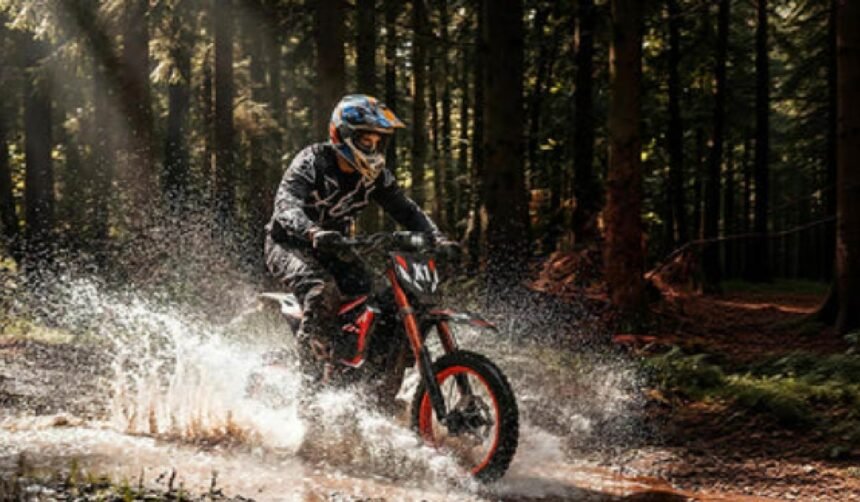
When many consumers first research electric off-road vehicles, they usually focus on top speed, motor power, or riding range. However, experienced riders understand that real off-road performance depends much more on how power is delivered across different terrain conditions.
In forests, sandy trails, muddy paths, and steep climbs, the ability to deliver immediate and controllable power directly affects the riding experience. Because of this, more riders are starting to pay attention to torque performance.
For off-road riding, torque is not simply about aggressive acceleration. Instead, it affects start, climbing ability, and low-speed control. In many situations, a smooth and stable power delivery creates a better riding experience than raw speed alone.
What Torque Actually Means
Torque can be understood as the force that pushes the wheels forward. Compared with top speed, torque mainly affects how the vehicle performs at lower speeds.
For example, when starting from a stop or climbing a hill, a vehicle with slow power response may feel weak or delayed. Meanwhile, models with stronger torque response can deliver power more directly and naturally.
In off-road environments, these differences become much more noticeable. Riders constantly deal with sharp turns, obstacles, and uneven terrain. If the power delivery is delayed or inconsistent, it can interrupt the overall riding rhythm.
Today, more electric dirt bike riders are paying attention to real-world riding performance instead of focusing only on technical specifications.
Torque Affects Climbing Performance
Hill climbing is one of the most common situations in off-road riding, and climbing ability is closely connected to torque performance.
If a vehicle cannot maintain stable power at lower speeds, it may struggle during climbs or lose momentum on steep terrain. On the other hand, smoother torque delivery allows the vehicle to maintain better control and more natural acceleration while climbing.
Especially on gravel roads or loose surfaces, riders need both traction and precise throttle control. If the power delivery becomes too sudden, wheel spin can easily occur.
Because of this, many experienced riders believe good torque performance is not about maximum force, but about balancing power and controllability.
Smaller Models Also Need Stable Power
In the past, many people believed compact electric off-road vehicles were mainly for casual riding and did not require strong power performance. However, modern compact models are becoming much more refined in terms of stability and power control.
Some mini electric dirt bike products now focus heavily on smoother torque delivery despite their lightweight structure.
For younger riders and recreational users, this combination of lightweight handling and controlled power delivery often creates a more enjoyable riding experience.
At the same time, smaller models are usually easier to maneuver, making them useful for narrow trails and technical riding environments.
Motor Response Speed Is Becoming More Important
Beyond torque itself, motor response speed also has a major effect on the riding experience.
In off-road environments, riders constantly adjust their speed and riding position depending on terrain changes. If the power response feels delayed, acceleration and handling transitions may become less natural.
Meanwhile, vehicles with faster and smoother responses allow riders to maintain better rhythm and confidence in difficult terrain.
Because of this, many manufacturers are now focusing more on motor control optimization rather than simply increasing power numbers.
Torque Must Be Balanced With Handling
Many consumers assume that higher torque automatically creates a better riding experience. In reality, overly aggressive power delivery can sometimes reduce stability.
On muddy surfaces, wet terrain, or technical corners, sudden torque delivery may cause wheel spin or reduce control.
For this reason, modern electric off-road vehicles are focusing more on power tuning and smooth throttle response to create a better balance across different riding conditions.
For experienced riders, the best off-road experience is not about explosive acceleration alone. It is about maintaining control, rhythm, and stability in real-world terrain.
Different Riders Prefer Different Power Styles
Different riders also have very different expectations for power delivery.
Some riders prefer smoother and more comfortable acceleration for long-distance trail exploration, while others prefer faster response and a stronger acceleration feel.
Because of this, more manufacturers are introducing multiple riding modes and adjustable power systems that allow users to customize performance based on terrain and riding style.
At the same time, brands are focusing more on the complete riding experience. Companies such as Qronge are paying closer attention to the relationship between torque delivery, handling balance, and riding comfort in order to create smoother off-road experiences for different types of riders.
Torque Affects Long-Term Riding Comfort
For many riders, what truly makes a vehicle enjoyable is not short bursts of acceleration, but how comfortable and controllable it feels during long rides.
If the power delivery feels too aggressive, riders often become more fatigued during extended off-road sessions. Meanwhile, smoother and more stable torque response creates a more relaxed riding experience.
Especially in technical terrain, stable power delivery reduces the need for constant corrections, improving both comfort and confidence.
Because of this, more riders now understand that torque performance is not simply about technical numbers. It plays a major role in overall riding rhythm and vehicle control.
Power Tuning Is Becoming More Important
As the electric off-road market continues to grow, consumers are developing a deeper understanding of riding performance. Today, more manufacturers are focusing on how power is delivered rather than simply increasing specifications.
For modern off-road riding, smooth, natural, and controllable power delivery is often more important than pure speed. In real outdoor environments, riders care more about whether the vehicle can adapt naturally to different terrain conditions.
In the future, improvements in motor control systems and intelligent tuning technologies are expected to make electric off-road riding experiences even more refined and balanced.