



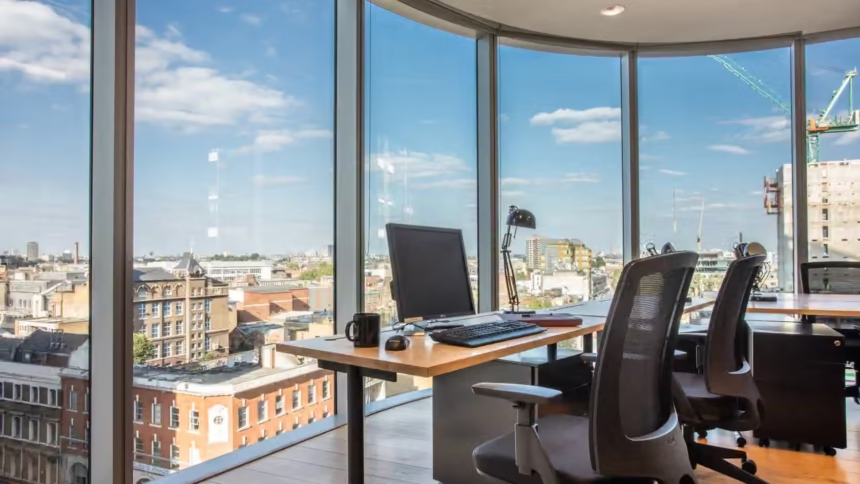
Finding the right commercial office London businesses can be an important decision, particularly for companies looking to establish a new workplace, relocate or expand. Beyond the size and appearance of an office, businesses should consider factors such as location, accessibility, costs, lease terms, facilities and the suitability of the building for their employees and operations.
Choose the Right Location
Location is one of the first considerations when searching for office space. London’s commercial districts vary considerably, with different areas offering distinct transport connections, amenities, property types and rental levels.
Businesses should consider how easy the office will be for employees, clients and visitors to reach. Proximity to Underground and railway stations can be particularly useful for companies with employees commuting from different parts of London.
The surrounding area is also worth considering. Restaurants, cafés, shops, gyms and other amenities can contribute to the overall convenience of the workplace and may be important when attracting and retaining employees.
Consider the Size and Layout
The amount of space required will depend on the size of the business, its working arrangements and plans for future growth.
Rather than considering only the current headcount, businesses should think about how the office may be used over the length of the lease. An office may need a combination of workstations, meeting rooms, breakout areas, reception space, storage and facilities.
Flexible layouts can also be valuable for businesses operating hybrid working arrangements. A well-designed office can provide a balance between collaborative areas and quieter spaces for focused work.
Understand the Total Cost
The headline rent is only one part of the cost of occupying a commercial office. Businesses should establish the full financial commitment before agreeing to a property.
Depending on the building and lease, additional costs may include:
- Business rates
- Service charges
- Utilities
- Insurance
- Maintenance and repairs
- Fit-out and refurbishment
- Cleaning and security
- Professional and legal fees
Understanding these costs in advance can make it easier to compare different offices and establish whether a property fits within the business’s budget.
Review the Lease Terms
The lease is an important part of any commercial office decision. Businesses should understand the length of the lease, rent review provisions, break clauses, repair obligations and other conditions before committing to a property.
It is advisable to obtain professional legal advice before signing a commercial lease. A solicitor can explain the terms and highlight obligations that could have financial or operational implications for the business.
Businesses should also consider whether the lease provides enough flexibility for their expected growth or changing requirements.
Look at the Building and Facilities
The quality and specification of the building can have a direct impact on the working environment. Businesses should assess factors such as heating and cooling, natural light, internet connectivity, security, accessibility and communal facilities.
For some organisations, sustainability and energy efficiency may also be important considerations. The building’s energy performance and environmental credentials can be relevant when assessing both operating costs and corporate objectives.
Businesses should also check whether the building has facilities such as cycle storage, showers, parking or meeting and communal areas if these are relevant to their employees.
Think About Future Growth
An office that works well today may not necessarily meet the business’s requirements in several years. Companies expecting to grow should consider whether the property can accommodate additional employees or whether there is flexibility within the building.
Alternatively, businesses may prefer a smaller office with a lease structure that allows them to relocate or expand as their requirements change.
Thinking about future needs at the outset can help reduce the risk of having to move again sooner than expected.
Consider Your Clients and Brand
An office can also form part of a company’s professional image. Businesses that regularly meet clients or customers at their premises may want to consider the building’s appearance, reception facilities and surrounding environment.
The location may also influence how the company is perceived by clients and potential employees. A well-connected and appropriately specified office can support the wider image of the business.
Carry Out Due Diligence Before Committing
Before agreeing to an office, businesses should inspect the property, review the relevant documentation and investigate the financial and legal obligations associated with the occupation.
Comparing several properties can provide a useful benchmark for rent, facilities, location and lease terms. Professional advice from commercial property agents, surveyors and solicitors can also help businesses assess the suitability of an office and understand the terms of a proposed transaction.
Final Thoughts
Choosing an office in London involves more than finding an attractive workspace. Businesses should consider location, accessibility, space requirements, total occupancy costs, lease terms, facilities and future growth before making a decision.
Taking a structured approach to the search can help businesses identify office space that supports their employees, operations and longer-term objectives while providing a clear understanding of the financial and contractual commitment involved.