



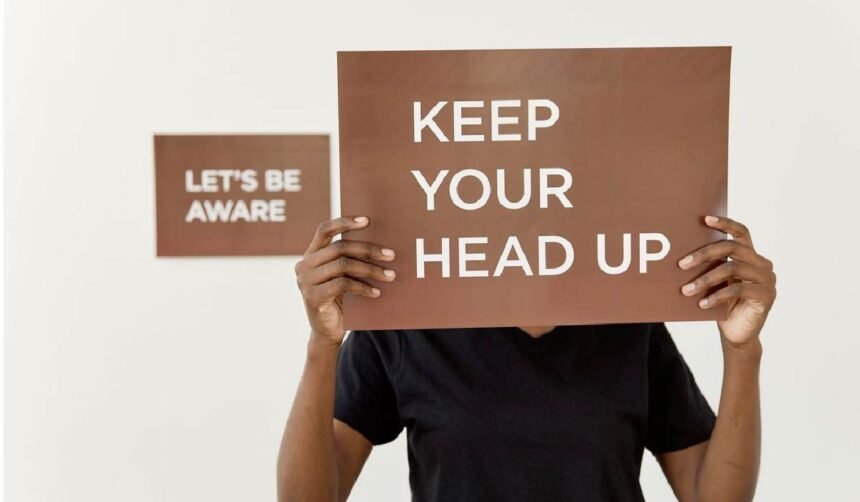
Most people recognise the moment after a reaction they regret. The sharp reply, the impulsive decision, the familiar habit that repeats despite better intentions. That gap between intention and action is where change begins, and self-awareness can help break unhealthy behavioral cycles by turning unconscious patterns into visible, manageable choices.
Why Do Unhealthy Behavioural Cycles Repeat?
Unhealthy cycles repeat because they operate below conscious awareness. When behaviour becomes automatic, it bypasses deliberate thinking and relies on learned emotional responses.

Alt: a couple having an argument
Caption: Automatic behaviour skips deliberate thinking and relies on learned emotional responses.
These patterns often develop through repetition. A stressful trigger leads to a predictable reaction, which then reinforces itself through temporary relief or reward. Over time, the brain prefers the familiar, even when it is harmful.
What Keeps These Patterns in Place?
Habit loops persist because they offer short-term comfort. The brain prioritises immediate relief over long-term wellbeing.
Common reinforcing factors include:
- Emotional triggers that activate automatic responses
- Environmental cues that signal a repeated behaviour
- Temporary rewards that reinforce the habit loop
- Lack of reflection after the behaviour occurs
Without awareness, these cycles feel inevitable rather than changeable.
How Does Self-Awareness Disrupt The Pattern?
Self-awareness interrupts automatic behaviour by introducing a pause. That pause creates space between stimulus and response, allowing for a different choice.
When individuals observe their thoughts and reactions in real time, they reduce the power of impulse. Instead of reacting, they begin responding with intention.
In many cases, developing this level of awareness is supported by structured approaches such as therapy for depression and life challenges, which help individuals recognise patterns they may otherwise overlook.
What Changes When You Become More Self-Aware?
The shift is subtle but powerful. Awareness transforms behaviour from automatic to deliberate.
Key changes often include:
- Recognising triggers before they escalate
- Identifying emotional patterns with clarity
- Questioning impulses instead of acting on them
- Choosing responses aligned with long-term goals
This is why self-awareness can help break unhealthy behavioral cycles. It replaces unconscious repetition with conscious decision-making.
How Do Dopamine And Compulsive Behaviour Influence Habits?
Dopamine drives repetition by rewarding behaviour that feels good in the moment. Even harmful habits can feel rewarding because of this chemical reinforcement.
The connection between dopamine and compulsive behavior explains why certain patterns feel difficult to break. The brain learns to associate specific actions with reward, even when the consequences are negative.
Why Do Some Habits Feel Addictive?
The answer lies in anticipation. The brain releases dopamine not only after the behaviour, but also in expectation of it.
This creates a loop where:
- A trigger activates anticipation
- The behaviour delivers a reward
- The brain reinforces the pattern
- The cycle becomes harder to interrupt
Awareness weakens this loop by exposing the mechanism behind it. Once recognised, the pattern becomes less automatic and more manageable.

Alt: Silhouette of a man smoking a cigarette, representing how self-awareness can help break unhealthy behavioral cycles by recognising harmful habits
Caption: The brain releases dopamine not just after the behaviour, but also in anticipation of it.
What Practical Steps Improve Self-Awareness?
Self-awareness develops through consistent observation rather than sudden insight. Small, repeated practices build clarity over time.
Effective approaches include:
- Daily reflection: reviewing emotional responses and behaviours
- Journalling patterns: writing down triggers and reactions
- Mindful pauses: stopping briefly before responding
- External feedback: listening to how others perceive your behaviour
These practices help individuals understand the connection between thoughts, emotions, and actions.
How Can Tools Support This Process?
Tools provide structure and consistency. They make awareness easier to maintain in daily life.
For example, a mental wellness app can track mood patterns, prompt reflection, and highlight recurring behaviours. Digital tools reduce the effort required to stay consistent, which increases long-term success.
Can Self-Awareness Replace Professional Support?
Self-awareness is powerful, but it is not always sufficient on its own. Some patterns are deeply rooted and require guided support.
Professional help offers a perspective that is difficult to achieve alone. Structured therapeutic approaches provide tools, accountability, and deeper insight into behavioural patterns.
When Should You Seek Additional Help?
External support becomes important when patterns feel overwhelming or resistant to change.
Signs that support may be needed include:
- Repeated behaviours despite a strong intention to change
- Emotional responses that feel disproportionate or uncontrollable
- Persistent low mood or lack of motivation
- Difficulty identifying triggers independently
Combining self-awareness with professional guidance often produces the most effective results.
How Long Does It Take To Break A Behavioural Cycle?
Change does not happen instantly. Breaking a behavioural cycle requires repetition of new responses until they become familiar.
The timeline varies depending on the individual and the habit. Some changes occur within weeks, while others take months of consistent effort.
What Makes Change Sustainable?
Sustainability depends on replacing, not just removing, behaviours. Eliminating a habit without introducing an alternative often leads to relapse.
Effective change includes:
- Replacing negative responses with healthier actions
- Reinforcing new behaviours through repetition
- Tracking progress to maintain motivation
- Accepting setbacks as part of the process
Consistency matters more than speed. Progress builds gradually, but it becomes more stable over time.

Alt: Never give up written on a black board
Caption: Self-awareness can help break unhealthy behavioral cycles by turning automatic reactions into intentional choices.
What Does Long-Term Self-Awareness Look Like?
Long-term self-awareness becomes a habit in itself. It shifts from effortful practice to natural observation.
People with strong self-awareness tend to:
- Recognise emotional changes early
- Adjust behaviour before escalation
- Reflect without judgement
- Maintain alignment with personal values
This level of awareness reduces the likelihood of falling back into old patterns.
A More Conscious Way Forward
Change begins with recognition, not perfection. Patterns lose their power when they are seen clearly and consistently. Over time, self-awareness can help break unhealthy behavioral cycles by turning automatic reactions into intentional choices. The process is gradual, but each moment of awareness creates an opportunity to respond differently. The goal is not to eliminate every negative habit overnight. The goal is to understand them well enough to choose something better.
Meta: Self-awareness can help break unhealthy behavioral cycles and turn habits into intentional choices. Learn how to take control.
Keyword: break unhealthy behavioral cycles
References: https://www.hopkinsmedicine.org/health/conditions-and-diseases/dysthymia
Images:
https://www.pexels.com/photo/person-holding-a-signboard-8385117/
https://www.pexels.com/photo/a-man-and-woman-arguing-each-other-7640479/
https://www.pexels.com/photo/a-motivational-phrase-in-a-frame-9169969/
https://www.pexels.com/photo/silhouette-of-a-man-smoking-a-cigarette-19211894/