



Introduction
The word Fascisterne continues to appear in news headlines, political debates, documentaries, and academic discussions, which is why many people search for it online today. In recent years, there has been a growing public interest in political history, especially in understanding how extremist ideologies rise during times of crisis.
People often encounter the term in media conversations about nationalism, authoritarian leadership, and threats to democracy, and they want to understand what it truly means rather than relying on emotional or exaggerated uses of the word.
There is also confusion between fascism, nationalism, and authoritarianism, which leads readers to look for clear explanations. Understanding Fascisterne is important in modern society because it helps people recognize historical patterns, protect democratic values, and avoid repeating mistakes from the past.
In this article, we will explore the meaning, historical origins, ideology, spread across Europe, role in global conflict, and modern relevance of Fascisterne in a detailed and informative way.
What Does Fascisterne Mean?
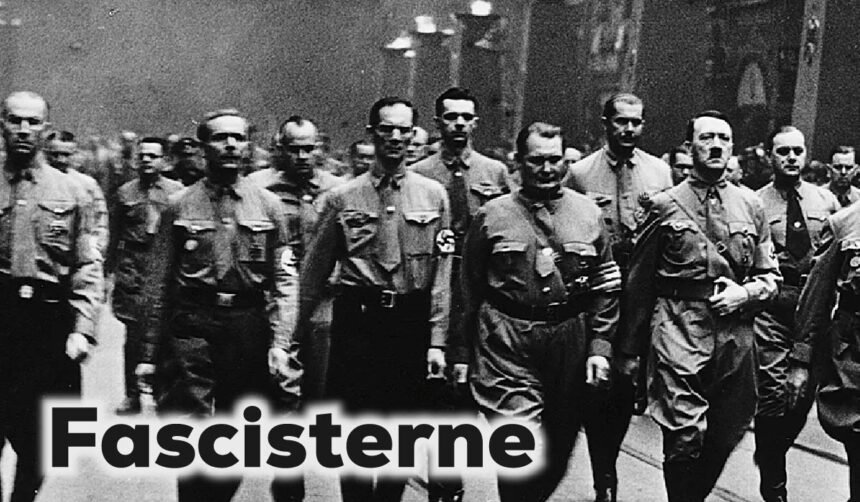
Fascisterne is a Danish word meaning “the fascists.” It refers to individuals or political groups who support fascist ideology—an authoritarian system centered on extreme nationalism, centralized leadership, suppression of democracy, and strict state control.
The term comes from the Danish language and is used in historical and political contexts to describe supporters of fascism, particularly those active in Europe during the early twentieth century. In academic discussion, Fascisterne refers specifically to movements that followed the political ideas developed in Italy under fascist leadership and later adapted in other European countries.
It is important to understand that the word has a precise historical definition and should not be used loosely as a general insult in political arguments.
While the term may appear in modern debates, historians emphasize that Fascisterne describes a specific ideology connected to authoritarian governance, nationalism, propaganda, and anti-democratic systems that shaped European history before and during World War II.
The Origin of Fascism – Where It Began
Fascism began in Europe in the aftermath of the devastating conflict known as World War I, which left many nations economically broken and politically unstable. Countries faced massive unemployment, inflation, public anger, and fear of social collapse.
In this environment of uncertainty and frustration, extremist movements promised order, national strength, and decisive leadership. Fascism emerged as one of those movements, presenting itself as a solution to chaos and division by advocating unity under a powerful central authority.
The Italian Roots of Fascism
The word fascism comes from the Italian term fascio, meaning a bundle of sticks tied together, symbolizing strength through unity. This symbol was adopted by the movement led by Benito Mussolini, who founded the Fascist Party in Italy.
Mussolini capitalized on post-war dissatisfaction and fear of communist revolutions, presenting himself as a strong leader capable of restoring national pride and stability. Through speeches, organized rallies, and paramilitary intimidation, he gained significant support among citizens who felt betrayed by weak governments. His rise marked the beginning of fascist ideology as a political force in Europe.
The March on Rome (1922)
In 1922, Mussolini organized the March on Rome, a political demonstration designed to pressure the Italian government into handing him power. Facing instability and threats of violence from fascist supporters, the king appointed Mussolini as prime minister.
Over time, Mussolini dismantled democratic institutions, weakened opposition parties, censored the press, and established a dictatorship. Parliamentary resistance collapsed as political freedoms disappeared, marking Italy’s transformation into a fascist state and setting a model for other movements that would follow.
The Spread of Fascisterne Across Europe
Fascist ideology did not remain limited to Italy. Economic depression, political anger, and fear of communism allowed similar movements to rise across Europe during the 1920s and 1930s. Fascisterne became associated with broader extremist trends that rejected democracy and promoted authoritarian rule.
Germany and the Rise of Nazism
In Germany, Adolf Hitler rose to power in 1933, leading the Nazi Party. While Nazism had unique racial elements centered on antisemitism and ideas of racial hierarchy, it shared many core features with fascism, including dictatorship, propaganda, suppression of opposition, and aggressive nationalism.
Hitler used economic crisis and resentment over the Treaty of Versailles to build support, employing propaganda and charismatic speeches to mobilize millions. The Nazi regime became the most destructive example of fascist-style governance in European history.
Fascist Movements in Scandinavia
Scandinavia also experienced fascist political movements. In Denmark, the National Socialist Workers’ Party of Denmark operated under the leadership of Frits Clausen. Although influenced by German Nazism, Danish fascists never gained broad national support. Most Danish citizens remained skeptical of extremist ideologies, and fascist parties struggled to achieve lasting political influence.
Fascism in Spain and Other Nations
Spain saw the rise of authoritarian leadership under Francisco Franco following a civil war. Fascist-style governments also appeared in Hungary and Romania, reflecting a broader European pattern where nationalist and authoritarian movements gained traction during periods of crisis. While each country’s version differed in detail, the underlying emphasis on strong leadership and suppression of dissent remained consistent.
Historical Context – Why Fascism Grew After World War I
The aftermath of World War I created ideal conditions for extremist ideologies. Many European economies collapsed, and hyperinflation destroyed savings in countries like Germany. Unemployment left millions struggling to survive. Political systems appeared weak and divided, unable to solve urgent problems.
Fear of communist revolutions spreading from Russia heightened anxiety among business leaders and middle-class citizens. Fascist leaders exploited these fears by promising stability, national pride, and swift solutions. Through emotional manipulation and simple slogans, they convinced people that democracy was ineffective and that only authoritarian rule could restore order.
Core Ideology of Fascisterne
Extreme Nationalism
Extreme nationalism sits at the heart of Fascisterne ideology, promoting the idea that the nation is superior and must be protected at all costs. Individuals are expected to place loyalty to the state above personal freedom. This belief often creates an “us versus them” mentality, where minorities and outsiders are blamed for national problems and portrayed as threats to cultural purity.
Authoritarian Leadership
Fascisterne support the principle of a single strong leader who embodies the will of the nation. Political pluralism and opposition parties are viewed as signs of weakness. Personality cults develop around leaders, presenting them as heroic figures beyond criticism.
Anti-Democratic Beliefs
Fascism rejects parliamentary systems, arguing that debate and compromise slow down progress. Courts and free media are weakened or controlled. Leaders claim democracy is inefficient and incapable of addressing national crises.
Militarism and Discipline
Militarism is glorified, and paramilitary groups such as the Blackshirts in Italy and the SA and SS in Germany enforce discipline and intimidate opponents. Youth programs promote obedience and loyalty from an early age.
Racism and Exclusion
Racist narratives and social hierarchies often define fascist systems, leading to discrimination, persecution, and dehumanization of minorities. Economic problems are blamed on scapegoated groups, deepening social division.
Fascisterne and Propaganda
Propaganda played a central role in maintaining fascist power. Governments controlled radio broadcasts, newspapers, posters, school textbooks, films, and art. Messages were repeated frequently to shape public perception, often appealing to fear, pride, and unity. Censorship removed opposing viewpoints, ensuring that citizens heard only state-approved narratives. Repetition psychology strengthened emotional attachment to the regime while discouraging critical thinking.
Fascisterne and Totalitarian Power
Fascisterne regimes evolved into totalitarian systems, where the state sought control over every aspect of life. Surveillance states monitored citizens, secret police arrested opponents, and censorship laws eliminated dissent. Political parties were banned, and public disagreement was punished. Authoritarian systems centralize power, but totalitarian systems go further by attempting to control culture, education, and private life entirely.
Fascisterne and World War II
World War II marked the peak of fascist aggression. Expansionist policies and military alliances formed the Axis powers. Territorial invasions, military aggression, and systematic human rights atrocities devastated Europe and beyond. The war ultimately led to the collapse of fascist regimes, but only after immense destruction and loss of life.
Fascisterne in Denmark During German Occupation
Germany invaded Denmark in 1940, initiating occupation during World War II. Danish resistance movements formed, and many citizens worked to protect Jewish communities from persecution. Fascist influence declined sharply after the war as Denmark restored democratic governance.
The Fall of Fascist Regimes
Mussolini was captured and executed in 1945. Hitler died as Germany faced defeat. The collapse of Axis powers ended fascist control across Europe. Countries began rebuilding democratic institutions and recovering from war.
The Global Response After Fascism
Formation of the United Nations
After the war, the United Nations was established to promote peace and prevent future conflicts through international cooperation.
Universal Declaration of Human Rights
The Universal Declaration of Human Rights was adopted to protect individual freedoms and prevent authoritarian abuses, reinforcing democratic values worldwide.
Fascisterne in Modern Political Debate
Today, the term Fascisterne appears in political discussions, sometimes accurately and sometimes loosely. Scholars caution against overusing the term, emphasizing its specific historical meaning. However, awareness of warning signs remains important.
Warning Signs Associated With Fascist Movements
- Attacks on democratic institutions
- Censorship of media
- Extreme nationalism
- Political violence
- Worship of a single leader
- Blaming minorities
- Claims of national decline requiring strongman rule
Why Education About Fascisterne Matters
Education preserves historical memory and strengthens critical thinking. Free press, pluralism, and minority protections guard against authoritarian drift. Understanding Fascisterne helps societies remain vigilant.
Conclusion
Fascisterne represents one of the most consequential political movements in modern history. Its rise demonstrates how fear, economic crisis, and manipulation can weaken democratic systems. The lessons of fascism remind us that unchecked power endangers freedom and human dignity. By studying Fascisterne carefully, societies can better protect democratic institutions and ensure that such destructive ideologies do not return.
Read More: