



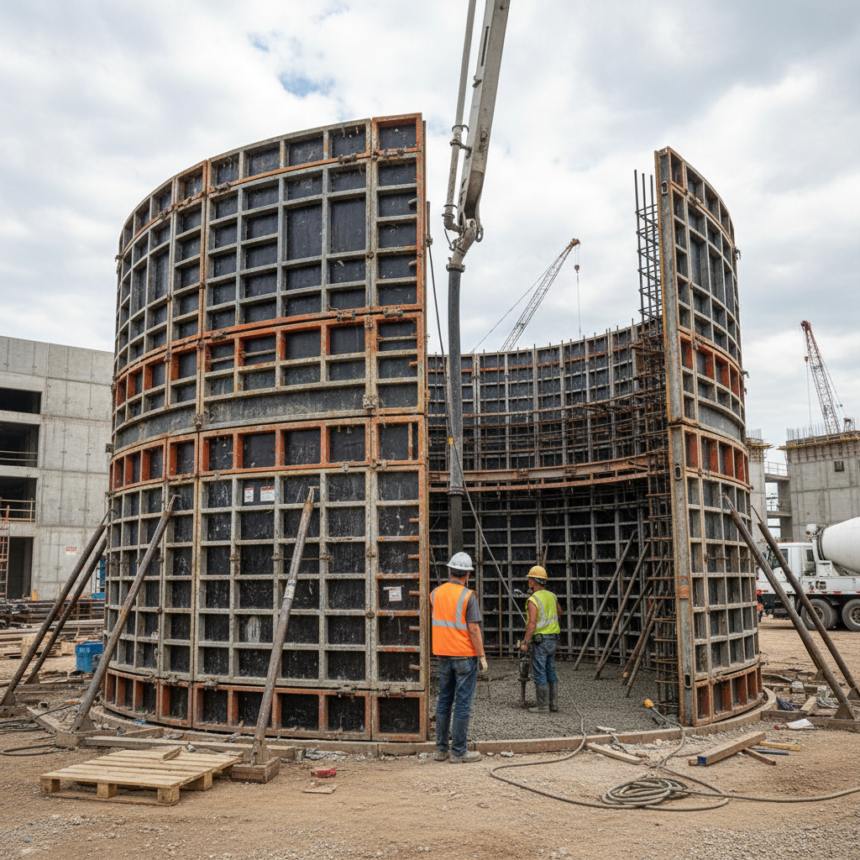
Understanding Circular Wall Formwork for Efficient Construction
In the realm of modern construction, efficiency and precision are paramount. Circular wall formwork has emerged as a vital solution for constructing curved walls and structures with exceptional accuracy and speed. This article delves into the intricacies of circular wall formwork, its applications, advantages, and considerations for successful implementation. Whether you’re involved in building curved architectural features, water tanks, or specialized industrial structures, understanding this technology is crucial. Constrframe provides cutting-edge circular formwork systems tailored to diverse project needs.
What is Circular Wall Formwork?
Circular wall formwork is a modular system designed to create curved concrete walls. Unlike traditional straight formwork, it utilizes pre-fabricated segments or panels that are assembled to form the desired radius. These systems often incorporate adjustable elements, allowing for flexibility in wall curvature and diameter. The formwork is typically constructed from steel, aluminum, or a combination of both, ensuring strength and durability. This method allows for complex designs to be realised with ease and precision, reducing the time and labor involved in building curved structures.
Key Benefits: Enhanced construction speed, precision in curved designs, reduced labor costs, and increased design flexibility.
Applications of Circular Wall Formwork
The applications of circular wall formwork are diverse, spanning across various industries and project types. Common uses include: constructing water tanks, silos, tunnels, curved architectural walls, bridge supports, and even specialized industrial structures. Its adaptability makes it suitable for both large-scale infrastructure projects and smaller, custom-designed buildings. The ability to create seamless, curved surfaces significantly enhances the aesthetic appeal and structural integrity of the final product. Constrframe’s systems are engineered for a wide range of these applications.
Common Applications:
- Water Tanks and Reservoirs
- Silos and Storage Facilities
- Curved Architectural Walls
- Tunnel Linings
Circular Wall Formwork: Types and Materials
Circular wall formwork systems are categorized by their construction and application. Panel systems use pre-fabricated, modular panels that are connected to create the desired curvature. Segmental systems employ individual segments that are assembled on-site, offering greater flexibility for complex designs. Regarding materials, steel formwork provides high strength and durability, making it suitable for large-scale projects. Aluminum formwork is lighter and easier to handle, ideal for smaller or more intricate applications. Plastic formwork is becoming increasingly popular for its cost-effectiveness and ease of use, although it may have lower load-bearing capacity.
| Formwork Type | Materials | Typical Applications |
| Panel Systems | Steel, Aluminum | Large Diameter Tanks, Silos |
| Segmental Systems | Steel, Aluminum, Plastic | Curved Walls, Tunnels |
| Climbing Systems | Steel, Aluminum | High-Rise Curved Structures |
Advantages of Using Circular Wall Formwork
The benefits of implementing circular wall formwork are substantial. First, it drastically reduces construction time compared to traditional methods, as the prefabricated panels or segments are quickly assembled. Second, it ensures a high degree of accuracy and consistency, resulting in smooth, uniform curved surfaces. Third, it minimizes labor costs, as it requires fewer skilled workers for assembly and disassembly. Fourth, it offers greater design flexibility, enabling architects and engineers to create complex and aesthetically pleasing structures. Finally, robust systems like those offered by Constrframe contribute to improved site safety by reducing the need for extensive on-site fabrication.
Considerations and Best Practices
Successfully implementing circular wall formwork requires careful planning and attention to detail. Proper site preparation, including accurate leveling and ground support, is crucial. It’s important to select a formwork system that is compatible with the concrete mix design and project specifications. Thorough inspection and maintenance of the formwork components are essential to ensure structural integrity and prevent potential failures. Trained personnel should be responsible for the assembly, disassembly, and operation of the formwork system. Finally, adherence to safety regulations and best practices is paramount throughout the entire process.
Conclusion: Streamlining Curved Construction with Circular Formwork
Circular wall formwork represents a significant advancement in construction technology, enabling efficient, accurate, and cost-effective building of curved structures. By embracing this innovative approach, contractors and developers can streamline their projects, enhance design possibilities, and deliver high-quality results. Constrframe stands as a trusted partner, providing comprehensive circular formwork solutions to meet the evolving demands of the construction industry.