



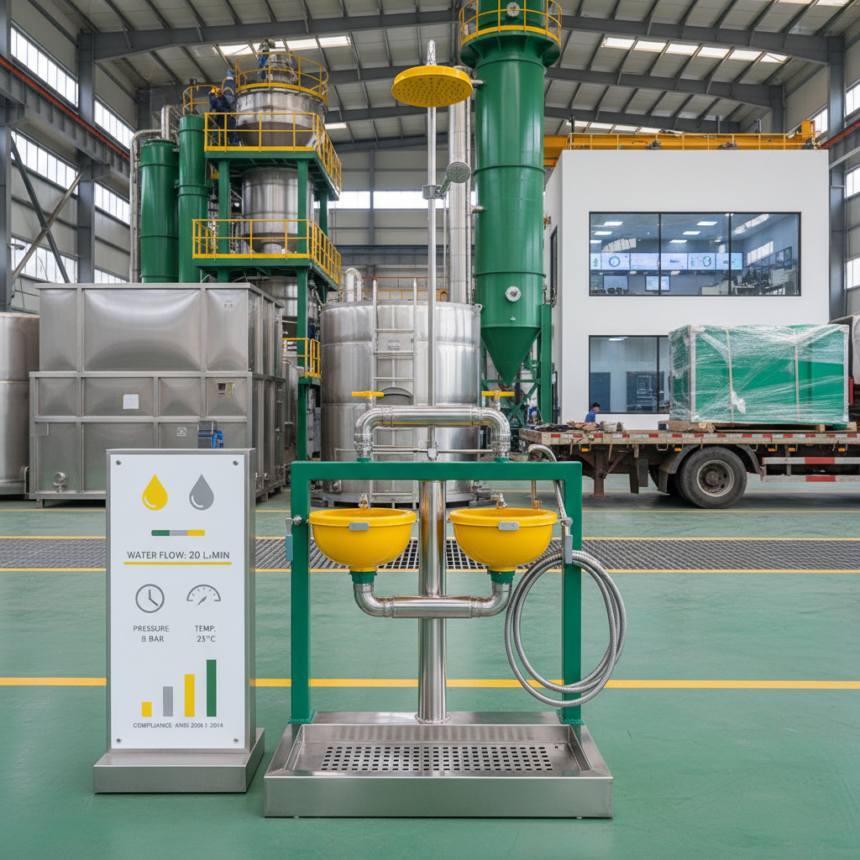
In any industrial environment where hazardous chemicals, corrosive substances, or volatile particles are handled, the presence of a high-quality eye wash shower station is not merely a regulatory requirement—it is a critical lifeline. The first few seconds following a chemical splash are the most decisive in determining whether an incident results in a minor irritation or permanent vision loss and severe skin burns. By providing immediate, high-volume irrigation, these stations neutralize contaminants and flush them away from sensitive tissues.
Globally, workplace safety standards have evolved to treat emergency decontamination as a foundational element of Risk Management. From pharmaceutical labs to heavy-duty manufacturing plants, the strategic placement of an eye wash shower station ensures that employees have access to life-saving water within a ten-second walking distance. This rapid response capability significantly reduces the severity of industrial accidents and lowers the long-term medical liabilities for organizations.
Understanding the nuances of different decontamination systems—ranging from combination units to portable stations—allows safety officers to tailor their protective infrastructure to specific hazard profiles. Whether dealing with caustic acids in a battery plant or organic solvents in a research facility, the right configuration of an eye wash shower station provides the peace of mind necessary for technicians to operate efficiently while knowing that immediate relief is always within reach.
The global industrial landscape is governed by strict safety protocols, most notably the ANSI/ISEA Z358.1 standard, which dictates the performance and placement of every eye wash shower station. Across North America, Europe, and Asia, these guidelines ensure that water flow is sufficient to flush contaminants for at least 15 minutes without interruption. Statistics from global occupational health organizations indicate that a significant percentage of ocular injuries can be mitigated if irrigation begins within 10 seconds of exposure.
Failure to adhere to these standards often leads to severe regulatory penalties and, more importantly, avoidable tragedies. The challenge for many facilities lies in the diverse nature of their hazards; a laboratory may require a delicate eye-wash flow, while a chemical storage area needs a high-volume deluge shower. Balancing these needs requires a comprehensive understanding of how an eye wash shower station integrates into the overall facility safety map to minimize travel time during an emergency.
Defining the Modern Eye Wash Shower Station
At its most basic level, an eye wash shower station is a specialized plumbing fixture designed to provide an immediate flow of tempered water to the eyes and body. Unlike standard faucets, these stations are engineered for rapid activation—typically requiring a single motion—and provide a hands-free flow that allows the victim to focus entirely on rinsing the affected area without struggling with valves.
In the context of modern industry, these stations have evolved from simple pipes into sophisticated safety systems. They are now often combined into “combination units” that offer both a drench shower for the body and a dedicated eye/face wash basin. This integration is crucial in environments where splashes are likely to affect both the face and the torso simultaneously, ensuring a holistic decontamination process.
Beyond the hardware, the concept of the eye wash shower station encompasses the entire safety ecosystem, including signage, accessibility pathways, and regular maintenance schedules. It represents a commitment to “Human-Centric Safety,” where the equipment is designed to be intuitive and effective even when the user is in a state of panic or blinded by a chemical agent.
Core Components and Engineering Factors
Durability is the cornerstone of any eye wash shower station. Because these units are often installed in corrosive environments, the use of high-grade stainless steel or specialized epoxy coatings is essential to prevent rust and degradation. A station that fails during an emergency due to corrosion is not just a mechanical failure, but a critical safety breach.
Water temperature control is another vital factor; the “Tepid Water” requirement ensures that the eye wash shower station delivers water between 60°F and 100°F (16°C to 38°C). Water that is too cold can cause thermal shock or lead the user to stop rinsing prematurely, while water that is too hot can exacerbate chemical burns or increase the absorption rate of certain toxins.
Finally, the fluid dynamics of the spray pattern are meticulously engineered. A professional eye wash shower station must provide a flow that is powerful enough to clear debris but gentle enough not to damage the corneal tissue. This balance is achieved through precision-engineered nozzles that create a laminar flow, ensuring consistent coverage of both eyes simultaneously.
Global Applications and Industrial Use Cases
The deployment of an eye wash shower station varies significantly across different sectors. In the pharmaceutical and biotech industries, these stations are often integrated into clean-room environments using non-corrosive polymers to prevent contamination. In these settings, the focus is on precise, low-pressure eye irrigation to treat exposures to delicate biological agents or concentrated acids.
Conversely, in heavy industrial zones such as mining or oil and gas refineries, the eye wash shower station must be ruggedized to withstand extreme weather and physical impact. In remote drilling sites, portable or self-contained stations are frequently used where permanent plumbing is unavailable, ensuring that safety is not compromised by geographic limitations.
Efficiency Comparison of Eye Wash Shower Station Types
Strategic Advantages and Long-Term Value
Investing in a premium eye wash shower station yields tangible financial benefits by drastically reducing workers’ compensation claims and insurance premiums. When a facility can demonstrate a rigorous adherence to safety standards through the installation of high-quality decontamination hardware, it builds a culture of trust and reliability. Employees who feel safe are more productive and less prone to anxiety-induced errors.
Beyond the financial logic, there is a profound ethical dimension. The provision of a reliable eye wash shower station is an act of dignity and care for the workforce. It acknowledges the inherent risks of industrial labor and provides a concrete solution to protect the most vital sense: sight. This commitment to safety enhances the brand reputation of a company, making it an employer of choice in a competitive global talent market.
Future Trends in Safety Station Innovation
The next generation of the eye wash shower station is moving toward “Smart Safety.” We are seeing the integration of IoT sensors that can alert maintenance teams in real-time when a station has been activated or when water pressure drops below the required threshold. This eliminates the reliance on manual weekly checks and ensures that the station is always ready for a crisis.
Sustainability is also driving innovation. New water-recycling systems for testing purposes allow facilities to perform the mandatory weekly flushes without wasting hundreds of gallons of potable water. By integrating closed-loop filtration, an eye wash shower station can remain compliant with safety laws while aligning with corporate green energy goals.
Furthermore, advancements in materials science are introducing antimicrobial coatings and ultra-corrosion-resistant alloys that extend the lifespan of these stations in the harshest chemical environments. These innovations reduce the total cost of ownership and ensure that the eye wash shower station remains functional for decades, regardless of the atmospheric contaminants present.
Overcoming Implementation Challenges
One of the most common challenges in deploying an eye wash shower station is the limitation of existing plumbing infrastructure in older buildings. Retrofitting a facility to provide tepid water and sufficient flow rates can be costly and disruptive. However, the solution often lies in the use of high-capacity self-contained units or the strategic installation of point-of-use water heaters.
Another hurdle is “complacency drift,” where stations become obstructed by pallets, machinery, or waste over time. To solve this, safety managers are implementing visual management systems, such as painted “Keep Clear” zones and high-visibility glow-in-the-dark signage. Ensuring that the path to the eye wash shower station is always unobstructed is just as important as the hardware itself.
Lastly, improper training can render even the best equipment useless. Many workers are intimidated by the high pressure of a drench shower or are unsure how to hold their eyelids open during an eye wash. Comprehensive, hands-on training sessions and simulated emergency drills are the only way to ensure that when the moment of crisis arrives, the use of the eye wash shower station is instinctive and effective.
Comparison of Eye Wash Shower Station Specifications by Hazard Level
| Hazard Level | Recommended Station Type | Min. Flow Rate (GPM) | Maintenance Frequency |
| Low (Mild Irritants) | Wall-Mounted Eye Wash | 0.4 GPM | Weekly Flush |
| Moderate (Acids/Bases) | Combination Station | 20 GPM (Shower) | Weekly Flush |
| High (Severe Corrosives) | Stainless Steel Combination | 20+ GPM (Shower) | Daily Inspection |
| Remote (Field Work) | Portable Gravity-Fed Unit | 0.4 GPM | Monthly Fluid Change |
| Specialized (Clean Room) | Polypropylene Station | 0.4 GPM | Bi-Weekly Flush |
| Extreme (Toxic Gas) | High-Volume Deluge System | 30+ GPM | Weekly Full Test |
FAQS
How often should an eye wash shower station be tested?
According to ANSI Z358.1 standards, an eye wash shower station must be activated weekly to flush the piping, clear any sediment, and ensure the water is flowing correctly. A comprehensive annual inspection is also required to verify that the flow rate and water temperature meet safety specifications.
Can a portable unit replace a plumbed eye wash shower station?
What is the “tepid water” requirement for these stations?
Where is the best place to install an eye wash shower station?
What materials are best for stations in highly corrosive environments?
How do I ensure employees know how to use the station?
Conclusion
The implementation of a professional eye wash shower station is a fundamental pillar of industrial safety, bridging the gap between a workplace accident and a successful recovery. By combining durable engineering, adherence to global ANSI standards, and strategic placement, organizations can effectively mitigate the risks associated with hazardous material handling. From the precision of the eye-wash nozzles to the volume of the drench shower, every component plays a vital role in safeguarding the health and vision of the workforce.
Looking forward, the integration of smart monitoring and sustainable water management will further refine how we approach emergency decontamination. As industries evolve, the commitment to safety must also evolve, moving from simple compliance to a proactive culture of protection. We encourage all facility managers to audit their current safety infrastructure and ensure that their eye wash shower station is not only present but fully operational and accessible. Visit our website for professional safety solutions: www.rwdlabsafety.com
Visit: EMS International Tracking