



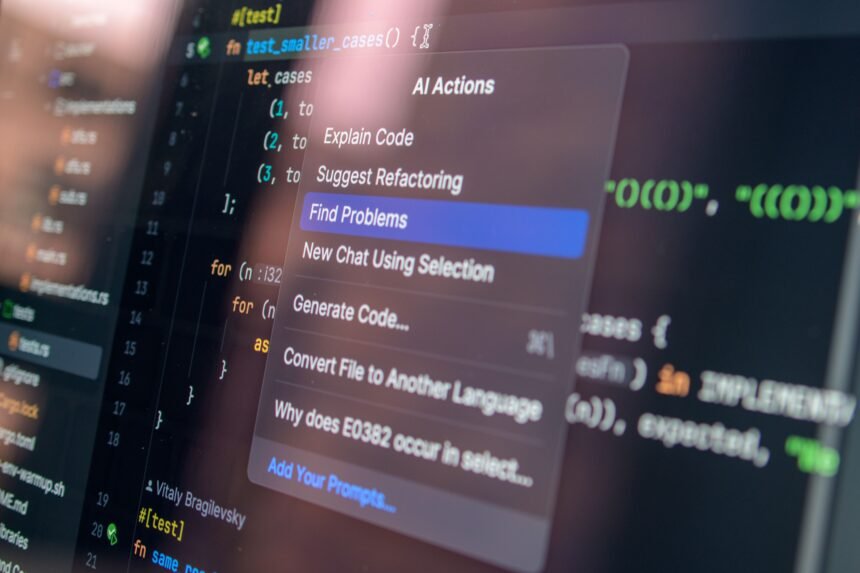
Software development has entered a new era. AI-powered coding assistants can generate code in seconds, automate repetitive tasks, and accelerate feature delivery. However, faster code generation introduces a new challenge: ensuring the generated software actually solves the right problem.
Acceptance Test-Driven Development (ATDD) offers an effective solution. Instead of beginning with implementation, ATDD starts with clearly defining how the software should behave from the user’s perspective. These acceptance criteria become executable tests that guide development and verify that business requirements have been met. When combined with AI, ATDD transforms into an even more powerful methodology where AI helps implement software while acceptance tests serve as the source of truth.
Rather than replacing developers or testers, AI enhances collaboration by turning well-defined requirements into working software that is continuously validated against agreed-upon business expectations.
What Is Acceptance Test-Driven Development?
Acceptance Test-Driven Development is a collaborative software development practice in which business stakeholders, testers, and developers define acceptance criteria before implementation begins. These criteria describe how the application should behave from the end user’s perspective and become executable acceptance tests.
Unlike traditional development, where testing often occurs after coding is complete, ATDD shifts validation to the beginning of the development process. Everyone agrees on what success looks like before a single line of production code is written.
A typical ATDD workflow includes:
- Define a user story.
- Collaboratively establish acceptance criteria.
- Convert those criteria into executable acceptance tests.
- Develop the application until all acceptance tests pass.
- Run the tests continuously as regression tests throughout the software lifecycle.
This process minimizes misunderstandings and creates a shared understanding across technical and non-technical team members.
Traditional ATDD Workflow
A common ATDD cycle looks like this:
Business Requirement
As a customer, I want to reset my password so I can regain access to my account.
Acceptance Criteria
- The user can request a password reset.
- A reset email is sent to the registered address.
- The reset link expires after 30 minutes.
- The user can successfully create a new password.
- Invalid or expired links display an appropriate error.
These acceptance criteria become automated tests before implementation begins. Developers then build the feature until every test passes.
The acceptance tests remain part of the regression suite, ensuring future changes don’t break existing functionality.
Why AI Makes ATDD Even More Valuable
AI changes software development by dramatically reducing the effort required to produce implementation code. Modern language models can generate APIs, UI components, business logic, database queries, and even documentation.
However, AI has an important limitation:
It generates what it thinks you want.
If requirements are ambiguous, AI often produces software that appears correct but doesn’t satisfy the actual business need.
ATDD addresses this problem by providing AI with precise behavioral specifications instead of vague prompts.
Instead of asking an AI:
Build a password reset feature.
ATDD provides concrete expectations:
- A reset email is sent.
- Links expire after 30 minutes.
- Invalid tokens display an error.
- Users can log in with the new password.
These executable specifications significantly reduce ambiguity and provide objective validation for AI-generated code.
Research has also shown that providing AI systems with tests or acceptance scenarios improves code generation quality and helps ensure implementations better match intended requirements.
ATDD + AI Workflow
An AI-assisted ATDD workflow often looks like this:
Step 1: Define the User Story
Business stakeholders describe the desired functionality.
Step 2: Write Acceptance Tests
Testers and product owners create executable scenarios describing expected behavior.
For example:
Given a registered user exists
When they request a password reset
Then a reset email is sent
Step 3: AI Generates Implementation
Instead of manually implementing every requirement, AI uses the acceptance tests as specifications to generate the necessary application code.
Step 4: Execute Acceptance Tests
The generated software is validated automatically.
Passing tests confirms that the implementation satisfies business requirements.
Failing tests provides immediate feedback for refinement.
Step 5: Continuous Regression Testing
The same acceptance tests become part of the CI/CD pipeline, ensuring future AI-generated changes don’t introduce regressions.
Benefits of Combining AI with ATDD
Better Requirement Accuracy
Acceptance tests define exactly what success looks like.
AI no longer has to infer business intent from incomplete prompts.
Reduced Hallucinations
AI-generated code is validated against measurable outcomes rather than assumed correctness.
Instead of trusting the generated code, teams trust the tests.
Faster Feature Development
Once acceptance criteria are established, AI can generate substantial portions of the implementation while developers focus on architecture, edge cases, and review.
Stronger Collaboration
ATDD naturally brings together product owners, QA engineers, developers, and business stakeholders.
AI becomes another contributor rather than replacing existing roles.
Living Documentation
Acceptance tests remain understandable months or years later.
They document expected system behavior far better than implementation details.
Best Practices for AI-Assisted ATDD
Write Tests Before Code
Acceptance tests should always exist before implementation begins.
Avoid generating tests after the code has already been written, as they may simply reflect the implementation instead of validating the intended behavior.
Focus on Business Outcomes
Acceptance tests should describe what users experience, not internal implementation details.
Good:
- Customer receives a confirmation email.
Poor:
- EmailService.send() is called.
Keep Tests Readable
Business stakeholders should understand acceptance tests without programming knowledge.
Clear language improves collaboration and reduces misunderstandings.
Review AI Output
AI accelerates implementation, but human review remains essential.
Engineers should evaluate:
- Security
- Performance
- Maintainability
- Compliance
- Architectural consistency
Automate Regression Testing
Acceptance tests become long-term assets.
Every future release benefits from automatically verifying existing functionality.
Challenges
Although AI significantly improves development speed, teams should remain aware of several challenges.
Poor Acceptance Criteria
AI cannot compensate for vague or incomplete requirements.
Clear specifications remain essential.
Overreliance on AI
Generated code should always be reviewed.
Passing tests confirms behavior, but they don’t guarantee optimal design or maintainability.
Maintaining Acceptance Tests
Business requirements evolve.
Acceptance tests should evolve alongside the product to remain valuable.
Example AI-Driven ATDD Workflow
Imagine an online banking application introducing scheduled transfers.
Instead of asking AI to “build scheduled transfers,” the team first defines acceptance scenarios covering successful scheduling, recurring transfers, insufficient funds, cancellation, and notification behavior. Once these executable specifications are in place, AI generates the implementation until every acceptance test passes. The tests then become part of the continuous regression suite, ensuring future changes preserve the expected customer experience.
This approach shifts the team’s focus from writing implementation details to defining correct behavior.
AI Tools Supporting ATDD
Several modern development platforms are beginning to support specification-first workflows. For example, testRigor offers codeCake, an AI-powered development platform that generates application code from executable behavioral specifications, allowing teams to define desired functionality through acceptance tests before implementation begins. This behavior-first approach aligns naturally with ATDD by using tests as the foundation for code generation rather than treating testing as a separate, post-development activity.
The Future of ATDD with AI
As AI becomes more capable of generating production-quality software, the role of acceptance testing becomes increasingly important.
Rather than replacing traditional software engineering practices, AI amplifies the value of well-defined requirements. Acceptance tests become executable specifications that guide AI toward correct implementations while providing objective validation of the results.
This shift changes the primary responsibility of development teams. Instead of spending most of their time writing implementation code, teams spend more time defining business behavior, validating outcomes, reviewing AI-generated changes, and improving product quality.
ATDD provides the structure that makes this possible.
Conclusion
Acceptance Test-Driven Development has always been about building the right software before building software correctly. AI strengthens this philosophy by allowing acceptance tests to guide implementation directly.
Instead of treating AI as an autonomous coding assistant, ATDD positions it as an implementation engine driven by executable business requirements. The result is faster delivery, improved collaboration, reduced ambiguity, and software that more consistently meets user expectations.
As AI-assisted development continues to evolve, organizations that combine clear acceptance criteria with automated validation will be better positioned to deliver reliable, maintainable, and customer-focused software.
If you’re interested in exploring how AI is reshaping software testing and development, NeuroBits AI offers practical insights into AI in QA, AI-assisted development, prompt engineering, automation, and emerging trends in artificial intelligence. Whether you’re a tester, developer, or engineering leader, it’s a valuable resource for staying current with the latest AI technologies and best practices.