



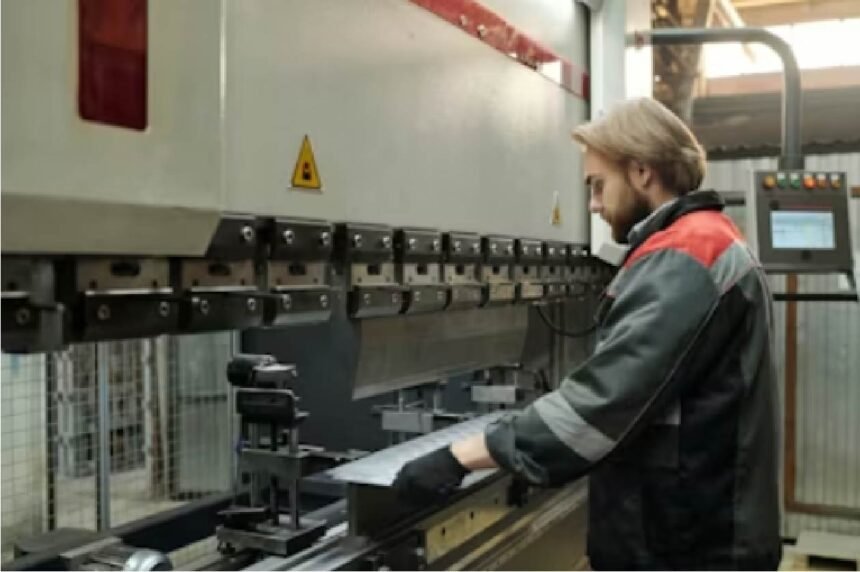
As the manager of a factory or warehouse, you are probably familiar with the following scenarios. An operator on the production line struggles to match a part number to a work order that has been printed and is now partially faded. He squints at the work order. He has to guess which part number matches the work order. Labels on the overhead storage racks are handwritten, and the labels are peeling and curled. Some of the numbers are smudged or missing. During the monthly inventory counting process, the numbers on the system do not match the actual numbers on the stock, and the team has to work overtime to verify hundreds of SKUs.
Where did this all go wrong? It occurs in the last meter of communication. Even with high quality ERP and WMS systems, once instructions hit the factory or warehouse floor, they are usually recorded on brittle, outdated paper. This inefficient communication is a disconnect between the digital and physical world, and most managers do not recognize the time and money it costs the business.
The technology has been around for a while, but The Electronic Shelf Label (ESL) is just now becoming a popular solution for industry. It is no longer just a way to label technology. In these contexts, the ESL serves as a key https://www.zhsunyco.com/fr/esl-wifi/.
What is an Industrial ESL? What is the Difference Between an ESL and a Retail Tag?
An industrial ESL is a digital display that is designed for heavy use. These are not the elegant and thin tags that you see at the supermarket. Industrial surroundings are tough: extreme temperatures, dust and liquid splashes, and constant vibration. Regular commercial devices will not last in these settings.
Industrial ESLs are constructed from a different blueprint. Their housings are made from industrial-grade plastics reinforced with metals and high ingress protection (like IP65). The screens are brighter, bolting visibility in corners when the light is dim and under bright dock lights. The powerful systems are designed for a long service life, batteries can last up to five years to prevent constant maintenance.
However, the main difference is in the information they show and the functions they perform. A retail ESL will show a price and a name of a product. An industrial ESL can perform different functions depending on what they are assigned to do. For example:
In the Raw Materials Store: It transforms into a material ID, displaying part number, specifications, batch lot, and supplier info.
- Production Line: Becomes a work instruction by detailing the job order, necessary parts, assembly instructions, and possibly even torque specs.
- Finished Goods Warehouse: Acts as a guide for picking and put-away by detailing storage location, live inventory, and instructions for stock manipulation.
- Everywhere: It may show low stock alerts, indicate a quality hold, and indicate a safety measure.
Moving from standard, quickly outdated paper to advanced, flexible, and updatable electronic surfaces? Closing the information gaps that burden many facilities.
From Assembly Lines to Lean Cells on the Shop Floor
The ultimate evaluation of a manufacturing operation lies in the seamless and precise movement of materials to the point of use. This is the stage where industrial ESLs switch from being passive displays to active directions. For example, in assembly kitting stations, labels can be instructed to illuminate in the precise order that components are required. This assembly “pick-to-light” logic eliminates errors and prevents people from losing time searching through bins.
For facilities implementing Kanban or Lean pull systems, digital labels have a novel way of signaling. Rather than using a signal that requires manual transfer, collection, and processing, electronic tags (ET) signal a replenishment request visually and unambiguously by changing color or flashing. In addition, this signal can be sent automatically, eliminating the need for manual processing, to the terminal of a lift driver or integrated into the replenishment system.
The most neglected value may be in flexibility of changeovers. Manufacturers dealing with high-mix, low-volume runs understand that line changeovers contribute to system downtime. Printing, distributing, and applying hundreds of new tags is a time-consuming, mindless, and error-strewn process.
An industrial electronic shelf label (ESL) system, for example, allows a supervisor to change every label on the line from her control over a software dashboard in minutes. This is flexibility that many companies would pay for.
Revolutionizing Warehouse Operations: Gaining Accuracy at The Speed of Light
For warehouse and distribution center managers, the most critical aspect of their operations is a combination of high accuracy and high speed. The easiest way to achieve improvements in this area, thus translating to a positive cash flow, is by using industrial ESLs.
Creating a visually guided warehouse is the strongest application. When integrated with your WMS, ESLs facilitate sophisticated ‘put-to-light’ and ‘pick-to-light’ systems. A worker receives steps via their handheld, and the targeted compartment’s ESL lights up, showing the item and the quantity, and includes a button to confirm the action.
This system has been documented in numerous peer-reviewed studies andreal-world implementations and can increase pick rates by more than 30% and achieve picking accuracy of 99.99% or more. The less customer complaints and mis-shipments, the fewer returns, and the fewer mis-shipments there are. That alone can justify the system financially.
More than active picking, ESLs eliminate the perennial headache of inventory control. Cycle counting transforms into a visual verification task. Auditors traverse the aisles and quickly align the quantity with the physical stock. Discrepancies are flagged in an instant. In receiving, ESLs are illuminated for put-away staff to the appropriate empty location, so from the very outset, optimal space utilization is reinforced.
All components of the hardware must be reliable. These labels are positioned on vibrating conveyor lines, within ice-cold storage, and on high-bay shelving. These stickers are not doubtful. For businesses with a solid, networked-integrated system, looking into industry-proven, WiFi-enabled ESL systems with a durable and scalable industrial design, such as those offered by Zhsunyco makes perfect sense.
Constructing the Business Case: Assessing Impact and Getting Started
For B2B, the decision is a matter of clear financial and operational logic. In the case of industrial ESLs, the business case articulates both tangible cost savings and the value of potential strategic advantages.
Tangibles (Hard ROI):
- Labor Productivity: Saving thousands of hours of labor from activities such as printing, cutting, distributing, and stickering paper labels. Decrease operator search walks by 15-25%.
- Error Reduction: Picking/assembly errors (e.g. Wrong order, wrong item) tend to be expensive from a labor and customer satisfaction perspective. Error reduction diminishes the need to ship, return, issue credit, and lose a customer.
- Reduction of Working Capital: Achieve more than 99.5% inventory accurate. Trusting the data allows for a decrease of safety stock, therefore working capital can be used for something else.
- Flexibility: Custom orders can be fulfilled more quickly with a reduction of 70% in line change over time.
Intangibles (Soft ROI):
- Compliance & Traceability: Industries like aerospace, pharma, food & beverage, and more can breathe easy with faultless digital records of material movement.
- Empowered Workforce: New employee and temp training is shortened. Many visual instructions diminish the cognitive load and frustration.
- Automation Readiness: Slave data (real-time, accurate data) from ESLs is the foundation for more automation (e.g. Automated picking systems, AGVs, etc.)
Once the pre-implementation groundwork is laid, we recommend starting with a pilot in a constrained, high-pain area — such as a problematic picking zone or a complex assembly cell. This proves the value, works out network kinks, and builds user acceptance. Most importantly, focus on change management; show operators how the technology makes their jobs easier, not just more monitored.
Ultimately, the value of investing in industrial ESLs is not in buying labels, but in investing in perfect data integrity at the physical layer. It is the essential upgrade that enables your digital management systems to ‘see’ and direct your physical operations with the accuracy your processes have always needed. This transforms your factory or warehouse into a truly connected, responsive, and intelligent asset.