



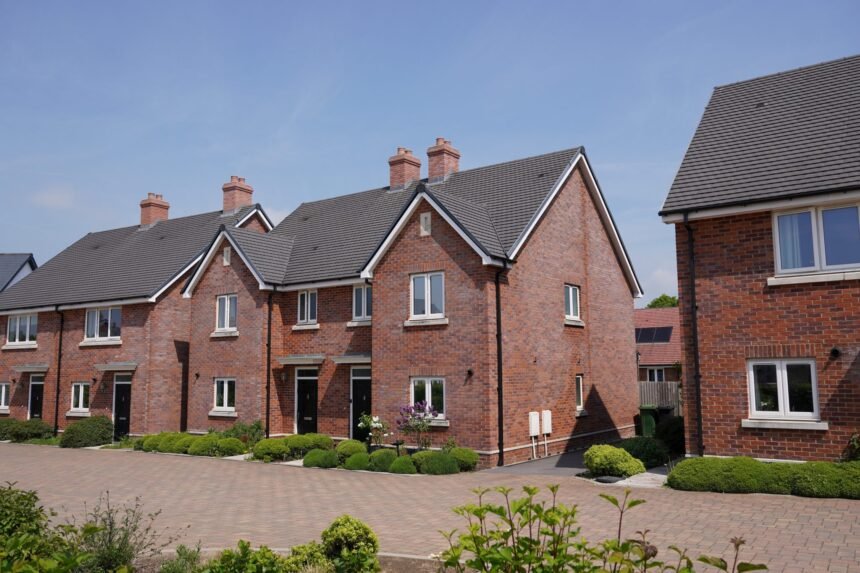
If you have fallen in love with a new build home but still need to sell your current property, a part exchange deal can sound like the perfect solution. Many housebuilders offer to buy your existing home as part of the deal, allowing you to move without waiting for a buyer or worrying about a chain. It is convenient, but it is not always the best financial choice. This guide explains how part exchange works, its advantages and drawbacks, and how to decide whether it is right for you.
How Part Exchange Works
With part exchange, the developer agrees to buy your current home, and the value they offer is used towards the price of your new build. You then pay the difference between the two, often with a mortgage.
The process usually starts with the developer arranging independent valuations of your current home. They then make an offer based on those valuations. If you accept, the developer buys your property and you move into your new home on an agreed date.
Part exchange schemes are usually only available on selected developments or plots, and there are often conditions. For example, the new home may need to be worth more than your current home by a certain percentage.
The Benefits of Part Exchange
The biggest advantage is certainty. You have a guaranteed buyer for your existing home, which removes the risk of a sale falling through or a chain collapsing. This can make moving much less stressful.
Other benefits include:
- No need to market your home or host viewings
- No estate agency fees on your current home
- A fixed timescale for moving
- Some developers contribute towards legal fees or removal costs
- A simpler, more predictable process
For people who value speed and convenience, such as those relocating for work or facing a difficult chain, part exchange can be very appealing.
The Drawbacks of Part Exchange
The main downside is price. Developers usually offer less than your home’s full market value. They need to resell your property and cover their costs and risk, so offers commonly sit below what you might achieve on the open market. The difference can amount to thousands of pounds.
You may also have less room to negotiate on the price of the new build. Some developers offer incentives instead of discounts, so make sure you understand the true value of the overall deal.
New builds themselves can carry a premium. If you need to sell within a few years, you may find resale values do not match what you paid, especially if the developer is still selling new homes nearby.
How to Assess Whether It Is a Good Deal
Before accepting, get your own independent market valuations from local estate agents. This tells you what your home could realistically achieve on the open market.
Then compare the two options:
- The developer’s part exchange offer for your home
- The likely open market price minus estate agency fees, legal costs and any moving delays
Also compare the new build’s price with similar new and resale homes in the area. Consider what incentives are included and whether they add genuine value.
If the gap between the part exchange offer and your realistic net sale proceeds is small, the convenience may be worth it. If it is large, selling on the open market could leave you significantly better off.
Alternatives to Part Exchange
Some developers offer assisted move schemes instead. Under these schemes, the developer works with local estate agents to market your home and may pay the agency fees. You usually achieve a price closer to market value, while still getting help with your sale. However, there is less certainty than with part exchange.
You could also sell your home independently and reserve the new build once you have a buyer.
Questions to Ask the Developer
- How is the part exchange value calculated?
- Can I see the independent valuations?
- Are there conditions on the new build’s price relative to my home?
- What incentives are included, and what are they worth?
- What happens if the new build is delayed?
Final Thoughts
Part exchange can offer a smooth, chain-free move, but convenience often comes at a cost. Before you accept an offer, find out what your home is really worth. Speak to estate agents in Biggleswade for an independent market valuation, so you can compare the developer’s offer with what you could achieve on the open market and make the right decision for your move.