



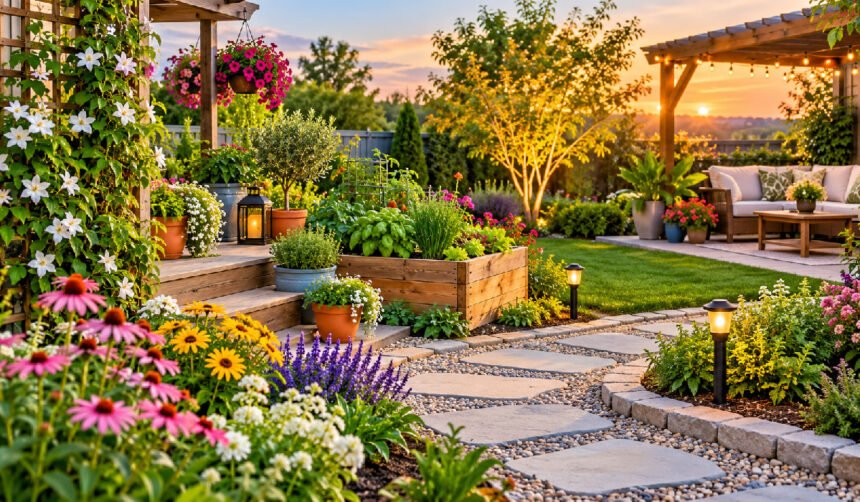
A beautiful outdoor space can make your home feel more welcoming, relaxing, and enjoyable. The good news is that you do not need a huge garden, expensive landscaping, or years of gardening experience to create one. A few thoughtful changes can make a noticeable difference.
Whether you have a large backyard, a small patio, a balcony, or a narrow garden area, simple gardening ideas can help you use the available space effectively. Plants, flowers, containers, lighting, and attractive pathways can turn an ordinary outdoor area into a place where you actually want to spend time.
If you are ready to refresh your surroundings, here are 10 easy gardening ideas to transform your outdoor space without making the project unnecessarily complicated.
Create a Colorful Flower Bed
One of the easiest ways to bring life to an outdoor space is by creating a flower bed. Flowers introduce natural color, texture, and seasonal interest while making even a simple yard look more carefully maintained.
Choose a suitable location that receives enough sunlight for the flowers you plan to grow. Before planting, remove weeds, loosen the soil, and consider adding compost or other appropriate organic matter to improve growing conditions.
You can combine flowers of different heights to create a layered appearance. Taller plants generally work well toward the back of a border, while shorter varieties can define the front.
For an attractive garden throughout the growing season, select plants with different flowering periods. This can help prevent the garden from looking colorful for only a few weeks and empty for the rest of the season.
Use Container Plants for Small Spaces
You do not need a traditional backyard to enjoy gardening. Container gardening is particularly useful for patios, balconies, entrances, decks, and other compact spaces.
Pots and planters allow you to grow flowers, herbs, vegetables, and small ornamental plants almost anywhere. They are also easy to rearrange whenever you want to refresh the appearance of your outdoor area.
Try using containers of different sizes and heights while keeping the overall design coordinated. Larger pots can act as focal points, while smaller containers can fill empty corners or decorate steps.
Always make sure containers have adequate drainage. Choosing plants according to the amount of sunlight available is also important. A sunny balcony and a shaded porch will require different plant selections.
Start a Small Herb Garden
A herb garden is attractive, practical, and relatively easy to maintain. Instead of using your outdoor space only for decoration, you can grow plants that are useful in the kitchen as well.
Popular choices include basil, mint, parsley, rosemary, thyme, chives, and cilantro. The best options will depend on your climate, season, and available sunlight.
Herbs can be grown in garden beds, individual pots, window boxes, or raised containers. Keeping frequently used herbs close to the kitchen can make harvesting especially convenient.
Remember that different herbs have different growing habits. Mint, for example, can spread aggressively in favorable conditions, so growing it in a container can help keep it under control.
A small herb garden can add fragrance and greenery to your outdoor space while providing fresh ingredients for everyday cooking.
Add a Simple Garden Path
A pathway can immediately make a garden feel more structured and intentional. It also provides a practical route through the yard and helps reduce unnecessary foot traffic across planted areas.
Garden paths do not have to be expensive or complicated. Depending on your landscape and budget, you can use stepping stones, gravel, bricks, pavers, or other suitable outdoor materials.
A gently curved path can create a softer, more natural appearance, while straight paths usually work well in modern or formal garden designs.
You can make the pathway more visually appealing by planting low-growing flowers or greenery along its edges. Solar lights can also be positioned nearby to improve visibility after dark.
The result is a simple feature that combines function with visual appeal.
Grow Plants Vertically
When ground space is limited, start thinking upward.
Vertical gardening allows you to introduce more greenery without taking over a patio, balcony, or small backyard. Trellises, wall-mounted planters, hanging containers, shelves, and vertical planting systems can all help maximize available space.
Climbing plants can also soften bare fences and walls. Depending on your local growing conditions, you might use flowering climbers, ornamental vines, or edible plants that naturally grow upward with support.
Vertical gardens can be particularly effective for growing certain herbs and compact vegetables.
Before attaching planters to a wall or fence, make sure the structure can safely support their weight, especially after watering. Proper drainage is equally important because trapped moisture may damage some surfaces.
Used carefully, vertical gardening can turn an overlooked wall into one of the most attractive parts of your outdoor space.
Introduce Outdoor Lighting
Your garden should not disappear as soon as the sun goes down.
Outdoor lighting can create a warm atmosphere while making pathways, seating areas, steps, and garden features easier to see at night. Even a small amount of carefully positioned lighting can completely change how an outdoor area feels.
Solar garden lights are a convenient option because many designs do not require complicated electrical installation. String lights can work well around patios, pergolas, fences, and seating areas.
Rather than lighting every corner, focus on important features. You might highlight a tree, flower bed, pathway, water feature, or outdoor dining area.
Aim for comfortable illumination rather than excessive brightness. Subtle lighting usually creates a more relaxing garden environment while keeping the overall design visually balanced.
Build a Raised Garden Bed
Raised beds can give an outdoor space a clean, organized appearance while creating a defined area for growing plants.
They can be used for vegetables, herbs, flowers, or a combination of different plants. Because you control what goes into the bed, they also provide an opportunity to create an appropriate growing medium for the plants you select.
Raised beds are available in many materials, including wood, metal, stone, and composite products. Choose a material suited to outdoor use and appropriate for what you intend to grow.
Placement matters as well. If you plan to grow sun-loving vegetables, position the bed where it receives sufficient direct sunlight.
Do not make the bed unnecessarily wide. You should ideally be able to reach the plants without regularly stepping onto and compacting the growing soil.
Create a Comfortable Seating Corner
A garden becomes much more valuable when you have somewhere comfortable to enjoy it.
Look for an unused corner and turn it into a simple seating area. Depending on the available space, this could include a garden bench, two outdoor chairs, or a compact table and chair set.
Surrounding the seating area with plants can make it feel more peaceful and private. Containers with flowers, ornamental grasses, or fragrant plants can create a natural boundary without completely closing off the area.
Shade is another important consideration, particularly in warmer climates. A mature tree, pergola, umbrella, or other suitable shade structure can make the space more comfortable during sunny weather.
You do not need to create an elaborate outdoor living room. A simple chair placed in the right location can give you a quiet spot for morning coffee, reading, or relaxing at the end of the day.
Add Mulch to Garden Beds
Sometimes improving a garden is more about making existing areas look cleaner than adding something entirely new.
Mulch can give flower beds and planted borders a more finished appearance. Organic materials such as wood chips, bark, shredded leaves, or other locally appropriate options can also provide practical benefits.
A suitable layer of mulch can help reduce weed growth and slow moisture loss from the soil. Organic mulch can gradually break down over time as well.
However, avoid piling mulch directly against tree trunks or plant stems. Excess material around the base can hold unwanted moisture and create poor growing conditions.
Before applying mulch, remove established weeds and tidy the area. This relatively simple job can make a neglected garden bed look considerably more organized.
Design a Garden That Is Easy to Maintain
An attractive garden does not have to demand hours of work every week.
Before buying plants, consider your local climate, available sunlight, soil conditions, watering needs, and how much time you realistically want to spend on maintenance.
Plants that are well suited to local conditions are generally easier to manage than plants constantly struggling against the environment. Native and regionally adapted species can be worth considering because many are naturally suited to local growing conditions.
Group plants with similar water and sunlight requirements together. This makes routine garden care more straightforward and can help avoid giving some plants too much water while others receive too little.
You can also reduce maintenance by using mulch, installing appropriate irrigation, controlling weeds early, and avoiding overcrowding.
A successful outdoor space should be something you enjoy—not another demanding household chore.
Simple Ways to Make Your Garden Look Better
You do not always need a major landscaping project to improve your garden. Start by cleaning the space and removing weeds, dead plants, broken pots, and unnecessary clutter. Trim overgrown plants where appropriate and redefine the edges of existing garden beds.
Next, identify areas that look empty or unfinished. A few containers, fresh flowers, a pathway, or a small seating area may be enough to make the entire garden feel different.
Try to maintain some consistency in the design. Repeating similar plants, materials, containers, or shapes throughout the garden can create a more connected appearance.
Most importantly, work with the space you already have. A small, thoughtfully designed garden can be just as inviting as a much larger landscaped backyard.
Final Thoughts
Transforming your outdoor space does not require an enormous budget or a complete landscape redesign. Small improvements can produce impressive results when they are planned carefully.
Start with one manageable project. Create a flower bed, add a few containers, grow herbs, build a simple pathway, or establish a comfortable seating corner. Once that area is finished, you can gradually improve other parts of the garden.
The best garden is not necessarily the largest or most expensive one. It is a space that works for your home, growing conditions, lifestyle, and personal taste.
With these easy gardening ideas, you can turn an ordinary outdoor area into a greener, more attractive, and more enjoyable extension of your home.
FAQs
What is the easiest way to improve an outdoor space?
Start by cleaning the area, removing weeds and clutter, and adding a few healthy plants. Containers, fresh mulch, simple pathways, and a small seating area can make a noticeable difference without requiring major landscaping.
What are the best gardening ideas for beginners?
Container gardening, herb gardens, simple flower beds, and raised beds are beginner-friendly options. Start with a small area and select plants that match your local climate, sunlight, and maintenance preferences.
How can I make a small garden look beautiful?
Use vertical space, hanging planters, compact furniture, containers, and carefully selected plants. Keeping the design simple and organized can make a small garden feel attractive without overcrowding it.
How can I improve my garden on a small budget?
Reuse suitable containers, grow plants from seeds or cuttings where practical, add homemade compost, refresh existing beds, and tackle projects gradually. Improving one section at a time can help control costs.
How can I create a low-maintenance garden?
Choose plants suited to your local growing conditions, group plants with similar needs, use mulch to help control weeds and retain soil moisture, and avoid overcrowding. Simple garden layouts are generally easier to maintain.