


Worried about pain before your first laser hair removal session? You are not alone. Many people want smoother skin but feel unsure because they have heard different things about how the treatment feels.
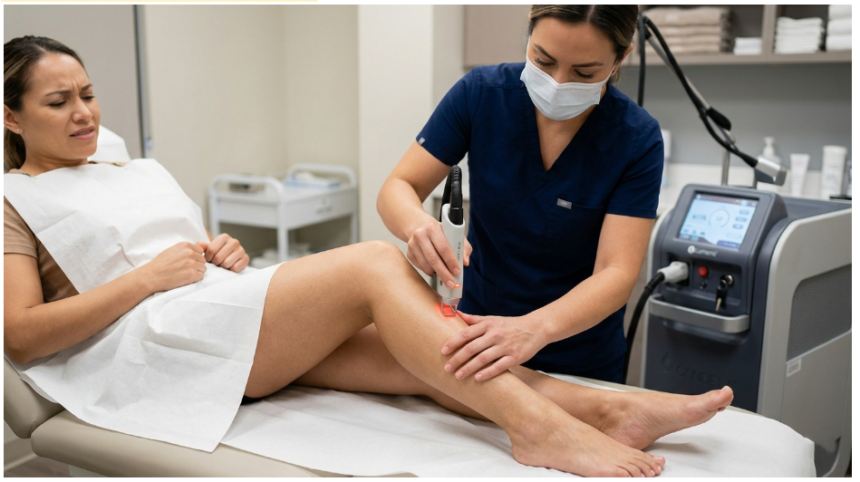
So, does laser hair removal hurt? It can hurt, but for most people, the pain is mild to moderate and over very quickly. The feeling is often described as a quick snap, sting, or hot prick on the skin during each laser pulse. It may feel sharper in sensitive areas, but it should still feel manageable.
This guide explains what laser hair removal pain feels like, which areas hurt more, what affects comfort, and when pain is not normal.
Does Laser Hair Removal Hurt? 7 Pain Factors
Laser hair removal is not usually described as severe pain. Most people feel short bursts of discomfort only while the laser is active on the skin.
- It can hurt, but the pain is usually mild to moderate and manageable for most people.
- The feeling is often like a quick snap, sting, or hot prick on the skin.
- The discomfort usually happens only when the laser pulse touches the treatment area.
- Once each pulse stops, the sharp feeling usually fades almost straight away.
What the Pain Feels Like
The feeling is quick and sharp rather than long-lasting. It does not usually feel like constant pain through the whole session.
- It can feel like a rubber band snapping against the skin for a split second.
- It may feel warm because the laser uses heat to target the hair.
- It can feel prickly or slightly sharp, especially where the hair is coarse.
- It may feel more intense on sensitive areas such as the upper lip, underarms, or bikini line.
- It is often easier to tolerate larger areas where the skin is less delicate.
Some people feel more heat than sting, while others feel a quick zap. Your own skin, hair type, and treatment area can change how strong it feels.
Pain Level During Treatment
Pain levels are different for everyone, but most people can handle the treatment well. A trained practitioner can also adjust comfort steps if the feeling becomes too strong.
- Many people feel mild discomfort that is noticeable but not too painful.
- Sensitive areas may feel moderately painful because the skin is thinner or more delicate.
- The discomfort often becomes easier once you get used to the sensation.
- Later sessions may feel less intense because the hair usually becomes finer.
- Cooling and numbing options can help make the treatment feel more comfortable.
Most Painful Areas
Some body areas feel sharper because the skin is thinner, the hair is thicker, or there are more nerve endings. These areas may need more patience, cooling, or numbing support.
- The bikini line can feel more painful because the skin is sensitive and the hair is often thicker.
- The Brazilian area can feel sharper because it has delicate skin and more nerve endings.
- The upper lip can feel intense because the skin is thin and the area is very sensitive.
- The underarms can feel stronger because the hair is usually coarse and the skin is soft.
- The ankles can feel sharper because the skin is close to the bone.
- The chest can feel more uncomfortable if the hair is dense or coarse.
- The stomach can feel sensitive depending on hair thickness and personal pain tolerance.
The pain in these areas is usually quick, but it can feel stronger than on the legs, arms, or back.
Least Painful Areas
Larger areas with thicker skin are often easier to tolerate. The sensation may still be there, but it usually feels less sharp.
- The legs are often easier to treat because the skin is usually less sensitive.
- The arms may feel more comfortable because the hair is often finer.
- The back can feel less sharp because the skin is thicker and the sensation is more spread out.
- The shoulders are usually easier than smaller, delicate areas.
- The cheeks may feel mild, depending on skin sensitivity and hair thickness.
- The sideburns may feel slightly sharper if the skin is sensitive or the hair is coarse.
These areas may feel more like warmth or light snapping instead of a strong sting.
Why Some Areas Hurt More
Pain changes from one area to another because skin and hair are not the same everywhere. The laser targets the hair, so thick or dense hair can create a stronger heat feeling.
- Thicker hair absorbs more laser heat, which can make each pulse feel stronger.
- Thinner skin reacts more quickly, so the sensation can feel sharper.
- Areas with more nerve endings often feel more painful during each pulse.
- Hormonal areas may feel more sensitive because the hair can be denser.
- Dense hair growth can make early sessions feel stronger than later ones.
This is why the upper lip, underarms, bikini line, and Brazilian area often feel more intense than the arms or legs.
Factors That Affect Pain
Your pain level is not based on one thing only. Several details work together to shape how laser hair removal feels during treatment.
- Hair thickness can increase the heat feeling during each laser pulse.
- Skin sensitivity can make the same treatment feel different from person to person.
- Laser strength setting can affect how sharp or warm the treatment feels.
- Treatment area matters because some parts of the body are naturally more sensitive.
- Pain tolerance plays a role because everyone reacts to discomfort differently.
- Numbing cream can help reduce the sharp feeling in sensitive areas.
- The type of laser device can affect comfort, especially if it has cooling support.
A proper consultation helps the practitioner understand your skin, hair type, and comfort level before treatment starts.
Pain During the First Session
The first session may feel the most uncomfortable because the hair is usually thickest and densest at the start. More active hair in the area can make the snapping or hot-prick feeling more noticeable.
- The first session may feel sharper because the hair is usually at its thickest.
- Dense hair can make each laser pulse feel stronger on the skin.
- As hair becomes finer, later sessions may feel less painful.
- Your skin may feel more familiar with the sensation after the first visit.
- Feeling nervous can make pain feel stronger, so slow breathing may help.
If you are worried before your first appointment, tell your practitioner. They can explain what to expect and help you feel more prepared.
Pain After Treatment
After laser hair removal, the skin may feel warm or tender for a short time. This is usually mild and should settle as the skin calms down.
- Skin may feel warm, similar to a mild sun-warmed feeling after the session.
- The treated area may feel slightly sore or tender when touched.
- Mild redness can happen because the skin has reacted to the laser heat.
- Mild swelling can appear around hair follicles, especially where the hair is thick.
- Discomfort often fades within a few hours, though sensitive areas may take longer.
The treated area may feel a little sensitive after the session, but it should not feel severely painful.
How to Reduce Pain
You do not have to push through strong discomfort. A few simple steps can make affordable laser hair removal feel easier and more comfortable.
- Ask about numbing cream before your session if you are treating a sensitive area.
- Avoid caffeine before treatment if it makes your body feel more reactive.
- Shave the area before your appointment so the laser can target the hair root better.
- Use cooling packs after treatment to calm warmth, redness, or tenderness.
- Tell the technician if the pain feels too strong so they can check your comfort.
- Stay relaxed and breathe slowly during sensitive areas to help reduce tension.
A good practitioner will want you to speak up if the treatment feels too intense. Laser hair removal should feel manageable, not unbearable.
When Pain Is Not Normal
Laser hair removal should not cause severe or worsening pain. Strong pain can be a sign that your skin needs attention.
- Severe burning pain is not normal and may mean the skin has been irritated too much.
- Blistering should be checked because it can be a sign of a skin reaction.
- Intense swelling is not expected and should not be ignored.
- Pain that gets worse after treatment may need advice from the clinic.
- Skin that feels raw, damaged, or very hot should be looked at as soon as possible.
If any of these happen, contact your clinic for advice. Do not ignore pain that feels severe, unusual, or worse over time.
Final Answer
Laser hair removal does hurt for some people, but the pain is usually quick and manageable. Most people feel a short snap, sting, or warm prick during each pulse.
Sensitive areas like the bikini line, Brazilian area, upper lip, and underarms usually hurt more. Larger areas like the legs, arms, back, and shoulders are often easier to tolerate.
A laser hair removal pain scale is a helpful way to understand the feeling, as most people rate the discomfort as mild to moderate, especially when compared with longer-lasting methods like waxing.
Conclusion
Laser hair removal can hurt, but the discomfort is usually brief, sharp, and easy to manage with the right care. Sensitive areas may feel stronger, especially during the first session, while larger areas are often much more comfortable. If the pain feels severe, burning, or gets worse after treatment, it should not be ignored. A safe treatment should feel controlled, and your practitioner should listen if you need extra comfort during the session.
FAQs
Is laser hair removal more painful than waxing?
For many people, laser hair removal feels quicker than waxing because the discomfort happens in short pulses. Some sensitive areas may still feel sharp, but the feeling usually passes fast. It’s also important not to wax in between laser treatments, as waxing removes the hair root that the laser needs to target.
Does laser hair removal hurt more on the face?
It can. The upper lip is often one of the more sensitive areas because the skin is thin and delicate.
Does the pain get worse with each session?
Not usually. Many people find later sessions easier because the hair often becomes finer and less dense.
Should I stop the session if it hurts too much?
Yes, tell your technician if the pain feels too strong. The treatment should feel manageable, not unbearable.