



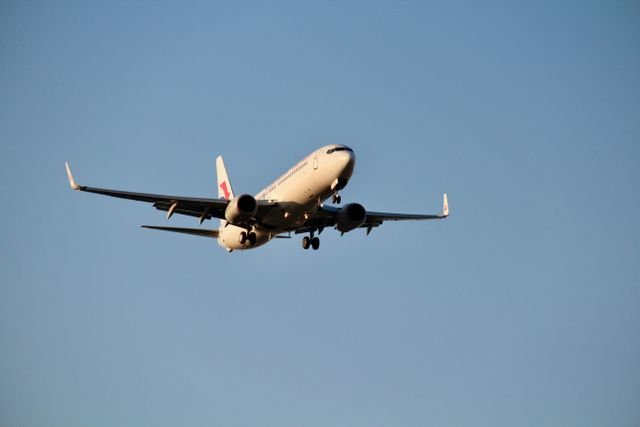
What happens when machines learn to predict maintenance problems before they occur, or when algorithms optimize flight paths to save fuel and reduce emissions? The aviation industry stands at a pivotal moment where artificial intelligence is reshaping everything from safety protocols to passenger experience. AI technologies are no longer experimental concepts confined to research labs. They are actively integrated into flight operations, aircraft maintenance, and airport management systems worldwide. This transformation is fundamentally changing how airlines operate and how passengers travel.
1. Predictive Maintenance and Aircraft Safety
Aircraft maintenance has traditionally relied on scheduled inspections and reactive repairs when problems surface. Artificial intelligence is shifting this model toward predictive maintenance, where algorithms analyze sensor data from aircraft systems to identify potential failures before they become serious. Modern commercial aircraft contain thousands of sensors that continuously monitor engine performance, hydraulic systems, structural integrity, and countless other components. AI systems process this massive volume of data in real time, detecting patterns that human technicians might miss. For example, an AI system can recognize subtle changes in engine vibration or temperature that indicate a bearing is beginning to wear prematurely, allowing maintenance teams to address the issue during a scheduled service rather than dealing with an emergency landing.
The safety benefits of this approach are substantial. By catching problems early, airlines reduce the risk of in-flight failures and emergency situations. Predictive maintenance also extends the useful life of aircraft components and reduces unnecessary part replacements, which lowers maintenance costs significantly. Airlines can schedule maintenance during planned downtime rather than experiencing unexpected breakdowns that disrupt flight schedules and strand passengers.
2. Flight Path Optimization and Fuel Efficiency
Fuel consumption represents one of the largest operating expenses for airlines, and AI is helping optimize every aspect of flight planning. Machine learning algorithms analyze weather patterns, air traffic, altitude variations, and countless other variables to calculate the most efficient routes for each flight. These systems consider real-time wind conditions, jet stream positioning, and congestion at departure and arrival airports to recommend flight paths that minimize fuel burn. The optimization extends beyond distance. An AI system might suggest flying at a slightly different altitude or speed based on atmospheric conditions, fuel tank levels, and headwind speeds at various elevation levels.
The financial and environmental impact of these optimizations is meaningful. Even marginal improvements in fuel efficiency across thousands of daily flights add up to significant savings. Airlines that implement AI-assisted flight optimization report fuel consumption reductions ranging from two to five percent annually. Beyond cost savings, reduced fuel consumption directly translates to lower carbon emissions, making aviation more sustainable. For an industry facing increasing pressure to reduce its environmental footprint, AI-assisted flight optimization offers a concrete pathway toward greener operations.
3. Passenger Experience and Operations
AI systems are increasingly enhancing passenger interactions throughout the travel journey, from booking flights through baggage handling. Chatbots powered by natural language processing can answer common questions about flight status, baggage policies, and seat selections without requiring human agents. These systems learn from thousands of conversations and improve their accuracy over time. Airlines also use AI to optimize crew scheduling, hotel bookings, and ground transportation arrangements, reducing the complexity of logistics that support daily operations.
Personalization represents another key application of AI in passenger services. Machine learning algorithms analyze passenger preferences, travel history, and booking patterns to recommend seat selections, meal preferences, and ancillary services that match individual needs. Some airlines use AI to predict which passengers might request seat changes or special accommodations, allowing ground staff to proactively address needs before passengers ask. These systems improve passenger satisfaction while also helping airlines manage seating arrangements and service requirements more efficiently.
4. Air Traffic Management and Runway Operations
Congestion at major airports creates delays that ripple through the entire aviation network, affecting thousands of passengers daily. AI systems are helping airport operators and air traffic controllers manage this complexity more effectively by predicting demand patterns and optimizing runway usage. Machine learning algorithms analyze historical flight data, weather forecasts, and current traffic situations to predict arrival and departure demand across different time windows. This predictive capability allows airports to schedule runway operations more efficiently, reducing both delays and the fuel burned by aircraft waiting in holding patterns.
Some airports now deploy AI systems to manage the sequential ordering of aircraft landing and taking off, considering factors like aircraft size, runway requirements, weather conditions, and connecting flight schedules. These systems can propose landing sequences that minimize ground delays while maintaining safety margins and separation standards. In congested airports, even small improvements in runway efficiency translate to significant reductions in delay time and fuel consumption. The cumulative effect across hundreds of airports worldwide helps the entire aviation system operate more smoothly.
5. Maintenance Data Analysis and Supply Chain Management
Beyond predicting when individual aircraft need repairs, AI is transforming how airlines manage their entire maintenance operations and supply chains. Machine learning systems analyze data from thousands of aircraft to identify patterns that affect multiple units, such as premature wear in a specific engine model or recurring issues with certain component batches. These insights allow manufacturers and airlines to address systemic problems proactively, potentially preventing widespread failures before they impact operations. This fleet-level perspective provides a breadth of analysis that would be impractical to achieve through manual review alone.
AI also optimizes spare parts inventory management by predicting which components are likely to be needed based on fleet composition, aircraft age, and usage patterns. During the procurement and stocking process, maintenance teams sourcing quality aircraft parts rely on accurate demand forecasting to ensure critical components remain available without inflating inventory costs. Supply chain visibility tools powered by AI help track parts throughout manufacturing, warehousing, and installation, reducing the time aircraft spend in maintenance facilities waiting for components to arrive. The result is a leaner, more responsive supply chain that supports safer and more reliable operations.
Conclusion
Artificial intelligence is fundamentally transforming modern aviation across safety, efficiency, passenger experience, and operational management. From predicting maintenance issues before they endanger flights to optimizing flight paths that reduce fuel consumption and emissions, AI technologies are delivering tangible benefits that affect how the industry operates. The integration of machine learning into air traffic management and airport operations is making the aviation network more efficient and reliable. As these technologies continue to mature and become more widely adopted, they will likely drive further innovations in areas not yet fully explored. The aviation industry’s embrace of artificial intelligence reflects a broader trend toward smarter, more responsive systems that improve safety while reducing environmental impact and operating costs.
The growing use of AI in aviation is also opening the door to fully autonomous aircraft capable of performing complex operations with limited human intervention. These systems combine artificial intelligence with navigation sensors, onboard computing, flight controls, and real time decision making to operate safely in demanding environments. A practical example of this development is Proteus, an autonomous helicopter that demonstrates how AI and advanced digital technologies are being applied to the future of aviation.