


Introduction: The Evolution of Waterfront Infrastructure
Architectural design along coastal and lakeside boundaries has traditionally been defined by rigid, permanent structures. For decades, waterfront property developers and marine engineers relied heavily on fixed concrete piers and heavy timber piling to bridge the gap between terrestrial landscapes and open water.
While structurally familiar, these traditional static installations struggle to accommodate the realities of dynamic marine environments. Seasonal water level fluctuations, intensifying tidal surges, and unpredictable wave action generate severe mechanical stress against inflexible foundations.
Furthermore, modern waterfront development is increasingly governed by stringent environmental conservation mandates. Traditional pile-driving and invasive dredging disrupt delicate aquatic habitats and face escalating regulatory pushback from municipal and marine authorities.
In response, modern coastal and lakeside property design has shifted toward dynamic, highly adaptable marine infrastructure. Modular floating solutions have emerged as the premier architectural response, offering resilience against fluctuating water levels without compromising structural integrity or design sophistication.
Engineering Advantages: The Shift to Modular HDPE Pontoon Systems
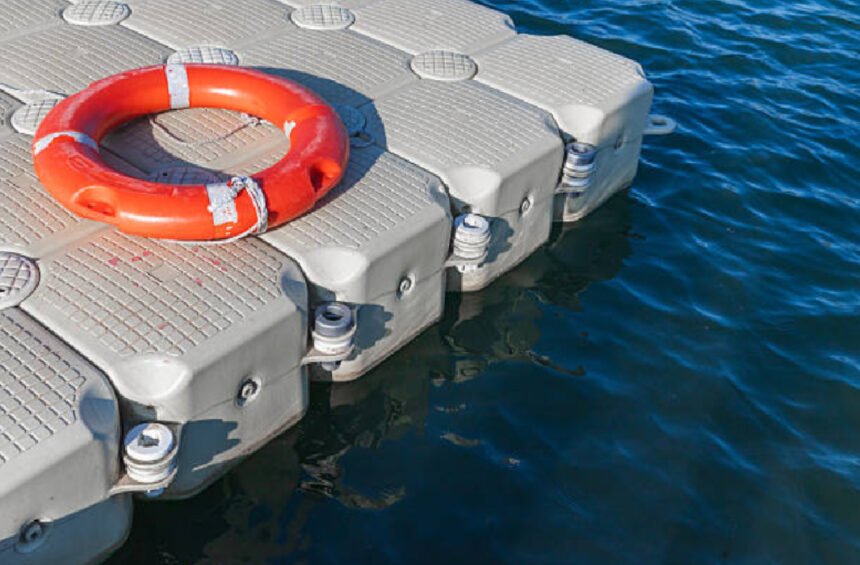
Unlike traditional timber or concrete piers that degrade rapidly under constant salt exposure and tidal stress, modern floating systems increasingly rely on high-density polyethylene (HDPE) modular units. According to technical documentation from modular pontoon manufacturers like Hisea Dock, industrial-grade HDPE cubes deliver a load capacity exceeding 350 kg per square meter while remaining completely impervious to UV radiation, corrosion, and extreme marine conditions.
The adoption of modular HDPE systems is driven by distinct mechanical and biochemical advantages over conventional marine building materials:
- Superior Material Durability: Industrial HDPE is engineered with a UV20+ rating, preventing photo-oxidation and embrittlement even under decades of direct solar exposure. Unlike timber, it does not rot, warp, or suffer from marine borer infestation; unlike steel, it is immune to galvanic corrosion in high-salinity waters.
- Dynamic Load Balance and Buoyancy Physics: Modular units utilize individual air-filled buoyancy chambers that distribute kinetic energy from wave action across a flexible matrix. Interlocking structural pins with a tensile strength exceeding 3 tons allow the entire platform to flex independently, dissipating stress forces that would shatter rigid concrete decks.
- Rapid, Non-Invasive Deployment: Assembly relies on standardized connecting lugs and pins, eliminating the need for heavy marine piling rigs or underwater curing periods. Project timelines are reduced by up to 70% compared to fixed-pile construction, significantly lowering capital expenditure and on-site labor requirements.
- Zero Thermal Retention: Premium HDPE polymer formulations maintain comfortable surface temperatures under direct sunlight, avoiding the intense heat retention characteristic of aluminum or dark stained wood.
Architectural Versatility in Residential & Commercial Applications
For architects and high-net-worth waterfront developers, utility must be matched by aesthetic coherence. Modern modular floating docks transcend the utilitarian appearance of industrial pontoons, offering an adaptable design canvas that integrates seamlessly into sophisticated coastal landscapes.
The geometric uniformity of modular HDPE systems allows designers to configure bespoke marine layouts tailored to specific property requirements. The structural matrix can be modified at any point during a property’s lifecycle, accommodating evolving functional needs without structural demolition:
- Integrated Recreational Platforms: Waterfront footprints can easily combine multi-vessel slips with dedicated swimming platforms, lounging terraces, and drive-on jet ski ramps engineered with reinforced rollers.
- Commercial Marine Infrastructure: For marina developments and luxury resort properties, modular configurations provide continuous, ADA-compliant accessibility regardless of tidal heights, maintaining an optimal freeboard height of 360 mm to 400 mm above the waterline.
- Utility & Service Routing: Modern pontoon architecture incorporates concealed internal channels within the dock matrix to safely route shore power, freshwater plumbing, and architectural lighting without visual clutter.
To satisfy aesthetic demands, manufacturers offer advanced composite overlays and custom color palettes that complement modern architectural vernaculars. Architects frequently specify wood-grain composite decking installed directly over the structural HDPE cores, achieving the timeless warmth of hardwood timber without its maintenance liabilities.
Environmental Sustainability & Coastal Regulatory Compliance
As coastal ecosystems face unprecedented environmental pressures, sustainable engineering principles have become central to waterfront permitting processes. Traditional construction methods frequently fail modern ecological assessments due to permanent habitat modification and chemical contamination.
Because permanent pile installations cause significant seabed disruption and habitat loss, environmental agencies worldwide strictly regulate waterfront building permits. Adopting modular floating structures aligns with broader coastal management standards on Wikipedia, which emphasize non-invasive, climate-resilient engineering to protect fragile benthic ecosystems.
Modular HDPE architecture offers decisive ecological advantages that streamline regulatory compliance across coastal municipalities:
- Benthic Habitat Preservation: Floating docks are anchored using non-invasive mooring systems—such as helical screw anchors or elastic Seaflex moorings—preventing seabed scouring and safeguarding submerged aquatic vegetation (SAV) like eelgrass beds.
- Inert Chemical Composition: Unlike chromated copper arsenate (CCA) pressure-treated timber, which leaches heavy metals into surrounding waters, virgin HDPE is 100% chemically inert, BPA-free, and releases zero microplastics during its operational lifecycle.
- High Recyclability: At the end of a 30- to 50-year service lifespan, HDPE pontoons are fully recyclable, fitting cleanly into circular economy frameworks required by modern sustainable building certifications such as LEED and BREEAM.
- Optimal Light Penetration: Modular configurations can be spaced with light-transmitting deck grids, complying with strict regional marine conservation mandates designed to prevent shading-induced marine life mortality.
Key Takeaways
| Area | Key Takeaway | Impact/Data |
| Load & Build | Deploy HDPE cubes for rapid deployment | >350 kg/m² load; -70% build time |
| Durability | Eliminate corrosion, rot, and UV embrittlement | UV20+ rating; 30–50yr lifespan |
| Permitting | Bypass pile-driving and toxic leaching | 100% inert; zero seabed drilling |
| Resilience | Flex independently against wave kinetic energy | >3-ton pin tensile shear strength |
Conclusion: Future-Proofing Waterfront Investment
The transition from static piers to modular HDPE floating infrastructure represents a fundamental paradigm shift in coastal and lakeside architecture. By aligning real-world marine engineering with contemporary aesthetic standards, these systems offer waterfront developers and architects an uncompromising solution to aquatic construction challenges.
With a load capacity exceeding 350 kg/m², exceptional UV and chemical resistance, and total tidal adaptability, modular floating docks deliver a quantifiable, long-term return on investment. They mitigate the financial risks associated with rising sea levels and violent shoreline storm events while providing the layout flexibility required for modern luxury living.
Ultimately, specifying modular HDPE pontoon architecture is not merely a structural choice—it is a strategic investment in sustainable, climate-resilient waterfront development that protects both property value and the marine environment for decades to come.