



Entrepreneurship resists being learned entirely from a textbook. Market research, business models, finance, marketing, leadership- all of it can be studied in a classroom. But actually starting and growing a business means deciding with incomplete information, watching customers behave nothing like expected, and discovering the first idea simply doesn’t work.
That’s exactly why a global hands-on entrepreneurship program offers something useful to aspiring entrepreneurs. Different markets, cultures, customers, and business environments- exposure to all of it gives students a chance to test ideas somewhere that actually resembles the realities of entrepreneurship.
Entrepreneurship Is About More Than Having an Idea
A common misconception treats entrepreneurship as simply needing a good idea. The hard part usually starts after that. Is there a customer willing to pay? Can the product be delivered at a sustainable cost? How should it be positioned? What happens the moment competitors respond? These questions are difficult to answer fully without actually putting an idea into practice.
This is where an entrepreneurship degree or business program with real market exposure makes a genuine difference. Students learn the fundamentals while getting real chances to test them through projects, ventures, and market-facing work.
Learn Entrepreneurship By Testing, Not Just Studying
Students often wonder how to learn entrepreneurship in college when entrepreneurship itself refuses to be predictable. One answer: treat college as a place built for experimenting.
Rather than analysing case studies alone, students in programs likedentify a real problem during a term project, build a product or Tetr’s undergraduate and postgraduate programs iservice around it, talk to actual potential customers, test demand, adjust, then watch what happens next.
Tetr’s model of studying abroad points to a major advantage: students get to make mistakes in unfamiliar business environments while the stakes stay educational rather than tied to an already-established venture. That room to experiment helps sharpen the instincts needed to navigate real uncertainty.
How a Hands-On Entrepreneurship Program Makes the Difference
There’s a real gap between learning about entrepreneurship and actually running something, even something small. A hands-on entrepreneurship program lets students live inside parts of that entrepreneurial process while faculty, peers, mentors, and structured feedback are all still within reach.
Tetr, for example, structures entrepreneurship as a comprehensive offering rather than a single course. Venture building sits at the center, supported by how-to style workshops, business and cultural immersions in different markets, and internships that put students inside real companies alongside their own projects.
The Opportunity to Start a Business While in College
Graduation doesn’t have to come first for entrepreneurial experience to start. Students can start a business while in college, whether that means testing a small e-commerce idea, developing an actual product, launching a service, or pushing a class project somewhere more substantial.
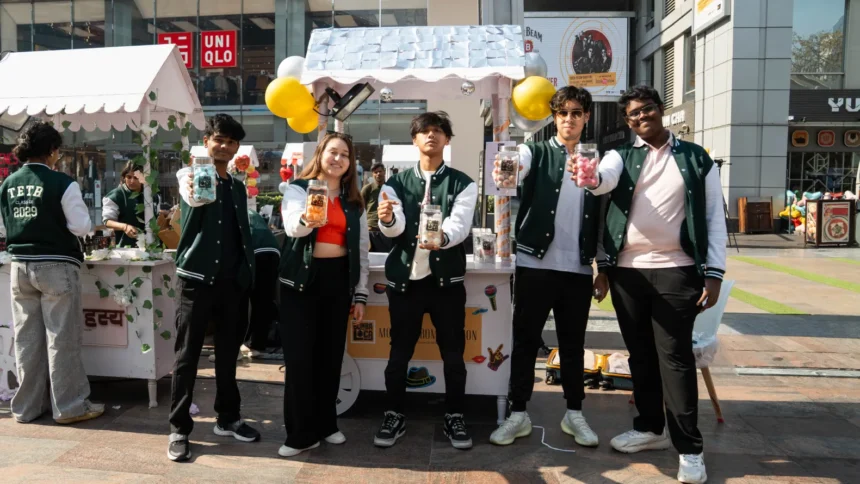
A business school for entrepreneurs like Tetr offers a genuinely useful environment for this. Tetr’s entrepreneurship ecosystem gives students real room to build and sell products while still studying. Student ventures span D2C brands, e-commerce businesses, and Kickstarter campaigns, creating a setting where product development and customer validation both happen in real time, not in theory.
Turning Business Education Into Entrepreneurial Experience
An entrepreneurship degree should ultimately move students between theory and action, back and forth, repeatedly. Learn a concept, apply it, analyse the result, and make the next decision. Over time, that loop builds a practical understanding of how businesses actually grow. Global exposure adds one more layer: the environment itself becomes part of the learning, not just the backdrop for it.
For students weighing entrepreneurship after school, the real question was never simply whether to study business or start one. It’s whether that education creates enough room to build, test, collaborate, adapt, and learn from what actually happens. For students willing to experiment, it can become part of the education itself.