



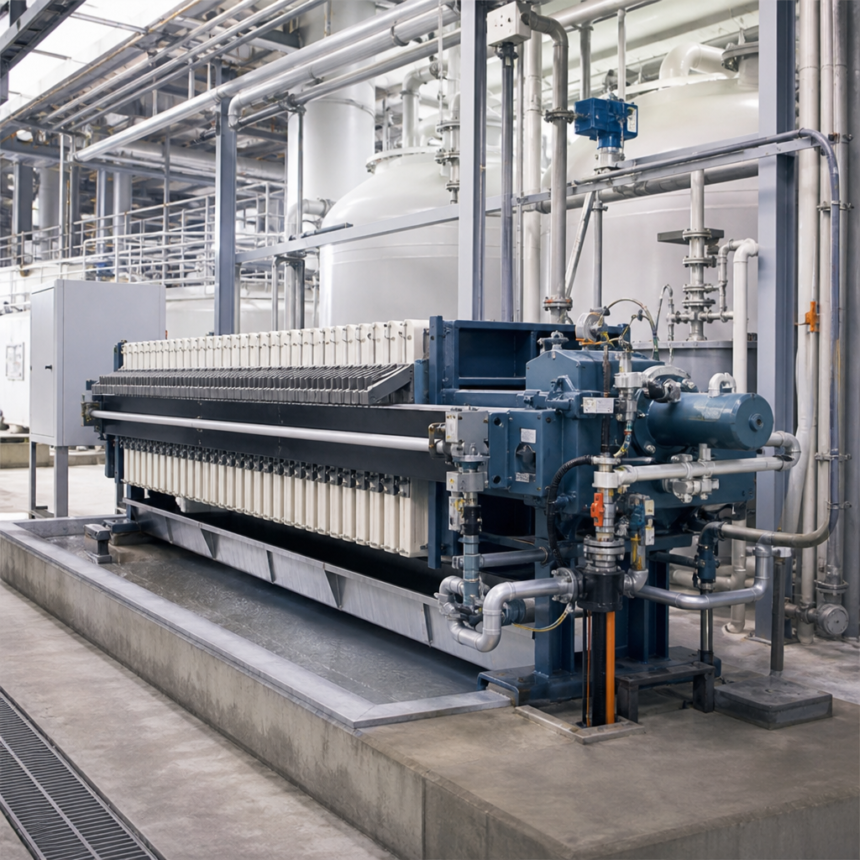
Industrial process engineering is rarely a static discipline. Plants evolve, production demands shift, and the equipment that supports separation, filtration, and fluid management must adapt accordingly. One of the most consistent challenges facility managers face is sourcing reliable, cost-effective filtration equipment without compromising on performance or compliance. In this context, understanding how filtration technology integrates with broader process infrastructure — from heat management systems to fluid control components — has become increasingly important for engineers and procurement specialists alike.
The Role of Filtration in Industrial Process Plants
Filtration sits at the heart of countless industrial operations. Whether a facility is processing minerals, treating wastewater, managing chemical slurries, or handling food-grade liquids, the ability to separate solids from liquids efficiently determines both product quality and operational throughput. Filter presses, in particular, have long been regarded as workhorses of industrial separation — capable of handling high-volume, high-solids applications that other filtration technologies simply cannot manage at scale.
The mechanics of a filter press are straightforward: slurry is pumped into a series of chambers formed between filter plates, pressure is applied, and liquid is forced through filter media while solids are retained as a cake. The result is a dry, manageable solid and a clarified filtrate — both of which can be further processed, recycled, or disposed of according to regulatory requirements. This simplicity of principle belies the engineering sophistication required to maintain these systems at peak performance over years of continuous use.
Why Procurement Strategy Matters
Capital expenditure on new process equipment can be prohibitive, particularly for mid-sized operations or facilities undergoing expansion. Sourcing refurbished or pre-owned equipment from reputable suppliers offers a practical alternative — one that allows plants to scale capacity without the lead times and costs associated with new machinery. A used filter press sourced from a trusted industrial equipment supplier can deliver the same operational performance as a new unit, provided it has been properly inspected, refurbished where necessary, and matched to the specific process requirements of the facility. This approach is increasingly favoured by procurement teams working within constrained capital budgets but unwilling to sacrifice reliability.
Integrating Filtration with Broader Energy and Process Systems
Modern industrial facilities are rarely designed around a single piece of equipment. Process plants operate as interconnected systems, where decisions about filtration capacity, fluid temperature, pressure management, and energy consumption all influence one another. This is particularly relevant as more facilities explore sustainable energy solutions to reduce their operational carbon footprint and energy costs.
Heat management, for instance, plays a significant role in filtration efficiency. Certain slurries filter more effectively at elevated temperatures, meaning that the energy source used to heat process fluids directly impacts filtration cycle times and cake dryness. Facilities that have invested in renewable or low-carbon heating infrastructure — such as heat pump systems — are finding that these technologies can be integrated into process heating loops to support more energy-efficient filtration operations. Understanding the differences between available heat pump technologies is therefore relevant not just to facilities managers but to process engineers as well. A thorough comparison of air source and ground source heat pump systems can help engineering teams identify which solution best suits their site conditions and process temperature requirements.
Fluid Control and Valve Selection in Filter Press Systems
Beyond the filter press itself, the surrounding pipework and fluid control infrastructure are critical to system performance. Slurry feed pumps, pressure relief valves, and check valves all play essential roles in maintaining consistent operating conditions and protecting equipment from damage caused by backflow or pressure surges. In filter press applications, check valves are particularly important — they prevent slurry from flowing back into feed lines during the pressure release phase of the filtration cycle, protecting pump seals and maintaining process integrity.
Selecting and installing the correct check valve for a given application requires careful consideration of fluid viscosity, solids content, operating pressure, and pipe orientation. Poor valve selection can lead to premature wear, valve chatter, or incomplete sealing — all of which introduce inefficiency and maintenance costs into the system. Engineers specifying valves for filter press installations should consult detailed technical guidance on check valve installation considerations to maximise process performance, ensuring that the selected components are appropriate for the specific demands of slurry handling environments.
Evaluating Equipment Condition and Fit-for-Purpose Standards
When sourcing pre-owned filtration equipment, the evaluation process is as important as the procurement decision itself. A filter press that has been used in a chemical processing environment, for example, may have different wear characteristics than one used in mineral processing or wastewater treatment. Plate condition, membrane integrity, hydraulic system performance, and frame alignment are all factors that must be assessed before a unit is considered fit for redeployment.
Reputable suppliers of used process equipment will typically provide full inspection reports, refurbishment histories, and technical specifications for each unit. This transparency allows buyers to make informed decisions and ensures that the equipment will perform reliably from the moment it is commissioned. In some cases, suppliers can also assist with installation planning, helping facilities engineers understand how a particular unit will integrate with existing pipework, electrical systems, and control infrastructure.
Maintenance Planning for Long-Term Reliability
Acquiring a filter press — whether new or pre-owned — is only the beginning of the equipment lifecycle. Long-term reliability depends on a structured maintenance programme that addresses filter cloth replacement, plate inspection, hydraulic system servicing, and control system calibration. Facilities that invest in proactive maintenance consistently achieve longer equipment lifespans and lower total cost of ownership than those that adopt a reactive approach.
Establishing a maintenance schedule based on the specific operating conditions of the plant — including feed slurry characteristics, cycle frequency, and operating pressure — allows maintenance teams to anticipate wear patterns and schedule interventions before failures occur. This approach also supports regulatory compliance, as well-maintained filtration equipment is more likely to consistently meet effluent quality standards and environmental discharge requirements.
International Process Plants: A Trusted Source for Used Process Equipment
International Process Plants has established a strong reputation in the global market for used and refurbished industrial process equipment. With an extensive inventory spanning filtration, separation, heat exchange, and fluid handling technologies, the company serves a diverse range of industries including chemicals, pharmaceuticals, food and beverage, and minerals processing. Their team of experienced engineers and equipment specialists provides detailed technical assessments for each unit, ensuring that buyers receive equipment that meets their specific process requirements. The company’s commitment to quality and transparency makes them a reliable partner for facilities looking to expand or upgrade their process infrastructure cost-effectively.
Conclusion
Industrial filtration is a discipline that rewards careful planning, informed procurement, and rigorous maintenance. Filter presses remain among the most effective tools available for solid-liquid separation across a wide range of industries, and the availability of quality pre-owned units makes this technology accessible to facilities operating under capital constraints. By integrating filtration decisions with broader considerations around energy management, fluid control, and system design, process engineers can build more efficient, resilient, and cost-effective operations — delivering value that extends well beyond the filter press itself.