



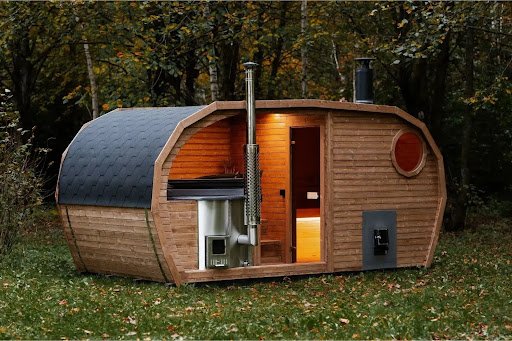
A solid, upmarket garden sauna may enhance a home in the United Kingdom, but the figure quoted is rarely eye-catching and rests heavily on the quality, permanence and perceptions of the wider buying public. Estate agents may see a permanent, well-isolated cabin as a real selling point that enhances the home; a tatty plug-in barrel on a patio may be seen as garden furniture in a conveyance package. The frank truth is that the value lies less in the sauna than in it.
The most obvious financial boost is not usually the buying-forward resale figure, but quicker sales and heightened buyer interest. An attractive garden extends the appeal of a property to more people; in a buoyant market an emotional premium can be more important than a nibble on a valuation. Don’t let that distinction slip away before committing to a few thousand pounds.
How much value does a garden sauna actually add?
There is no definitive figure, and someone quoting one exactly is just taking a stab in the dark. What property professionals tend to feel is that good quality garden rooms and outbuildings should be capable of reaping a substantial element of their cost back on resale, and saunas are categorised into the wider umbrella of garden structures that consumers are now paying more attention to. There has always been industry speculation that permanently fixed garden offices and studios quickly get their money back, with a sauna to the same build quality regarded in the same way. Perfection changes everything.
A custom-built insulated cabin, connected to the house electrics, with proper drainage and a firm base is considered an extension to the existing living area. Surveyors have no hesitation valuing it – a portable unit you could pick up and put straight onto a van has little worth in their eyes. So if you are wondering whether your sauna adds value, the key question is whether you have created something permanent or something temporary. The same investment leads to very different results based on which side of the line it comes down on.
What does a garden sauna cost to install in the UK?
Prices are quite varied and the spread is precisely that of the permanence point referenced above. Entry-level barrel saunas and small flat-pack cabins generally fall in the band of approximately 3,000 to 6,000 whereas a mid-range insulated cabin with good quality timber, a relatively good quality heater and some form of changing room would range from approximately 8,000 to 15,000. Bespoke builds with bench joinery, glazed fronts and lighting would add to this, and would readily go upward of 20 000. Mainly once fundamental groundworks and electrical work are taken into account.
The hidden costs will surprise you. Anything you want to last well, an electric or wood-burning sauna, for example, must have the right wiring and likely a dedicated circuit; figure on an electrician.
Just about anything would require a sound foundation, should be an acceptable timber deck engineered to meet current building standards, or would be better to have a concrete base, take your pick. The costs of heating the sauna are relatively low; an electric kit running 6kW or so, a few times a week, is manageable in a normal energy bill rather than frighten you. The expense that is not spoken about is the cost of maintenance. The timber needs to be maintained, the heating system will wear out, and the benches within the interior will take some punishment.
Do you need planning permission for a garden sauna?
Most garden saunas are permitted for development, so you don’t need to apply for planning permission, which is one of the factors that have fuelled the rise of these buildings. The other guidelines still apply: single storey, set behind the front elevation of the house, not covering more than 50 per cent of the garden and abiding by height restrictions in the region of 2.5 metres if located close to a boundary. These are the same restrictions that apply to garden offices and summer houses.
Apart from these, there are some exceptions that will trip people up. Listed buildings, conservation areas and those with restrictive covenants, change the situation completely, as will a wood-burning sauna heater, which may involve additional considerations for flues and smoke control zones in certain built-up areas. Building regulations may also apply if requiring dwellings of a certain size and if electrical work is being undertaken, when planning permission isn’t required. Consulting your local authority will cost nothing, and avoid costly errors.
When you reach the stage of choosing a supplier, it pays to look at companies that build for the British climate specifically, since UK damp and temperature swings test timber and insulation harder than the Scandinavian conditions these products were originally designed for. Specialists such as Edenhut focus on garden saunas suited to UK gardens, and comparing that kind of dedicated offering against a generic imported flat-pack tells you a lot about build quality and longevity. The difference shows up years later, which is precisely when resale matters.
Is a garden sauna worth it for lifestyle rather than resale?
For most owners the truthful motivation has little relationship to valuations, and that is an entirely valid justification. Studies show the benefit of regular sauna use in relaxation, recovery and cardiovascular health, and those who use one regularly tend to consider it among the better paper-pen purchases they have made. If you will seriously use it twice a week then the valuation is quite different from something just bought for its own stunning merits to its next recipient. The lifestyle case also comes into play here.
If this is meant to be a forever home, then the resale debate is pretty academic. The real question becomes whether every day makes a high cost worth it, which it does while we are on it. If you will be a boarder then every penny needs to be more carefully considered, and it is better to build for permanence and a quality finish than a cheap unit that can only be confused with trash.