



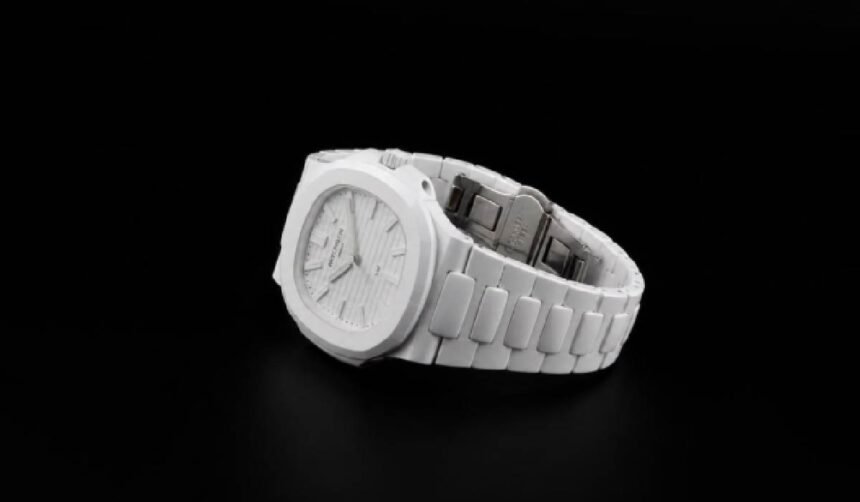
For a new generation of affluent clients, the factory standard – even one bearing a six-figure price tag – has become synonymous with mass production. Exclusivity that is stamped out on a conveyor belt no longer inspires the reverence it once did. In this piece, we explore why modern collectors are forsaking endless waitlists in favor of creating their own utterly unique artifacts, and how independent ateliers are rewriting the rules of the game.
Why We Feared Touching the Classics for So Long
To comprehend the scale of this paradigm shift, one must consider the architecture of the watch market just five years ago. For years, major auction houses like Phillips, Christie’s, and Sotheby’s dictated stringent standards: the ultimate and indisputable value lay in flawless originality.
Horological purists were willing to pay hundreds of thousands of pounds in premiums for the faded “tropical” dial of a vintage Patek Philippe, or the unpolished chamfers of an early Rolex Submariner. The guiding philosophy was that the timepiece had survived to the present day exactly as it left the manufacture forty years prior. Any third-party intervention in the factory design, no matter how delicate, was perceived by collectors as an act of vandalism that inevitably eradicated the object’s investment value.
Yet, this rigid adherence to factory standards birthed a pervasive visual monoculture. The industry reached a point where, at a charity gala or within a private business club, every third guest might be seen wearing the exact same recognizable chronograph.
The End of Predictable Luxury
If we look at the statistics, the trajectory of the market becomes unmistakably clear. Analytical reports from Bain & Company highlight that by 2030, Millennials and Generation Z will generate up to 80% of all purchases in the global luxury sector. This demographic possesses an entirely different cultural code.
Conspicuous consumption is yielding to the concept of stealth wealth. For the entrepreneur who amassed a fortune in the technology sector and is accustomed to architecting their own business processes, the idea of standing in line for a watch already worn by thousands of others is devoid of meaning. Such a client does not desire standardized access to a closed club; they prefer to be its sole member.
Restraint as the New Privilege
It is precisely at this intersection of shifting consumer habits that the influence of independent, deep-customization ateliers is rapidly expanding. Here, the term “tuning” feels entirely inappropriate, as it is inextricably linked to the Y2K aesthetic and an excess of diamond encrustation. Modern horological refinement is more akin to uncompromising bespoke tailoring, transposed into the microcosm of complex mechanics.
A striking marker of this movement is the work being done at the DUVE atelier. As the project’s founder, Evgen Kolotilin, observes, contemporary watch customisation is akin to uncompromising bespoke tailoring, transposed into the microcosm of complex movements. The DUVE team embodies the shift towards ‘stealth wealth’: the owner intentionally dials down the brand’s external recognisability, resulting in an object whose true complexity is appreciated only by a select circle of connoisseurs.
This approach grants the client absolute control over how their status is perceived by society. As a prime illustration, Evgen points to their work on a stainless steel Audemars Piguet Royal Oak. In its original factory finish, this timepiece actively catches the light and instantly demands attention. The artisans at DUVE completely alter the physics of the piece: the case is treated with an aerospace-grade DLC (Diamond-Like Carbon) coating.
The metal ceases to be smooth; it acquires a dense microtexture, turning matte and absorbing light. From a distance, the watch assumes the visual identity of a utilitarian tool. It is only upon close inspection that the flawless geometry of the celebrated octagonal bezel is revealed.
Simultaneously, the caliber undergoes profound engineering refinement. The factory movement is disassembled, and standard components are replaced with titanium equivalents. The technique of “black polishing” is applied, where the metal’s surface is brought to such a state of perfection that, at a precise angle, it appears absolute black.
Elaborating on DUVE’s philosophy, Evgen Kolotilin emphasizes:
“Hundreds of hours of manual labour go into the final finishing of the movement’s internal chamfers. All the while, we are fully aware that the owner might be the only person in the world who will ever examine these details under a loupe. The essence of this work is an exercise in absolute restraint, where luxury is concealed within rather than flaunted on the outside.”
The “Anti-Flex” as the Ultimate Privilege
A logical question remains: why are clients willing to pay a substantial premium over the base price to intentionally strip recognizable models from Rolex, AP, or Patek Philippe of their signature gloss?
The answer lies in the transformation of the psychology of ownership. The client is evolving from an obedient consumer into a rightful co-author. By entrusting a project to specialized ateliers of DUVE’s caliber, the patron assumes strict control over their own image. This phenomenon, often referred to as the “anti-flex,” is a psychological endeavor for those who no longer require public validation of their status.
The owner operates with the quiet knowledge that they are wearing a micromechanical masterpiece, the creation of which consumed months of painstaking work. Yet, to the casual observer, it is merely a dark, unassuming watch. The authority to independently decide who is granted the key to understanding the object – this power over the narrative – is valued far higher today than the traditional gleam of gold.
Instantaneous Legacy
The industry is transforming before our eyes. For a long time, it was believed that the true value of a watch lay in its history, in the patina acquired over generations. However, the concept of the “instant relic” has upended this dogma. Intelligent, technologically advanced customization does not destroy the DNA of Swiss manufactures; rather, it elevates their creations into the realm of contemporary, deeply personal art.
One no longer needs to wait decades for a timepiece to become truly “theirs” through the slow accumulation of scratches on a bracelet. You can embed your own code into the metal here and now. And it appears that in a world where luxury has decisively become a mass phenomenon, the right to absolute, radical individuality remains the only true privilege.