


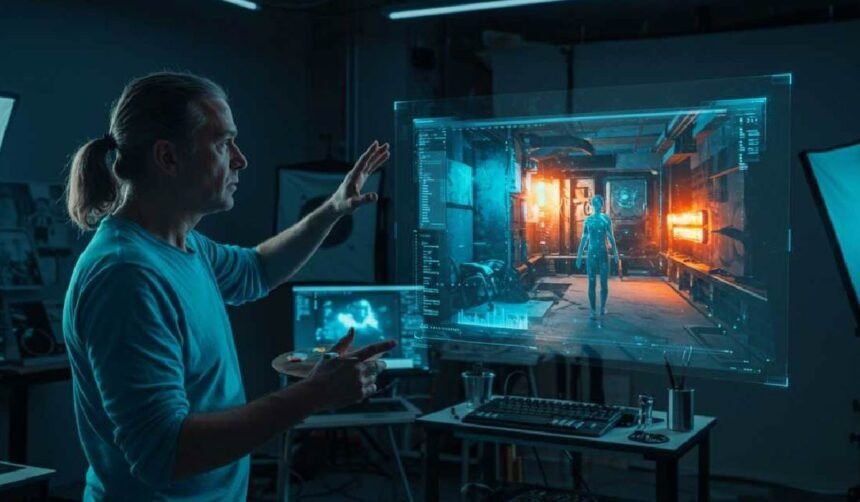
Recently, AI generated video technology has evolved tremendously – moving from its initial experimental phase through now that it is being used practically. Before it wasn’t possible to produce anything more than small sections or low quality videos. Now a number of these new models can generate high quality movie style videos in minutes using simple text input. Almost any type of video can be automatically produced, such as commercials, short story clips, ASMR or fully finished instructional videos without editing any video traditionally.
Because of this enormous growth in the use of these tools by content creators, there are many new questions arising about how different model versions differ from one another in terms of capabilities? In what type of cases would be an appropriate choice for each? Given the number of AI video generating services operating on several different platforms – charging users a fee to access a service, how do you determine the best one to fit your needs?
The purpose of this article is to evaluate, one by one, some of the most common questions people have in order for users to know better how to navigate through the current AI video generating ecosystem.
The Underlying Mechanism of AI Video Generator
Using state-of-the-art generative models, AI video generation functions as a content creation system. For example, it can transform text or images into dynamic videos with seamless visual composition.
The process begins with training on vast amounts of video data, allowing the system to build an understanding of how images change over time, how lighting behaves, and how motion is represented. As a result, users can produce video content that approaches professional quality, regardless of their level of expertise or access to cameras and editing equipment.
How a Image-to-video Generator Works?
There is a very similar logic used across the mainstream models by sending our input (either text, image or both), through to the model being used to create the new sequences of video (via large amounts of video data that has been previously augmented) and they produce a new video.
The overall process can usually be summarized into several steps:
Input Description: Users provide a description that conveys information about the content they want to create, such as camera angle, lighting and mood, movement of the characters or objects, and style. Some systems allow users to specify length or provide an image reference.
Video Creation: The system utilizes the parsed user-provided content data to build a set of sequential frames utilizing its internal generation mechanism, culminating in the creation of a complete video.
Result Modification: If the final video generated does not meet user expectations, the video can be recomposed by changing the original description, adjusting random variables, or changing other option settings.
Exporting the Final Video: When the end result meets user expectations, users may export the video using different resolutions and formats to use elsewhere.
One of the main things you can do to improve your chances of getting a good result is to be as specific and detailed in your description as you can. The quality of the output will often depend on how well the input is described. To illustrate, a description like “The morning sun is streaming through the window; there’s a young person sitting at their desk writing in their diary; the combination of the soft sunlight and shadows creates an atmosphere of peace and tranquility.” This will often produce a better result than simply saying, “There is a person writing something.”
AI Video Generation Models Worth Paying Attention to At Present
Veo 3.1 – Google DeepMind
Veo 3.1 and the ability to create great video are currently leading the way in creating video. It can produce video with a total length of 8 seconds maximum at up to 4k resolution, and is built to work at 9:16 and 16:9 aspect ratios natively. Regarding audio, this model generates audio via music, ambient sounds, and human voice to synchronize the audio and video via a single processing method, meaning there is no need for post-processing.
Seedance 2.0 – ByteDance
The goal of Seedance 2.0 is to be an AI video generation model that allows for the multimodal creation of a video, from “input materials” to “finished product”. This includes the ability to input video, images, audio or text simultaneously, therefore allowing users with little or no editing experience to create a cinematic-quality video by providing only basic materials and descriptions.
Seedance 2.0 is designed with intelligent camera switching and seamless transition methods, in order to automatically synchronize the rhythm and movements of the camera to attain the video content.
Additionally, Seedance 2.0 is able to replicate and create extended content from references, allowing for extension of existing content while preserving the same style and using the same materials from the original reference.
Also, Seedance 2.0 enables the fine-tuning of specific segments of the video without the creation of a new video, while still providing sound effects and voice-over that will be synchronized with the final product to enable integrated audio and video output.
Sora 2 – OpenAI
The strong point of Sora 2 is its narrative consistency over longer spans of time and the consistent way in which character portrayals are represented in all scenes. This benefit becomes even more important when representing the same character in multiple shots with a consistent look and feel.
Hailuo 2.3 – MiniMax
Hailuo 2.3 is superior in both character movement and facial detail compared to its equivalent models; therefore, emotional content (for example, videos that contain descriptive and instructional elements) are enhanced due to the fact that Kling 3.0 creates realistic and expressive models.
Kling 3.0 – Kuaishou
Kling 3.0 has been developed to address social media scenarios, including optimally producing vertical, fast-paced, short-form video content through a highly engaging visual aesthetic, and facilitating the use of a multi-camera style of expression in creating short-form video content that can be used for sharing or created on an everyday basis.
Kling 3.0 will provide a final product of up to 4k resolution in output and up to will produce (or generate) video of approx 15 seconds in length. Additionally, Kling 3.0 has the capability to generate audio in multiple languages, making it appropriate for use in professional video production as well as for the needs of short-form video platforms such as TikTok or Reels.
Technical Comparison of Mainstream AI Video Tools
| Model | Max Resolution | Max Duration | Native Audio | |
| Veo 3.1 | 4K | ~8 seconds | ✅ | |
| Seedance 2.0 | Up to 2K | ~15 seconds | ✅ | |
| Sora 2 | 1080p | ~25 seconds | ❌ | |
| Hailuo 2.3 | 1080p | ~10 seconds | ✅ | |
| Kling 3.0 | 4K | ~15 seconds | Partial |
How to Choose the Right Tools?
Each model has its own distinct role and strengths, making it difficult to simply judge “which is best.” Veo 3.1 excels in image quality and realism, Seedance 2.0 emphasizes multimodal input and creative freedom, Sora 2 is adept at long-form narratives and character consistency, Kling 3.0 is more expressive in character animation and social media content, while Hailuo 2.3 holds its own in terms of generation efficiency and overall balance.
Because of these significant differences in their capabilities, creators often need to switch between different tools for different tasks, making the selection process complex and even costly.
In this context, model aggregation platforms have become increasingly important. Products like Viddo AI emerged to address this issue—integrating multiple mainstream video generation models into a single platform, allowing users to freely choose or switch models based on their specific needs without having to subscribe to and manage multiple services separately, thus significantly lowering the barrier to entry and improving creative efficiency.
Features of Viddo AI
Viddo AI is a single, unified platform that allows you to create high-quality videos from multiple standard sources and from well known video editors/models. You don’t have to switch back and forth. Everything can be done on this one website.
In terms of functional structure, it mainly covers three core generation methods:
Text to Video AI: Users simply supply a description or script, and the system will parse the semantics and output the required video content, all while coordinating the camera movement, the video style and the timing of the footage with respect to the original text in a quick conversion from text to finished product.
Image to Video AI: When a user uploads a set of still images, the AI will create dynamic effects such as camera zooms, environmental changes, or character movements on those images; thereby converting them into dynamic, event-based or secondary-created videos that can be used to expand on existing video content or develop new video content.
Video to Video AI: Allows users to an artwork, or new textures, or angles within the same video, therefore enabling users can develop popularly re-created versions of existing videos while maintaining the core structure of the original video content.
Beyond its single-model capabilities, Viddo AI’s core feature lies in its multi-model integration: the platform integrates mainstream video generation models such as Veo, Runway, Kling, and Seedance, allowing users to freely choose the appropriate model for different tasks without having to subscribe to and switch services separately.
Conclusion
The rapidly developing landscape of AI video generation does not yet have any models that can claim “overall superiority” over all others on every dimension. Each of these tools has its own unique capabilities, making the right choice almost entirely dependent on how you intend to apply them and what creative objectives you want to achieve.
If you have to use multiple models at once but are not interested in the hassle of managing multiple subscriptions, aggregation platforms that provide integrated access to a variety of mainstream video generation technologies, such as Viddo.ai, can be much more efficient ways for you to work.
The overall quality of the final video output is usually determined not by the specific product you’re using but rather by the description you provide to determine how to accurately communicate the imagery you would like the tool to generate. Instead of regularly switching tools, it can often pay dividends to learn how to better describe to the tool what type of graphics/images you would like to see in your finished product.