



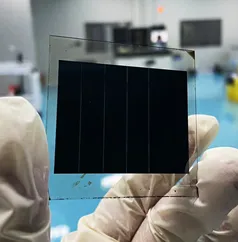
Industry Trends & The Emergence of Perovskite Technology
The global demand for high-efficiency, lightweight, and versatile energy generation solutions is driving a relentless pursuit of advanced photovoltaic technologies. Traditional silicon-based solar cells have reached maturity, prompting a surge of innovation towards next-generation materials. Among these, perovskite solar cell technology stands out as a transformative contender, poised to revolutionize numerous sectors from aerospace to flexible electronics. Its unique optoelectronic properties offer unparalleled advantages, addressing critical limitations of conventional solar technologies, including high power-to-weight ratio, exceptional radiation tolerance, and performance versatility.
Recent years have witnessed remarkable progress in the development of new perovskite solar cell architectures, pushing power conversion efficiencies (PCEs) to levels competitive with, and in some research contexts, surpassing, established silicon cells. This rapid advancement, coupled with the potential for low-cost manufacturing and material abundance, positions perovskites as a pivotal technology for sustainable energy. Industry projections indicate significant market growth for perovskite-based solutions, driven by applications requiring high power-to-weight ratios, flexibility, and robust performance in challenging environments. The ability to customize spectral response and transparency further expands their applicability beyond traditional power generation, opening avenues for Building Integrated Photovoltaics (BIPV), Internet of Things (IoT) devices, and critical space-level applications. This growth trajectory is supported by continuous breakthroughs in material stability and scalability.
Technical Overview: Unpacking the Perovskite Structure
At its core, a perovskite solar cell leverages a hybrid organic-inorganic lead-halide or tin-halide material with a specific crystal structure, similar to that of the naturally occurring mineral perovskite (calcium titanate, CaTiO3). This material acts as the primary light-absorbing layer. The fundamental structure typically comprises several distinct layers, each engineered for optimal charge separation and transport:
- Substrate:A foundational transparent conductive oxide (TCO), such as Fluorine-doped Tin Oxide (FTO) or Indium Tin Oxide (ITO), typically deposited on rigid glass or a flexible polymer film (e.g., polyethylene naphthalate, PEN), providing mechanical support and one electrical contact.
- Electron Transport Layer (ETL):A semiconductor layer, often titanium dioxide (TiO2) or tin dioxide (SnO2), which facilitates the selective extraction and transport of electrons from the perovskite layer to the external circuit, while blocking holes.
- Perovskite Layer:The active photoactive material, typically a mixed-cation, mixed-halide perovskite (e.g., (FA,MA)Pb(I,Br)3 where FA=formamidinium, MA=methylammonium). This layer efficiently absorbs photons, generating electron-hole pairs, which are then separated by the device’s internal electric field.
- Hole Transport Layer (HTL):An organic p-type semiconductor, such as Spiro-OMeTAD, or an inorganic equivalent like nickel oxide (NiOx), which selectively transports holes from the perovskite layer to the opposing electrode, preventing electron recombination.
- Counter Electrode:A highly conductive material like gold, silver, or carbon, deposited on top of the HTL, completing the electrical circuit and extracting holes.
The exceptional power conversion efficiency of these cells stems from the perovskite material’s strong light absorption coefficient across the visible spectrum, long charge carrier diffusion lengths (often exceeding 1 µm), high open-circuit voltages (VOC), and rapid charge separation dynamics. Researchers are continually refining material compositions and device architectures to enhance long-term stability against moisture, heat, and radiation, while also reducing reliance on lead through innovative alternative compositions, paving the way for non-toxic, commercially viable solutions.
Figure 1: Schematic representation of a typical planar heterojunction perovskite solar cell architecture.
Manufacturing Process: From Precursor to Performance
The fabrication of a high-performance perovskite solar cell involves a precise sequence of deposition and post-treatment steps, critical for achieving the desired crystalline structure and optimal electrical properties. Unlike traditional silicon wafer processing, perovskite manufacturing often employs solution-based techniques, which are inherently more scalable, energy-efficient, and cost-effective for large-area and flexible substrates.
Key Process Steps in Perovskite Solar Cell Manufacturing:
- Substrate Cleaning & Preparation:This initial stage is paramount for device performance and longevity. Substrates (e.g., FTO-coated glass, flexible PEN, or even high-temperature polymers like Kapton for space applications) undergo rigorous multi-step cleaning, typically involving sonication in organic solvents (e.g., acetone, isopropanol), followed by deionized water rinses and UV-ozone treatment. This ensures the removal of organic residues and activates the surface for optimal layer adhesion.
- Electron Transport Layer (ETL) Deposition:The ETL precursor solution (e.g., TiO2 nanoparticles, SnO2 colloids) is deposited onto the cleaned substrate. Common techniques include spin-coating (for laboratory scale), spray pyrolysis, or atomic layer deposition (ALD) for ultra-uniform, pinhole-free films crucial for high reliability. This layer is then annealed at controlled temperatures (e.g., 100-500°C, depending on the material and substrate compatibility) to form a dense, crystalline electron transport pathway.
- Perovskite Precursor Deposition:This is the defining step. Perovskite precursors (e.g., lead iodide, formamidinium iodide) are precisely dissolved in specific solvents. Deposition methods vary based on application and scale:
- Spin-Coating:Widely used in R&D, providing excellent film uniformity for small areas, often with solvent engineering or anti-solvent treatment.
- Slot-Die Coating:A highly scalable, continuous manufacturing technique suitable for large-area flexible substrates, enabling high-throughput production of perovskite solar cell modules.
- Inkjet Printing:Offers precise patterning capabilities and minimizes material waste, ideal for complex device geometries and transparent applications.
- Vapor Deposition (e.g., thermal evaporation, hybrid vapor-solution methods):Preferred for ultra-high purity films and specific space-grade applications due to its vacuum compatibility and control over film morphology.
Following deposition, a precise annealing step (e.g., 100-150°C for 30-60 min in a controlled atmosphere) is performed to crystallize the amorphous perovskite film into its desired highly ordered cubic or tetragonal structure, which is critical for optimal charge generation and transport efficiency.
- Hole Transport Layer (HTL) Deposition:The HTL solution (e.g., Spiro-OMeTAD with dopants, or inorganic materials like NiOx) is applied, typically via spin-coating or slot-die coating. This layer ensures efficient hole extraction and prevents electron leakage back into the perovskite.
- Counter Electrode Deposition:A highly conductive metal (e.g., Gold, Silver, Aluminum) is deposited using thermal evaporation or sputtering through a shadow mask to define the active area. For cost-sensitive or flexible applications, printed carbon electrodes can also be used. This layer completes the electrical circuit.
- Encapsulation:This is a crucial and often proprietary step for ensuring the long-term stability and service life (often >10 years) of the device, particularly in harsh environments like space. Devices are hermetically sealed using advanced UV-curable epoxies, polymer laminates, inorganic atomic layer deposition (ALD) barriers (e.g., Al2O3), or glass encapsulation to protect against moisture, oxygen, and other environmental stressors. For space applications, radiation-hardened materials are carefully selected.
Quality Control & Testing Standards:
Throughout the manufacturing process, stringent quality control measures are implemented to ensure product integrity and performance. These include material characterization using techniques such as optical microscopy, scanning electron microscopy (SEM) for morphology, X-ray diffraction (XRD) for crystal structure, and spectroscopic analysis (e.g., UV-Vis, PL) for material purity and optical properties. Finished devices undergo rigorous electrical characterization under standard simulated solar illumination (AM1.5G, 1000 W/m²) to determine key performance parameters like Power Conversion Efficiency (PCE), Open-Circuit Voltage (VOC), Short-Circuit Current Density (JSC), and Fill Factor (FF). Environmental stability tests, including damp heat (e.g., IEC 61215: 85°C/85% RH for 1000h), thermal cycling, and humidity-freeze, are conducted to certify reliability and adhere to industry standards (e.g., IEC 61215 and IEC 61730 for terrestrial PV modules). For aerospace applications, additional testing for radiation hardness (proton and electron fluence), thermal vacuum cycles, and mechanical vibration (MIL-STD-810G, ECSS-E-ST-10-03C) is paramount to ensure functionality in the extreme space environment, demonstrating superior corrosion resistance and energy saving capabilities over conventional materials.
Space-Level Perovskite Solar Cell Specifications
Space-Navi’s Space-Level perovskite solar cell technology is engineered for the most demanding extraterrestrial environments, offering a unique blend of high efficiency, exceptional radiation tolerance, and ultra-lightweight design. These specifications are crucial for satellites, deep-space probes, and orbital platforms where every gram of mass saved and every percentage point of efficiency gained translates directly to enhanced mission capabilities and reduced operational costs.
| Parameter | Space-Navi Space-Level Perovskite Solar Cell | Typical High-Efficiency Silicon Space Solar Cell (Comparison) |
| Power Conversion Efficiency (PCE, AM0, 25°C) | 23.5% (Initial Certified, under AM0 spectrum) | ~29-32% (Multi-junction GaAs/Ge cells) |
| Power-to-Weight Ratio (W/kg) | >1000 W/kg (Flexible substrate) | ~300-500 W/kg (Rigid GaAs) |
| Operating Temperature Range | -100°C to +120°C (Extended range with custom designs) | -110°C to +110°C (Typical for GaAs) |
| Radiation Tolerance (1 MeV Electron Fluence) | Significantly higher than Si, >1015 e/cm² with | Degrades faster, typically 14 e/cm² for significant degradation |
| Flexibility / Bend Radius | Bend radius | Rigid, not flexible, limited to flat panel deployment |
| Degradation Rate (Space Environment) | Guaranteed | ~0.5-1.5% / year (depending on shielding & orbit) |
| Service Life (Space Missions) | >10 years (with robust, space-qualified encapsulation) | >15 years (for state-of-the-art GaAs cells) |
Diverse Application Scenarios & Technical Advantages
The unparalleled characteristics of perovskite solar cell technology, particularly its high efficiency, flexibility, excellent power-to-weight ratio, and robust performance under low-light and high-radiation conditions, open up a vast array of application opportunities across critical industries that demand superior energy solutions.
Key Application Areas:
- Aerospace & Satellite Power:For Low Earth Orbit (LEO) and Geostationary Earth Orbit (GEO) satellites, CubeSats, and deep-space missions, the extremely high power-to-weight ratio and intrinsic radiation tolerance of solar panel perovskite modules are game-changers. Reduced mass translates directly to lower launch costs and increased payload capacity, while superior radiation hardness ensures mission longevity in harsh cosmic environments and reduces the need for heavy shielding.
- Unmanned Aerial Vehicles (UAVs) & Drones:Flexible and ultra-lightweight perovskite cells can be seamlessly integrated into wing structures, fuselage panels, or deployable surfaces, significantly extending flight duration and operational range by providing continuous, autonomous power recharging, even in diffuse or non-optimal light conditions.
- Remote Sensors & Internet of Things (IoT) Devices:Providing self-sustaining power to remote sensing stations, environmental monitors, agricultural sensors, and vast networks of IoT devices where grid connectivity is absent or impractical. Their exceptional low-light performance ensures continuous operation in shaded areas, indoors, or during adverse weather.
- Building Integrated Photovoltaics (BIPV):With tuneable transparency, color, and form factor, perovskite modules can be directly integrated into architectural elements like windows, facades, and roofing tiles, transforming buildings into active energy generators. This offers significant energy saving potential, aesthetic versatility, and structural integration without compromising design.
- Portable & Wearable Electronics:Their flexibility, minimal thickness, and efficiency make them ideal for integration into smart clothing, flexible displays, medical devices, and portable charging solutions, enhancing user convenience and energy independence for advanced consumer and professional electronics.
Key Technical Advantages:
- High Power Conversion Efficiency:Perovskites are achieving efficiencies competitive with or superior to many traditional solar technologies, especially for specific spectral ranges and multi-junction device architectures.
- Exceptional Power-to-Weight Ratio:Critical for weight-sensitive applications in aerospace and mobile platforms, enabling lighter designs, increased payload capacity, and fuel efficiency.
- Flexibility & Form Factor Versatility:Can be fabricated on flexible substrates, allowing seamless integration into curved surfaces, complex geometries, and deployable structures that are impossible with rigid silicon cells.
- Superior Radiation Tolerance:Perovskite materials exhibit an inherent self-healing mechanism and superior resilience to high-energy particle radiation compared to silicon or GaAs, which is essential for long-duration space missions.
- Low-Light Performance:Maintains higher efficiency under diffuse or low-intensity light conditions (e.g., indoor light, dawn/dusk, heavily clouded skies) compared to many other PV technologies, expanding their operational envelope.
- Tunable Bandgap:The chemical composition of perovskite material can be engineered to precisely absorb specific wavelengths of light, allowing for optimized performance in tandem cells or for specialized applications requiring narrow spectral response.
Vendor Comparison & Customized Solutions
While the market for new perovskite solar cell technologies is expanding rapidly, discerning the right partner is crucial for B2B applications, especially those requiring mission-critical performance and high reliability. Space-Navi distinguishes itself through a steadfast commitment to pioneering R&D, stringent quality assurance processes, and unparalleled customization capabilities, particularly for the demanding space, defense, and high-reliability industrial sectors.
| Feature | Space-Navi Space-Level Perovskite | Standard Perovskite Solar Cell Module (Generic/Terrestrial) |
| Target Market Focus | Aerospace, Defense, Mission-Critical Remote Sensing, High-Reliability Industrial IoT | General consumer, Building Integrated PV (BIPV), Terrestrial Utility PV, academic research |
| Environmental Qualification | ISO 9001:2015, AS9100D certified, MIL-STD (e.g., MIL-STD-810G), ECSS-E-ST-10-03C compliant testing for radiation, thermal vacuum, vibration, atomic oxygen exposure. | IEC 61215/61730 (terrestrial standards), basic damp heat, UV exposure. |
| Encapsulation & Material Science | Proprietary multi-layer, hermetic, radiation-hardened encapsulation and custom perovskite formulations designed for extreme longevity in vacuum and under high-energy particle flux. | Standard polymer laminates (e.g., EVA, PVF), general purpose perovskite compounds optimized for terrestrial stability. |
| Customization & Integration | Full design-to-delivery service, tailored form factors, optimized spectral response, integrated power management support, mechanical and electrical integration assistance. | Limited standard sizes, off-the-shelf options, basic electrical interfaces. |
| Reliability & Traceability | 100% batch traceability, extensive accelerated life cycle testing (ALT), dedicated QA team with over 15 years experience in high-reliability components. | Standard manufacturing batch quality control, limited long-term reliability data for new products. |
Space-Navi Space-Level Perovskite vs. Standard Perovskite Providers:
Tailored Perovskite Solutions for Unique Challenges:
Space-Navi understands that off-the-shelf solutions rarely meet the precise demands of advanced B2B projects, particularly in mission-critical environments. Our team of world-class materials scientists and engineers specializes in developing customized perovskite solar cell modules and arrays that are perfectly aligned with project specifications and operational constraints. This includes:
- Form Factor Adaptation:Designing cells and modules to fit specific dimensions, curvatures (e.g., for curved satellite bodies), and deployable structures (e.g., rollable arrays for stowage).
- Optimized Power Output & Voltage:Engineering cell series/parallel connections and module sizing for precise voltage and current requirements under specific mission profiles and operating temperatures.
- Spectral Response Tuning:Adjusting perovskite composition and layer thicknesses to maximize efficiency under specific light spectra (e.g., AM0 for space, specific LED lighting environments for indoor IoT, or filtered light for specialized applications).
- Environmental Hardening:Developing robust encapsulation strategies and selecting advanced materials specifically for extreme temperature variations, intense radiation exposure, deep vacuum conditions, and resistance to atomic oxygen.
- System Integration:Providing comprehensive electrical and mechanical integration support, ensuring seamless compatibility with existing power management systems, structural elements, and communication protocols.
Our decades of experience in high-reliability components and space-grade materials enable us to deliver solutions that not only meet but exceed the most stringent performance, longevity, and regulatory expectations. We act as an extension of your engineering team, from conceptual design to final deployment.
Application Case Studies: Perovskite in Action
The theoretical advantages of perovskite solar cell technology are now being realized in real-world applications, delivering tangible benefits across various high-stakes sectors. Space-Navi has partnered with leading entities in aerospace and critical infrastructure to deploy cutting-edge solutions that overcome traditional power limitations.
Case Study 1: Enhanced Power for LEO Satellite Constellation
A major global telecommunications firm required a significant increase in onboard power for their next-generation Low Earth Orbit (LEO) satellite constellation, without exceeding stringent mass budgets or compromising radiation hardness for a 7-year mission. Traditional multi-junction GaAs cells were deemed too heavy and cost-prohibitive for the projected scale of deployment. Space-Navi deployed custom-designed flexible perovskite solar cell modules, leveraging their high power-to-weight ratio (achieving over 1000 W/kg) and inherent radiation resistance. The solution provided a 25% increase in power output per unit area compared to the incumbent technology, while simultaneously reducing the overall solar array mass by 30%. This innovation not only significantly lowered launch costs but also allowed for additional payload integration, profoundly enhancing mission capabilities and extending operational lifespan by over 2 years due to superior radiation resilience against LEO proton and electron belts.
Case Study 2: Autonomous Power for Remote Environmental Monitoring Stations
For a national environmental agency operating a network of critical monitoring stations in extreme Arctic conditions, reliable, continuous power was a persistent challenge. Traditional solar panels struggled with prolonged low-light periods, diffuse sunlight, extreme sub-zero temperatures, and heavy snowfall. Space-Navi engineered robust, hermetically encapsulated perovskite solar cell arrays specifically designed for optimal performance under these challenging conditions. The modules featured tailored spectral response for diffuse light and were rated for continuous operation down to -80°C. The perovskite modules demonstrated a 40% improvement in average daily energy yield during winter months compared to conventional silicon panels of similar active area, ensuring uninterrupted data collection for critical climate research and providing superior energy saving. Their lightweight, deployable form factor also greatly simplified installation and maintenance in remote, challenging terrains.
Visit: kali puja countdown