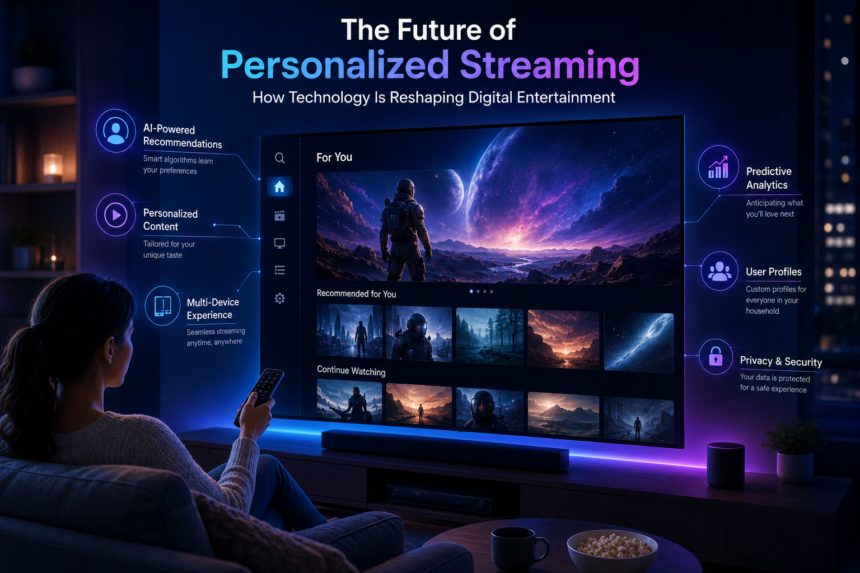
Introduction
The digital entertainment industry has experienced remarkable growth over the past decade. Advances in internet infrastructure, artificial intelligence, and connected devices have transformed how people discover, consume, and interact with content.
Modern audiences expect more than simply access to movies, television programs, and live events. They want personalized experiences that align with their interests, preferences, and viewing habits.
As competition within the streaming industry continues to intensify, personalization has become one of the most important factors driving innovation and user engagement.
Today, digital entertainment is no longer about delivering the same content to everyone. It is about creating unique experiences for every individual viewer.
The Shift Toward Personalized Content
Traditional television operated on a one-size-fits-all model. Broadcasters selected programs and viewers had limited control over what they watched and when they watched it.
Streaming services have fundamentally changed this dynamic.
Consumers now expect content recommendations tailored to their interests. They want platforms to understand their preferences and help them discover relevant programming without requiring extensive searching.
This shift has encouraged entertainment companies to invest heavily in data analytics and recommendation technologies.
The result is a more efficient and enjoyable viewing experience.
Artificial Intelligence as a Driving Force
Artificial intelligence plays a crucial role in modern streaming ecosystems.
Advanced algorithms analyze viewing history, user interactions, search behavior, and content preferences to generate personalized recommendations.
These systems continuously improve as they process more data, enabling platforms to deliver increasingly accurate suggestions.
Artificial intelligence also helps optimize user interfaces, improve content discovery, and enhance overall engagement.
As AI technologies continue to evolve, their influence on digital entertainment will become even more significant.
Why Consumers Value Personalization
One of the primary reasons personalization has become so important is the overwhelming volume of content available today.
Thousands of new movies, television shows, documentaries, and digital productions are released every year.
Without intelligent recommendation systems, users could easily become overwhelmed by the sheer number of options.
Personalization helps reduce decision fatigue by presenting content that aligns with individual interests.
This creates a more satisfying and efficient entertainment experience.
The Rise of Connected Entertainment
Entertainment is no longer limited to a single screen.
Consumers regularly move between smartphones, tablets, laptops, gaming consoles, and Smart TVs throughout the day.
This multi-device environment requires streaming platforms to provide seamless experiences across all devices.
Users expect to start watching content on one screen and continue on another without interruption.
This demand for flexibility has become a defining characteristic of modern digital entertainment.
Smart TVs and the Modern Living Room
Smart TVs have become the centerpiece of home entertainment.
Unlike traditional televisions, modern Smart TVs provide direct access to streaming services, applications, interactive content, and smart home integrations.
Their growing popularity reflects broader changes in consumer behavior.
People increasingly prefer centralized entertainment platforms that simplify content access and reduce the need for multiple devices.
As Smart TV adoption continues to increase worldwide, their role within the digital ecosystem is expected to expand further.
The Growing Importance of Content Accessibility
Consumers increasingly value accessibility and convenience.
They want entertainment solutions that allow them to access diverse content through a simple and intuitive interface.
This demand has contributed to growing interest in internet-based content delivery models.
In Canada, many consumers are exploring options associated with IPTV Canada Quebec as part of a broader trend toward flexible and connected entertainment experiences.
The popularity of these technologies reflects changing expectations regarding content accessibility and user control.
The Impact of High-Speed Connectivity
Modern streaming experiences depend heavily on reliable internet infrastructure.
The expansion of fiber-optic networks and advanced wireless technologies has significantly improved content delivery capabilities.
Consumers now expect high-definition and ultra-high-definition streaming without interruptions or buffering issues.
These improvements have enabled entertainment providers to deliver increasingly sophisticated digital experiences.
Connectivity remains one of the most important factors shaping the future of streaming.
Consumer Expectations Continue to Evolve
Today’s viewers are more informed and selective than ever before.
They expect platforms to provide high-quality content, personalized recommendations, seamless navigation, and cross-device compatibility.
Entertainment providers must continuously innovate to meet these expectations.
Companies that fail to adapt risk losing audience engagement in an increasingly competitive market.
This environment encourages ongoing investment in technology and user experience improvements.
Simplifying the Entertainment Experience
As the number of digital services continues to grow, consumers often face increasing complexity.
Many users prefer solutions that simplify content discovery and reduce fragmentation.
This trend has contributed to interest in services related to IPTV subscription Canada, which are often associated with efforts to centralize content access and streamline digital entertainment experiences.
The desire for simplicity is likely to remain a major factor influencing future innovation.
Emerging Technologies and Future Opportunities
The future of streaming extends beyond personalization.
Technologies such as virtual reality, augmented reality, and interactive media have the potential to transform how audiences engage with content.
Viewers may eventually become active participants in entertainment experiences rather than passive observers.
These innovations could redefine storytelling and create entirely new forms of digital engagement.
The next decade promises exciting developments across the entertainment landscape.
Data Privacy and Ethical Considerations
As personalization becomes more sophisticated, concerns regarding privacy and data security continue to grow.
Consumers are increasingly aware of how their information is collected and used.
Entertainment providers must balance personalization with responsible data practices.
Transparency, user control, and strong security measures will be essential for maintaining trust.
Companies that prioritize privacy are likely to gain a competitive advantage in the years ahead.
The Future of Streaming
Industry experts agree that personalization will remain a defining characteristic of digital entertainment.
Artificial intelligence will become more advanced, user experiences will become more intuitive, and content discovery will continue to improve.
Consumers will benefit from increasingly tailored entertainment ecosystems designed around their individual needs and preferences.
This evolution represents a major shift in how audiences interact with media and technology.
Conclusion
The future of streaming is being shaped by personalization, artificial intelligence, connected devices, and evolving consumer expectations.
As digital entertainment continues to evolve, platforms that deliver flexible, intuitive, and personalized experiences will be best positioned for long-term success.
The next generation of streaming services will not simply provide content—they will create highly individualized experiences that transform how people engage with entertainment in everyday life.