



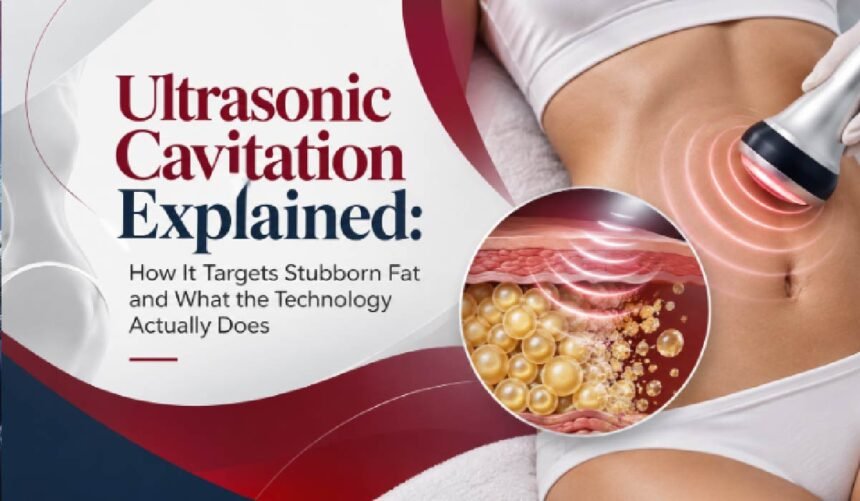
Ultrasonic cavitation is a non-invasive body contouring method that uses sound energy to break down small, stubborn pockets of fat sitting just beneath the skin. It is also called ultrasonic lipolysis, and it is sometimes recognized through brand names such as UltraShape or Liponix. The point worth settling first is what the treatment is actually for. It is designed to reshape specific areas that resist diet and exercise, not to lower the number on the scale.
The technology now spans a wide range of formats, from clinic handpieces operated by trained providers to compact units meant for personal use, and the broad market of ultrasonic cavitation devices reflects how much interest there is in localized, regional slimming. Whatever the format, the underlying idea is the same. Sound waves are delivered into the fatty layer, and physics does the work of disrupting fat cells, which the body then clears gradually through its own pathways.
How the technology actually works
The mechanism behind the name is straightforward once it is broken into steps. The applicator sends ultrasound waves into the tissue, and those waves create rapid cycles of high and low pressure. During the low-pressure phase, microscopic vapor bubbles form in the fluid around the fat cells. As the pressure shifts, those bubbles collapse. That repeated formation and collapse is the cavitation effect, and the mechanical stress it produces is enough to disrupt the membranes of nearby fat cells.
When a fat cell membrane is disrupted, the fatty contents are released into the surrounding fluid. From there the body handles them the way it handles other waste, moving them through the lymphatic system to be processed and eliminated over the following days. This is why results are gradual rather than immediate, and why staying well hydrated is usually part of the aftercare guidance.
What “targeting stubborn fat” really means
The phrase is popular in marketing, so it helps to be precise. Cavitation works on subcutaneous fat, the layer directly under the skin that you can pinch, rather than the deeper visceral fat that surrounds the organs. It is best suited to small, defined areas that have not responded to a stable diet and regular activity. Some evidence suggests the effect is more pronounced in denser, fibrotic regions such as the back and the chest, though it is commonly applied to other areas as well.
Commonly treated regions include:
- The stomach and flanks
- The hips and thighs
- The upper arms
- The back and chest
- The neck and, in some cases, the face
None of this changes the core limitation. The treatment contours a region. It does not reduce overall body weight, and it is not a substitute for the habits that keep fat from returning.
What a session is like
A session is usually simple and involves no downtime. The area is cleaned, and a handheld device is moved slowly across the skin over the target zone. Most people feel a mild warmth and hear a faint buzzing from the machine, but the process is not considered painful. A single area typically takes somewhere between forty minutes and an hour, and you can generally return to normal activity right afterward.
Realistic results and how many sessions
This is where honesty matters more than enthusiasm. The clinical picture is still limited, and effectiveness varies from person to person, which independent health sources are careful to state. One study of the procedure found that participants saw a measurable reduction in fat in the treated area after three treatments, with the treated region shrinking by roughly one to three centimeters. Notably, participants in that study did not lose weight overall. They lost fat in a specific place.
Two practical points follow from that. First, a single visit is rarely the whole story. Regional changes tend to build across a short course of sessions rather than appearing after one. Second, the result depends on what happens between and after treatments. If released fat is met with a calorie surplus, the remaining fat cells can simply refill, which is why the treatment is paired with a steady diet and activity rather than treated as a replacement for them.
Firming, skin texture, and honest limits
Many devices in this category are also promoted for firming, and there is a reasonable basis for the interest, since some ultrasound and radiofrequency approaches aim to tighten the skin surface. But firming and fat disruption are not the same job, and results for skin texture are modest and inconsistent. In some cases the skin does not settle evenly after fat breaks down, which can leave temporary lumps, dimples, or waves that may need follow-up sessions to smooth out. Treating firmness as a possible bonus, rather than a guaranteed outcome, sets expectations correctly.
Who it suits, and who should be cautious
The treatment tends to make sense for someone who is already close to a stable weight and wants to refine a specific area. Independent guidance describes the strongest candidate as a person in good general health, a non-smoker, with realistic expectations, and already within a modest range of their goal weight. It is not intended for significant weight loss.
Caution is warranted in several situations, and a qualified provider should be consulted before starting. It is generally avoided during pregnancy and breastfeeding, and people with conditions affecting the liver, kidneys, heart, or circulation, or those with implanted electronic devices such as a pacemaker, should not proceed without medical clearance. Anyone taking regular medication or supplements should disclose that in advance.
Side effects are usually minor and short-lived. The most common are:
- Temporary redness or a warm flush over the treated skin
- Mild bruising or tenderness
- Occasional headache
Common preparation advice includes drinking plenty of water in the days around treatment and avoiding alcohol for a couple of days beforehand. Some providers also suggest pausing anti-inflammatory painkillers in the run-up, which is another reason to have the conversation with a trained professional rather than self-prescribing a plan.
How it compares to the alternatives
Cavitation is often weighed against surgical and cold-based options. The comparison below outlines the practical differences rather than declaring a winner, since the right choice depends on the goal, the area, and personal risk tolerance.
| Method | How it works | Invasiveness | Best understood as |
|---|---|---|---|
| Ultrasonic cavitation | Sound waves disrupt fat cell membranes | Non-invasive, no incisions | Gradual contouring of small areas |
| Liposuction | Fat is physically suctioned out | Surgical, incisions and recovery | Larger, more definitive fat removal |
| Cryolipolysis (cold-based) | Controlled cooling breaks down fat cells | Non-invasive | Contouring with longer sessions and higher cost |
The bottom line
Ultrasonic cavitation is a genuine, low-risk way to encourage the breakdown of fat in a targeted area, and the science behind the cavitation effect is real. What it is not is a shortcut around weight management or a guaranteed sculpting tool. Understood as a gradual, area-specific refinement that works alongside consistent habits, and started only after checking suitability with a qualified provider, it can be a sensible option. Treated as a promise of dramatic change, it will disappoint.