



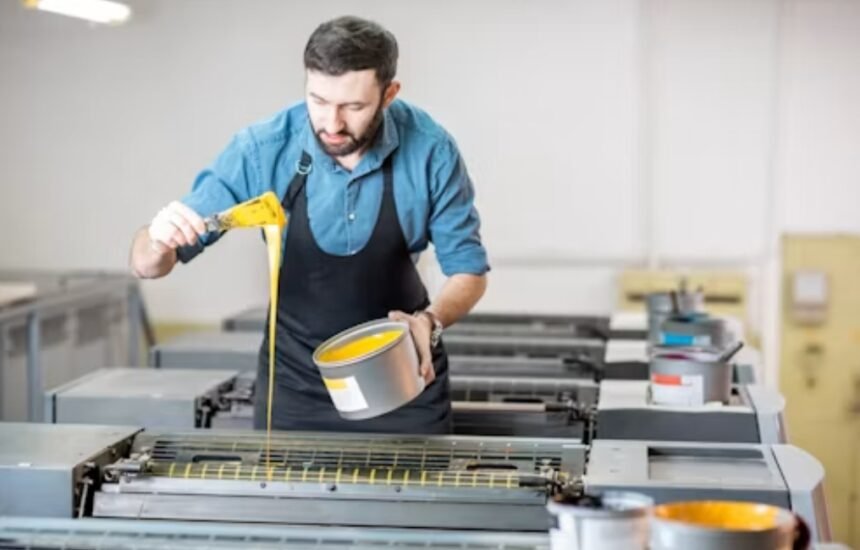
The industrial label manufacturing sector is operating under immense pressure to deliver flawless results at unprecedented speeds. Production facilities are constantly challenged to balance strict quality control with the necessity of mass output. In 2026, relying on outdated machinery is no longer a viable business model for competitive packaging firms. Optimizing the production floor with modernized equipment is critical for protecting profit margins against rising raw material costs.
The Rising Demand for High-Speed Custom Labeling
The modern global economy heavily depends on accurate, durable labeling for everything from consumer retail to complex logistics tracking. Fast-moving consumer goods (FMCG) require visually stunning labels to capture shelf attention, while logistics networks demand billions of scannable barcodes. This dual demand forces manufacturing facilities to print massive quantities without sacrificing micro-level precision. As order sizes grow, the inefficiencies of legacy printing systems become glaringly apparent, leading to costly production bottlenecks.
To keep pace with the massive order volumes generated by the FMCG and logistics sectors, converters are re-evaluating their production lines. Modernization often requires implementing advanced flexo KETE GROUP that deliver the rapid web speeds and precise color consistency necessary to fulfill long-run orders profitably. This strategic upgrade enables facilities to handle complex industrial supply chain requirements seamlessly.
Technological Breakthroughs in Modern Printing Presses
Modernizing a label production facility involves integrating equipment that utilizes intelligent automation and high-precision mechanics. Current iterations of flexographic presses have transformed the printing floor from a labor-intensive environment into a highly streamlined operation. These systems reduce manual intervention, limit operator error, and maximize continuous running time.
Key technical upgrades driving this efficiency include:
- Direct-Drive Servo Motors: Eliminating traditional gearboxes to provide smoother, highly accurate cylinder rotation at peak speeds.
- Enclosed Ink Chambers: Preventing solvent evaporation and maintaining exact ink viscosity during multi-shift print runs.
- Advanced Web Tension Control: Using digital sensors to maintain perfect substrate tension, eliminating material stretching or tearing.
Automated Registration and Color Consistency
The most significant bottleneck in traditional printing occurs during the job setup phase, where operators manually align the print cylinders. Modern presses utilize automated pre-registration systems powered by highly sensitive optical cameras and sophisticated software. These systems automatically align the plates before the machine even reaches full production speed.
This automation yields profound benefits for medium-to-long print runs:
- Drastic Waste Reduction: Getting the press into an exact register within meters rather than hundreds of meters of wasted substrate.
- Unwavering Color Consistency: Closed-loop color management systems constantly monitor and adjust the ink flow dynamically.
- Faster Changeovers: Moving from one job to the next in minutes, significantly improving overall machine uptime.
Cost-Benefit Analysis for Medium to Long Print Runs
Evaluating machinery investments requires a stringent look at the total cost of ownership versus output capacity. For medium-to-long print runs, modern flexographic equipment presents an overwhelmingly positive return on investment (ROI). The initial capital expenditure is quickly offset by dramatic reductions in setup waste and daily consumable usage. By strictly controlling these variable costs, plant managers can offer more competitive pricing to their B2B clients.
Furthermore, minimizing substrate and ink waste directly impacts a facility’s B2B cost management strategy. High-yield equipment ensures that every roll of raw material generates the maximum number of sellable labels.
| Performance Metric | Legacy Printing Equipment | Modern Advanced Flexo Systems | Impact on ROI |
| Average Setup Time | 45 – 90 minutes | < 15 minutes | Massive increase in billable printing hours. |
| Material Setup Waste | 100 – 300 meters per job | 10 – 20 meters per job | Drastic reduction in substrate expenditure. |
| Output per Hour | 3,000 – 5,000 meters | 9,000 – 15,000 meters | Triples daily fulfillment capacity. |
| Ink Consumption | Inconsistent / High evaporation | Highly controlled / Minimal loss | Stabilizes consumable forecasting. |
Global Supply Chain Resilience in the Packaging Sector
The past few years have demonstrated how quickly geopolitical shifts and raw material shortages can disrupt global manufacturing. Label and packaging converters are no longer just printing providers; they are critical nodes in the global supply chain. To survive material volatility, facilities must operate with maximum efficiency, ensuring they can absorb sudden shocks without halting production. Reliable machinery ensures that when materials are available, they are processed flawlessly and swiftly.
Operational efficiency at the printing stage acts as a buffer against wider market volatility. Insights detailed by Forbes on global supply chain strategies suggest that investing in high-yield, reliable manufacturing technology is a primary defense mechanism for industrial packaging firms facing material shortages. Upgraded equipment provides the agility needed to pivot quickly between different substrates or adapt to sudden changes in client order volumes.
Key Takeaways
| Area | Key Takeaway | Impact/Data |
| Production | Deploy direct-drive servo flexo presses | Triples hourly output to 9,000–15,000 meters |
| Efficiency | Automate pre-registration and color control | Slashes setup waste to 10–20 meters per job |
| Downtime | Streamline job changeovers with auto-alignment | Cuts setup time to < 15 minutes |
| Inks | Install enclosed ink chamber systems | Eliminates solvent loss and stabilizes ink costs |
| Resilience | Modernize equipment to buffer market volatility | Absorbs raw material shocks without halting |
Conclusion: Streamlining the Manufacturing Workflow
Securing long-term profitability in the industrial label sector demands a relentless focus on operational efficiency. Legacy systems simply cannot support the volume, speed, and precision required by modern FMCG and logistics networks. By integrating advanced, automated printing infrastructure, facilities can eliminate traditional bottlenecks, drastically reduce material waste, and guarantee unwavering color consistency. Ultimately, this technological shift insulates manufacturers from supply chain volatility, establishing a resilient and highly efficient production workflow.