



Introduction
At first glance, kouskousi may look like rice or tiny grains, so many people do not realize what it really is. But kouskousi is a very special food with a long history, deep cultural meaning, and a place in kitchens far beyond its original home. For centuries, families in North Africa have prepared and shared it as part of everyday meals and important celebrations.
Today, it is also enjoyed in many other parts of the world because it is simple to cook, easy to pair with different foods, and pleasant to eat. Kouskousi is a small pasta-like food made from semolina, traditionally steamed and served with vegetables, meat, or broth. It is a staple dish in North African cuisine and is known for its light texture, versatility, and cultural importance. People are interested in kouskousi because it is both traditional and practical.
It carries history, yet it also fits modern life. In this article, you will learn what kouskousi is, where it came from, why it matters in culture, how it is prepared, what health value it offers, and how it can be served in many delicious ways.
What Is Kouskousi?
Kouskousi is a small food made from semolina, which comes from durum wheat. Although it looks like tiny grains, it is not a grain like rice, and it is not a seed like quinoa. It is closer to pasta because it is formed by mixing semolina with water and rolling it into very small round granules. In many places, kouskousi is simply called couscous, while the name “kouskousi” reflects traditional naming or local pronunciation. Once cooked, it becomes soft, light, and fluffy, with a texture that feels gentle but still slightly firm.
Its taste is mild and neutral, which is one of the reasons it is so widely loved. Because it does not have a very strong flavor on its own, it easily takes in the taste of broth, spices, vegetables, meat juices, butter, and herbs. This makes it useful in many different dishes.
Main Ingredient: Semolina is the heart of kouskousi and gives it its structure. Why It Is Not Rice: it may look similar in size, but it is made from wheat and shaped by hand or machine. How It Gets Its Texture: Steaming or soaking allows the granules to expand and become fluffy. In simple words, kouskousi is a light wheat-based food that works as an excellent base for both simple and rich meals.
The Meaning and Origin of Kouskousi
The story of kouskousi begins in North Africa, where it has been part of food culture for many centuries. It is strongly linked to Berber communities, who are among the earliest known people to prepare it. In traditional households, semolina was rolled by hand with water until tiny granules formed, and then these granules were steamed carefully over simmering liquid. This was not only a cooking method but also part of daily family life.
Berber Heritage: kouskousi reflects the skills, traditions, and food identity of North African communities that valued simple ingredients and patient preparation. Over time, the dish spread across regions through trade, migration, and cultural exchange. It became deeply rooted in countries such as Morocco, Algeria, Tunisia, and Libya, where each place developed its own style of serving and seasoning it.
Traditional Hand Preparation: This process helped preserve both flavor and custom, making the dish feel personal and meaningful. As travelers and merchants moved across the Mediterranean, kouskousi reached new lands and adapted to local tastes. Spread Across Regions: it became known outside North Africa while still keeping its original identity. Kouskousi remained important over time because it was filling, practical, and easy to pair with many ingredients, but also because it carried a sense of belonging and tradition.
Why Kouskousi Is Important in Culture and Tradition
Kouskousi is more than a meal. In many homes, it represents family, generosity, and shared moments. It is often served during weddings, religious holidays, Friday meals, and large family gatherings, where everyone sits together and enjoys food from a common platter. This way of eating creates closeness and reminds people that meals are not only about hunger but also about connection.
A Shared Family Dish: kouskousi often brings generations to the same table, from grandparents to children, and each person recognizes it as something familiar and comforting. In many traditions, preparing kouskousi is also a social act. People may gather in the kitchen, steam the semolina, prepare broth, and arrange the dish together. Symbol of Hospitality: offering kouskousi to guests shows warmth, care, and respect, because it is considered a generous and meaningful food.
The dish is also passed from one generation to another through recipes, habits, and stories. Food with Cultural Meaning: It connects people to their roots and reminds them of where they come from. Even when families move far from North Africa, kouskousi often stays in their kitchens, helping them keep cultural traditions alive through a simple but powerful meal.
What Is Kouskousi Made From?
Kouskousi has a very simple base, which is one reason it has remained popular for so long. The main ingredient is semolina, a coarse flour-like product made from durum wheat. Water is added to help form the tiny granules, and sometimes a little salt is mixed in as well. In traditional preparation, these granules are rolled by hand until they become evenly sized and ready to steam.
Core Ingredient: semolina is what gives kouskousi its identity, texture, and light golden color. Handmade kouskousi often takes more time and care, while store-bought versions are usually machine-made and often pre-steamed for convenience.
Traditional Base: at its most basic level, kouskousi does not need many ingredients to exist, because its strength comes from simplicity. However, the final taste depends greatly on what it is served with. What Adds Flavor: broth, vegetables, spices, herbs, meat, chickpeas, lentils, butter, or olive oil all bring life to the dish.
That is why kouskousi can be plain when prepared alone, yet deeply flavorful when combined with rich sauces and hearty foods. Its simple base allows it to fit into many cuisines, styles, and levels of cooking, from traditional home meals to quick modern dinners.
Different Types of Kouskousi
Kouskousi comes in several forms, and knowing the different types can help readers understand why it appears differently from one recipe to another. Moroccan Kouskousi: This is the smallest and most common type. It cooks quickly and becomes soft and fluffy, making it ideal for traditional dishes with vegetables, meat, or broth.
Israeli or Pearl Couscous: this type has larger, rounder grains and a slightly chewy texture. It is often toasted before packaging, which gives it a deeper flavor and makes it popular in salads and side dishes. Lebanese Couscous: This variety is larger than Moroccan couscous and is sometimes used in slow-cooked meals because it holds up well in broth. It feels heartier and more filling. Greek-Style Couscous: This is often closer to tiny pasta shapes and is commonly used in soups or mixed dishes.
The main differences between these types are size, texture, and cooking method. Smaller versions are lighter and quicker, while larger ones are firmer and need more time. Their best uses also vary. Some are excellent with stews, while others are better for cold salads or rich one-pot dishes. Even though these versions are different, they all share the same idea: a small wheat-based food that is flexible, easy to serve, and able to absorb flavor beautifully.
Kouskousi Taste and Texture Explained
One reason kouskousi is so easy to enjoy is that its taste is simple and gentle. Mild Taste: on its own, kouskousi does not have a strong flavor, which makes it easy to pair with many ingredients. It can feel warm and savory with broth and spices, or light and fresh with lemon and herbs.
This mild character is what helps it fit into many dishes without overpowering anything else on the plate. Light Texture: when cooked properly, kouskousi becomes fluffy, soft, and separate rather than sticky. Some types feel more delicate, while others have a little chew, especially larger pearl versions. The best result is when the grains stay light and open, giving the dish a pleasant mouthfeel.
Flavor Absorption: perhaps the best feature of kouskousi is how well it takes in the taste of butter, olive oil, stock, meat juices, vegetables, and spices. That is why the same base can be used for both savory and sweet dishes. With cumin and broth, it feels hearty and rich. With honey, cinnamon, and dried fruit, it becomes soft and comforting in a different way. This balance of mild flavor and absorbent texture makes kouskousi highly adaptable and easy for many people to enjoy.
Nutritional Value of Kouskousi
Kouskousi provides useful nutrition, especially when it is part of a balanced meal. Its main strength is carbohydrates, which give the body energy for daily activity. Energy Source: because it is made from durum wheat, kouskousi offers a steady supply of fuel that works well for lunch or dinner. It also contains a small amount of protein, which supports body function and becomes more helpful when combined with foods like beans, chickpeas, fish, or meat.
Fiber and Digestion: Regular semolina couscous has some fiber, but whole wheat kouskousi offers more, which is better for digestion and may help people feel full for longer. Kouskousi also contains vitamins and minerals such as iron, selenium, magnesium, and B vitamins. Important Nutrients: These help support energy use, red blood cell function, nerve health, and general wellness.
Plain kouskousi is low in fat, which makes it a lighter option when prepared simply. However, its nutritional value can change depending on what is added. Rich sauces, butter, or fatty meat may increase calories, while vegetables and legumes can improve fiber and vitamins. Portion awareness is also important. Kouskousi can be very satisfying, so serving it in balance with protein and vegetables is a smart way to make the meal both filling and nourishing.
Health Benefits of Kouskousi
When prepared in a balanced way, kouskousi can support a healthy eating pattern. Good for Energy: because it contains complex carbohydrates, it helps provide steady fuel for the body instead of a quick burst that disappears fast. This makes it useful for people who want a meal that feels satisfying and supports regular daily activity. Light but Filling: kouskousi is often easy to digest and does not usually feel too heavy when it is cooked simply and served with moderate portions. It can create a complete meal when paired with vegetables, chickpeas, lentils, beans, chicken, or fish.
These combinations improve the overall nutrition and make the dish more balanced. It is also low in fat in its plain form, which can be helpful for people who want a lighter base for meals. Another benefit is flexibility. Kouskousi can fit many eating styles because it pairs well with plant-based foods and lean proteins.
That means it can work for both simple family cooking and more health-conscious meal planning. Gluten Warning: since kouskousi is made from wheat, it contains gluten and is not suitable for people with celiac disease or gluten intolerance. For others, though, it can be part of a wholesome diet that offers comfort, convenience, and nutrition without needing a long list of complicated ingredients.
How Kouskousi Is Traditionally Prepared
Traditional kouskousi preparation is careful, patient, and deeply connected to old cooking methods. Hand-Rolled Semolina: In many traditional kitchens, semolina is sprinkled with water and gently rolled by hand until tiny granules form. This process takes time and skill because the goal is to create grains that are even and light. After that, the kouskousi is steamed rather than boiled. A special pot called a couscoussier is often used, with broth or stew cooking in the lower section and the semolina steaming above it.
Steaming in Stages: the grains are usually steamed more than once, then taken out, fluffed, and sometimes moistened lightly before being steamed again. This repeated process helps the texture become airy and separate. Fluffing between rounds is very important because it prevents clumps and helps every grain cook evenly. Why Traditional Cooking Matters: Steaming over broth allows kouskousi to take in gentle flavor while keeping its delicate texture.
Many people feel that this method produces better results than quick modern versions because the taste is fuller and the texture is more refined. Traditional preparation also carries emotional value. It teaches patience, skill, and respect for food, and it often turns cooking into a shared family experience rather than just a task.
Modern Ways to Cook Kouskousi at Home
In modern kitchens, kouskousi has become much easier to prepare, which is one reason it is still so popular. Most packaged versions sold in stores are pre-steamed, so they only need to be rehydrated before serving. Quick Cooking Method: The usual process is simple. Place the kouskousi in a bowl, pour hot water or broth over it, cover it, and let it sit for about five minutes. After that, fluff it gently with a fork so the grains separate and become light.
This method is fast and practical, especially for busy households. Best for Busy Days: it allows people to prepare a filling meal without spending much time in the kitchen, which is helpful for weeknight dinners or quick lunches. It is also easy for beginners because it does not require special equipment or advanced cooking skills. Traditional vs Modern: while the traditional steaming method often gives deeper flavor and a softer, more refined texture, the modern method offers convenience and consistency.
Both approaches are useful, and each one has its place. Some people use the quick version for everyday meals and save the traditional method for special occasions. This flexibility is part of what keeps kouskousi relevant in both classic and modern cooking.
How to Serve Kous kousi
Kouskousi is one of the easiest foods to serve in many different ways, which makes it useful for many kinds of meals. With Meat and Broth: one of the most traditional options is to place it under a rich stew made with lamb, chicken, or beef. The broth flows into the grains and gives the dish deep flavor.
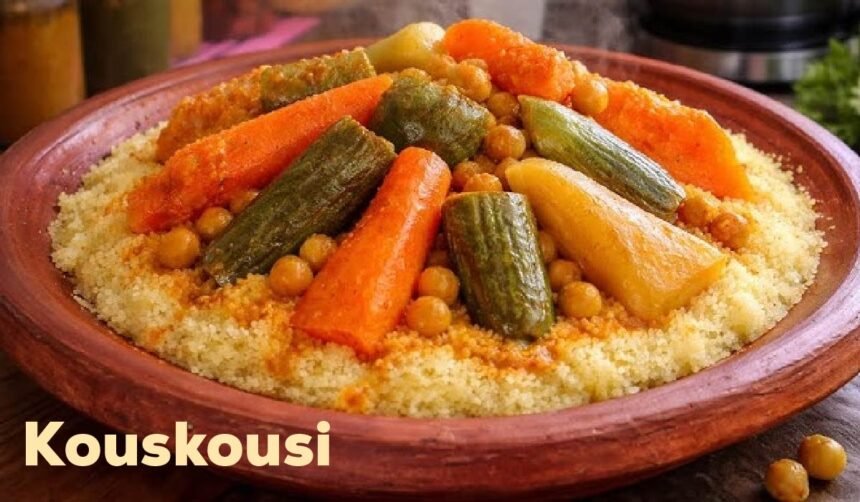
With Vegetables and Chickpeas: kouskousi also works beautifully with carrots, zucchini, pumpkin, chickpeas, lentils, and other vegetables, making it a satisfying vegetarian-friendly meal. It can also be served as a side dish instead of rice or pasta, especially with grilled foods or roasted vegetables.
In Fresh Salads: once cooled, kouskousi mixes well with parsley, mint, cucumber, tomato, lemon juice, and olive oil for a light and refreshing salad. This version is especially popular in warm weather or as a quick lunch.
As a Sweet Dish: in some traditions, kouskousi is served with raisins, nuts, cinnamon, honey, or dried fruit, creating a soft and comforting sweet meal or dessert. It can be served hot or cold, depending on the recipe. This wide serving range is one of the strongest reasons kouskousi remains so useful, because it can easily move from a hearty dinner to a fresh salad or even a sweet plate.
Popular Kous kousi Dishes Around the World
As kouskousi spread beyond its place of origin, it became part of many well-loved dishes. Moroccan Kouskousi: one of the most famous versions is served with lamb, vegetables, chickpeas, and fragrant broth. It is filling, colorful, and strongly connected to traditional family meals. Vegetarian Kouskousi: another common version includes roasted or stewed vegetables with spices, creating a dish that is simple but rich in flavor.
Couscous Salad: In many modern kitchens, especially outside North Africa, kouskousi is used in salads with herbs, tomatoes, onions, cucumber, lemon juice, and olive oil. This style is light, fresh, and easy to prepare. Chicken and raisin kouskousi is also popular, especially in dishes that combine savory and sweet flavors through spices, dried fruit, and tender meat.
Sweet Couscous: some regions prepare it with sugar, cinnamon, nuts, or dried fruit as a dessert or special treat. Across the Mediterranean and the Middle East, local ingredients have shaped many variations. Some places use stronger spices, some use seafood, and others prefer a simpler style. These dishes show how one humble food can adapt to many tastes while keeping its traditional character.
Common Mistakes People Make When Cooking Kouskousi
Although kouskousi is easy to cook, a few common mistakes can affect the final result. Too Much Water: this is one of the biggest problems because it makes the grains soggy, heavy, and sticky instead of light and fluffy. Measuring the liquid carefully is important. Not Fluffing Properly: after cooking, kouskousi should be loosened gently with a fork.
If this step is skipped, the grains may clump together and lose their pleasant texture. Another mistake is skipping seasoning. Lack of Flavor: plain kouskousi can taste dull if no salt, broth, herbs, oil, or spices are added. Even a simple drizzle of olive oil and a little salt can improve the dish a lot. Letting it sit too long without mixing can also lead to lumps, and under-hydrating may leave the texture dry or uneven. On the other hand, overcooking can make it too soft.
Some people also use water when broth would give the dish much more flavor. Avoiding these mistakes is not difficult, but it makes a big difference. A few careful steps can turn a bland or clumpy result into kouskousi that feels light, flavorful, and enjoyable.
Tips to Make Kouskousi Taste Better
Kouskousi does not need complicated tricks to taste good, but a few simple choices can improve it greatly. Cook with Broth: using vegetable, chicken, or meat broth instead of plain water gives the grains much more flavor from the very beginning. This is one of the easiest ways to make a noticeable difference. Use Fresh Herbs: parsley, mint, or cilantro can brighten the dish and add freshness without making it heavy.
Add Warm Spices: cumin, paprika, cinnamon, turmeric, or a small touch of black pepper can give kouskousi more depth and character, especially when it is being served with vegetables or meat. A little olive oil or butter can also improve both texture and richness, helping the grains feel smoother and more inviting. Roasted vegetables such as carrots, onions, peppers, or zucchini add sweetness and body.
Finish with Texture: nuts, raisins, lemon juice, or caramelized onions can make the dish more interesting by adding contrast in taste and feel. These additions do not need to be expensive or difficult. In fact, the best kouskousi often comes from simple ingredients used thoughtfully. Because the base is mild, even small changes can make the final dish feel much more complete and delicious.
Why Kous kousi Is Still Popular Today
Kouskousi remains popular because it matches both traditional values and modern needs. Fast and Practical: in today’s busy world, people appreciate foods that are easy to prepare, and kouskousi can be ready in only a few minutes when using pre-steamed versions. Affordable and Flexible: It is usually low-cost, easy to store, and simple to keep in the kitchen for quick meals.
At the same time, it works with many ingredients, from vegetables and legumes to fish, chicken, and rich stews. This means it can fit many cuisines and budgets without losing its identity. Still Connected to Tradition: Even though it is convenient today, kouskousi still carries deep cultural meaning.
Families continue to prepare it for gatherings, celebrations, and comfort meals, so it stays tied to memory and heritage. It is also easy for new generations to enjoy because it can be prepared in both traditional and modern ways. That balance is rare. Many old foods are meaningful but not always practical, while many modern foods are practical but not meaningful. Kouskousi offers both. It feels at home in everyday cooking, but it also reminds people of family, culture, and shared meals. That is why it continues to hold a special place in kitchens around the world.
Conclusion
Kouskousi is a small semolina-based food with a much bigger story than its simple appearance suggests. It comes from North Africa, carries strong Berber roots, and has grown into a widely loved dish across many cultures. Its importance is not only culinary but also emotional, because it has long been connected to family meals, hospitality, celebration, and tradition.
At the same time, it remains useful in modern life because it is easy to cook, affordable, and highly flexible. It can be served with meat, vegetables, legumes, broth, herbs, or even sweet ingredients, which makes it suitable for many different tastes and occasions.
Nutritionally, it offers energy and can be part of a balanced meal when paired with wholesome foods. Its soft texture, gentle taste, and ability to absorb flavor explain why people continue to enjoy it generation after generation. In the end, kouskousi is more than a dish on a plate. It is history, comfort, culture, and connection brought together in one warm and timeless food.
FAQs About Kouskousi
What is kouskousi made from?
Kouskousi is made from semolina, which comes from durum wheat. The semolina is mixed with water and shaped into tiny round granules, then steamed or dried. This process gives it a light and fluffy texture when cooked.
Is kouskousi the same as couscous?
Yes, kouskousi and couscous usually refer to the same food. The difference is mainly in the name, which changes based on region and language. Both are made from semolina and used in similar dishes.
Is kouskousi rice or pasta?
Kouskousi is not rice, even though it looks like small grains. It is actually a type of pasta because it is made from wheat. This is why it cooks differently and has a softer, fluffier texture.
How long does it take to cook kouskousi?
Modern kouskousi cooks very quickly and usually takes about 5 minutes with hot water or broth. Traditional kouskousi takes longer because it is steamed in stages, which gives it a richer texture and flavor.
Is kouskousi healthy to eat?
Kouskousi can be a healthy food when eaten in balance. It provides energy, contains some protein, and includes important vitamins and minerals. It becomes even healthier when served with vegetables, legumes, or lean protein.
Read More: