



Introduction
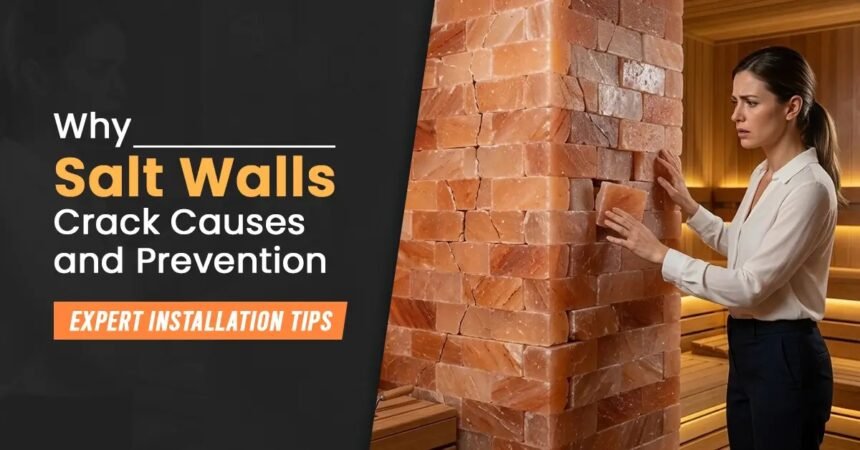
Salt walls typically crack due to humidity fluctuations, trapped heat, poor airflow, weak framing, or improper salt wall adhesive systems. Most structural problems develop gradually over time and can often be prevented through proper installation, ventilation, and specialized salt wall glue products.
Salt walls crack mainly due to humidity changes, trapped heat from lighting, poor airflow, and weak adhesive systems. Because Himalayan salt is hygroscopic, it absorbs moisture from the air, which causes expansion and contraction over time, leading to structural stress and cracks.
Salt walls usually do not collapse suddenly. Most of the time, the problem builds slowly in the background long before anyone notices visible damage.
A wall may look perfectly fine at first. The lighting glows warmly, the bricks seem solid, and everything feels heavy enough that movement almost feels impossible. Then, after months or sometimes years, tiny changes begin appearing.
Salt wall adhesive is a specialized bonding material designed to secure Himalayan salt bricks while resisting humidity, heat, and structural movement over time.
In most cases, the issue comes from installation methods or room conditions affecting the structure over time. Himalayan salt reacts differently compared to ordinary backlit salt wall materials.
Key Factors Affecting Salt Walls
- humidity in the room
- trapped heat
- poor airflow
- uneven weight pressure
That’s why long-term durability depends on:
- proper framing
- ventilation behind the wall
- curing time
- lighting placement
- strong salt wall glue
Why Do Salt Walls Crack?
Salt walls crack mainly due to humidity, heat buildup, poor ventilation, and weak adhesive systems. These issues develop gradually and can be prevented with proper installation and environmental control.
Why Do Salt Walls Crack Even When They Look Stable?
Because structural pressure develops gradually as humidity changes, temperature fluctuations, and wall movement continuously affect the installation.
A salt wall can appear completely stable while environmental changes continue affecting it every day.
For example:
- room humidity changes throughout the day
- heat builds up behind LED lighting
- airflow stays trapped in certain areas
- the wall frame shifts slightly over time
Since Himalayan salt naturally absorbs moisture, it reacts more than stone or tile.
Over time this can cause:
- uneven spacing
- surface cracking
- shifting rows
- weak corners
Does Humidity Really Make a Difference?
Yes, more than most people expect.
Humidity control is one of the biggest reasons salt walls weaken over time, especially in poorly ventilated rooms.
This commonly happens in:
- bathrooms
- spas
- steam rooms
- wellness spaces
- bedrooms with limited airflow
Moisture management becomes critical in such environments.
When moisture stays trapped:
- adhesive weakens slowly
- bricks shift slightly
- pressure becomes uneven
- gaps start appearing
A professional-grade salt wall adhesive helps improve bond strength and long-term stability.
Moisture & Environmental Factors
Proper Moisture Management and Indoor Air Quality are essential for long-term stability.
Salt walls are classified as hygroscopic architectural materials, meaning they continuously interact with surrounding air moisture. This interaction causes gradual expansion and contraction cycles, which directly impact adhesive strength, alignment stability, and long-term durability of salt installations.
You can also explore related guides such as salt wall installation techniques, indoor humidity control systems, and LED lighting setups for spa environments to better understand long-term durability factors.
Why Framing Is Important
A salt wall behaves like a heavy installation system. The bricks place continuous pressure on the support frame.
If the frame is weak or uneven:
- unstable corners
- vertical cracks
- shifting brick rows
- pressure around lighting sections
- partial wall weakness
Professional installers usually use:
- reinforced wooden support systems
- metal support structures
- moisture-resistant backing materials
Structural support and building materials help distribute weight evenly.
Can Poor Adhesive Cause Problems?
Yes.
Low-quality adhesive does not fail immediately but weakens over time due to:
- moisture changes
- heat fluctuation
- airflow inconsistency
- room pressure shifts
Professional installers prefer specialized solutions like Best Salt Brick Adhesive for Himalayan Salt Wall glue for long-term durability and resistance against humidity and heat.
Can Lighting Systems Create Stress?
Yes, sometimes.
Lighting creates heat behind the wall which can cause pressure around:
- adhesive layers
- wiring areas
- brick joints
- support sections
Common causes:
- low-quality LEDs
- blocked airflow
- rushed curing time
- poor wiring placement
Proper LED systems and ventilation reduce these risks.
Why Small Cracks Should Not Be Ignored
Small cracks may be early signs of structural pressure.
Common problems:
- Hairline cracks → humidity and internal pressure
- Loose bricks → weak adhesive
- Uneven rows → poor framing
- Adhesive weakening → heat and moisture exposure
- Corner movement → uneven weight distribution
- Shifting near lights → heat buildup
How to Prevent Salt Wall Cracks
Prevention depends on proper salt wall installation, including balanced ventilation, reinforced framing, controlled humidity, careful adhesive curing, and stable lighting placement.
Can DIY Salt Walls Last Long-Term?
Yes, if structure is taken seriously.
Successful DIY projects include:
- reinforced framing
- balanced airflow
- moisture awareness
- proper spacing
- correct curing time
Most failures happen due to:
- wall weight miscalculation
- humidity neglect
- airflow issues
- wrong adhesive use
How to Maintain a Salt Wall
Check regularly for:
- cracks
- loose bricks
- moisture buildup
- lighting heat
- adhesive wear
Early maintenance prevents major damage.
Professional Installation Standards & Material Behavior
Proper salt wall installation requires understanding both structural engineering and material science. Professionals consider humidity exposure, airflow design, adhesive strength, and thermal impact from lighting systems to ensure long-term durability. Without these factors, even high-quality salt bricks may fail prematurely.
Conclusion
Salt wall durability depends on airflow, structural support, and adhesive quality more than appearance.
Most failures are preventable when installation is done properly with controlled humidity, ventilation, and correct materials.
FAQs
Can salt wall glue fail over time?
Yes, due to humidity, heat, and ventilation issues.
Do salt walls need ventilation?
Yes, ventilation reduces moisture buildup.
Why do salt walls crack?
Salt walls crack because humidity, heat, and poor ventilation slowly weaken the adhesive and structural balance over time.
Does moisture damage salt walls?
Yes, it weakens adhesion and structure.
What adhesive should be used?
Specialized salt wall adhesive is recommended.
How long do salt walls last?
Many years with proper installation and conditions.