



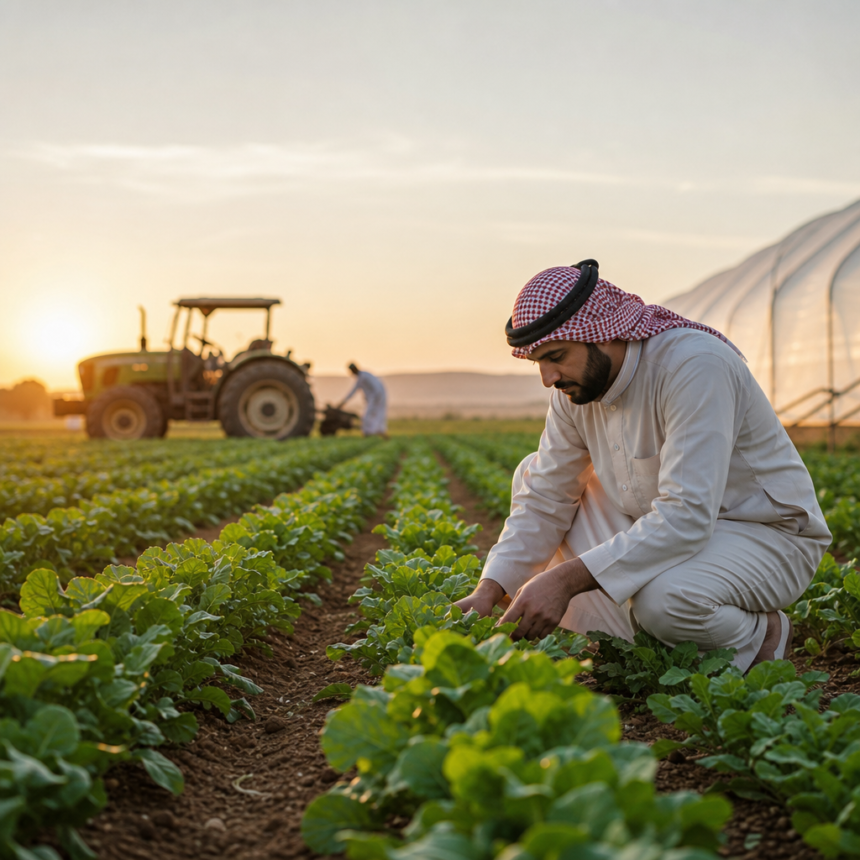
Agriculture has never been a static industry. From the earliest hand-turned soil to today’s GPS-guided machinery, farming has always evolved in response to necessity, technology, and the relentless demands of feeding a growing world. Yet something feels distinctly different about the current era. The pace of change has accelerated, the tools have grown more sophisticated, and the stakes — environmental, economic, and social — have never been higher. For farmers stepping into this landscape, whether seasoned veterans or first-generation growers, the challenge is not simply keeping up. It is learning how to lead.
The New Reality of Modern Farming
Walk into any agricultural equipment dealership today and you will find machines that would have seemed like science fiction two decades ago. Tractors equipped with real-time soil sensors, planters that adjust seed depth automatically, and combines that communicate yield data directly to farm management software — these are not experimental prototypes. They are the standard tools of competitive farming operations across the country. The shift toward precision agriculture has fundamentally changed what it means to manage a farm efficiently.
But technology alone does not make a successful farmer. Knowledge, mentorship, and access to reliable resources remain just as critical as the equipment itself. Many new and transitioning farmers find themselves overwhelmed not by a lack of ambition, but by the sheer volume of decisions they must make — from crop selection and soil health management to financing equipment and navigating market volatility. The learning curve is steep, and the margin for error is often thin.
Finding Your Footing in a Complex Industry
For those who are new to farming or returning after time away, the experience can feel isolating. Agricultural communities, while deeply supportive in many ways, can also be insular — built on generations of inherited knowledge that is not always easy to access from the outside. This is why resources that speak directly to the experience of learning farmers carry such value. Reading about the personal journey of navigating the agricultural industry as a newcomer can offer both practical insight and the reassurance that uncertainty is a shared experience, not a personal failing.
Community matters enormously in agriculture. Whether it is a neighbor who lends a hand during harvest, a county extension agent who explains soil test results, or an equipment dealer who takes the time to walk a new farmer through a machine’s capabilities, the human network surrounding a farm operation is often as valuable as any single piece of technology or technique.
Equipment as a Foundation for Growth
One of the most consequential decisions any farmer makes is where to source and service their equipment. A tractor that breaks down at the wrong moment — during planting or harvest — does not just cost money in repairs. It costs time, yield, and sometimes an entire season’s work. This is why the relationship between a farmer and their equipment provider is not merely transactional. It is foundational to the operation’s long-term success.
Reliable equipment dealers understand this dynamic. The best among them do not simply sell machines — they invest in the success of the farmers they serve. They provide training, responsive service, and the kind of ongoing support that helps farmers get the most out of their investment across years and seasons. For operations of all sizes, having that kind of trusted partner in the field makes a measurable difference.
Trusted Partners in Agricultural Equipment
H&R Agri-Power has built a strong reputation as a full-service agricultural equipment dealer committed to supporting farmers across the region. With a comprehensive inventory of leading machinery brands and a service team that understands the demands of working farms, H&R Agri-Power positions itself as more than a dealership — it is a resource for farmers who need dependable equipment backed by knowledgeable support. For growers navigating the complexities of modern agriculture, having access to that level of expertise and reliability is not a luxury. It is a necessity.
Sustainability and the Evolving Purpose of Agriculture
The conversation around agriculture has expanded well beyond yield per acre and commodity prices. Increasingly, farming is being recognized as a critical lever in addressing broader environmental and social challenges — from carbon sequestration and water conservation to the supply chains that feed industries far removed from the field. The intersection of agriculture and sustainability is reshaping how farmers think about their land, their practices, and their legacy.
This shift is visible across sectors. Regenerative agriculture practices are gaining traction among row crop farmers. Cover cropping and reduced tillage are becoming standard considerations rather than niche experiments. And the materials produced on farms — fibers, natural dyes, plant-based inputs — are finding their way into industries that have historically had little connection to the agricultural world. The relationship between what grows in the field and what ends up in consumer products is becoming more direct and more intentional. Exploring how agricultural innovation is shaping sustainable fashion reveals just how far-reaching these connections have become, and why farmers are increasingly seen as key contributors to a more sustainable global economy.
The Role of Innovation in Long-Term Viability
Innovation in agriculture is not about replacing tradition. It is about equipping farmers with better tools to honor the land while meeting the demands of a changing world. Whether that means adopting new planting technologies, exploring alternative crops, or rethinking how water and inputs are managed across a farm, the spirit of continuous improvement has always been central to agricultural identity. The farmers who thrive in the decades ahead will be those who approach their operations with both deep roots and open minds.
Building a Career in Agriculture with Confidence
There is no single path into farming, and there is no single definition of success once you arrive. Some farmers inherit operations that have been in their families for generations. Others come to agriculture from entirely different careers, drawn by a desire to work the land, produce food, or build something lasting. What unites them is the willingness to learn continuously — from the soil, from the season, from experienced neighbors, and from the broader community of agricultural professionals who share their challenges and their goals.
The resources available to today’s farmers — from precision technology and data-driven decision-making to strong dealer networks and growing online communities — make it more possible than ever to build a viable, sustainable farming operation from the ground up. The work is hard, the risks are real, and the learning never truly stops. But for those who commit to it, agriculture offers something rare: the chance to do work that is genuinely meaningful, rooted in the land, and connected to the most fundamental human need of all.
Conclusion
Modern agriculture demands more from its participants than ever before — more knowledge, more adaptability, and more willingness to embrace change without losing sight of what makes farming enduring. Whether you are just starting out or looking to take your operation to the next level, the combination of reliable equipment, strong community ties, and a commitment to sustainable practices will define the farms that succeed in the years ahead. The future of agriculture belongs to those who are willing to invest in it — in the soil, in the tools, and in themselves.